
Instant Retail
Same-city delivery, multi-store and dark-store operations in one system — bringing outlets and warehouses online for 30–60 minute liquor delivery.
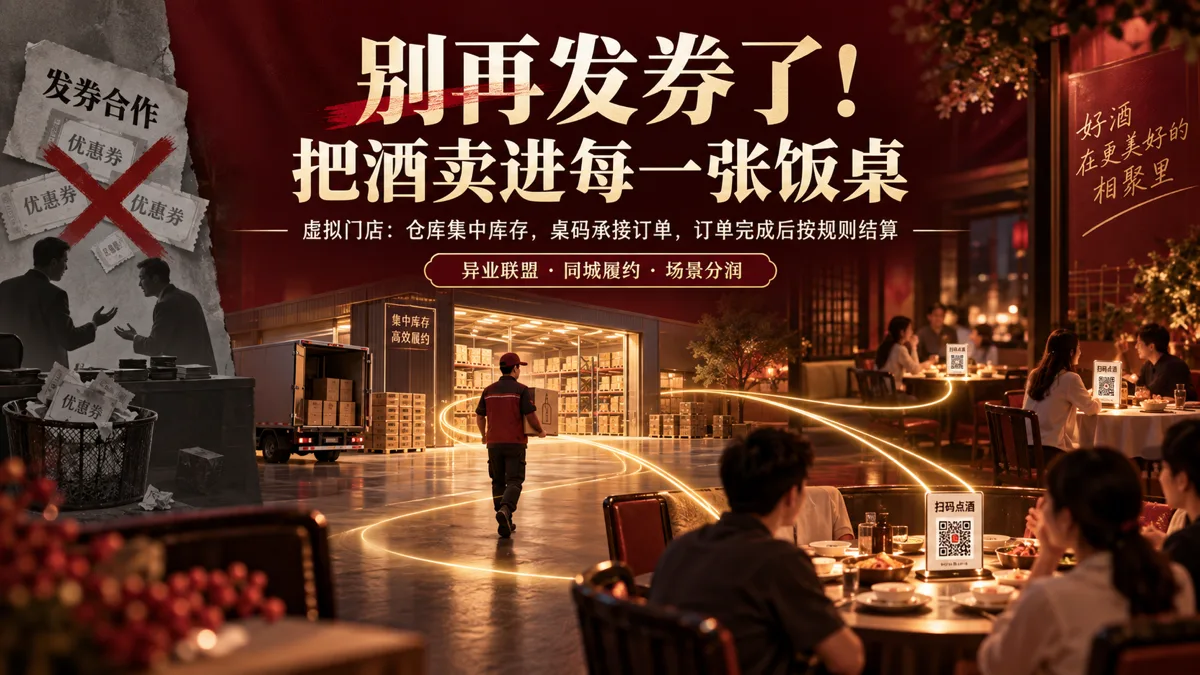
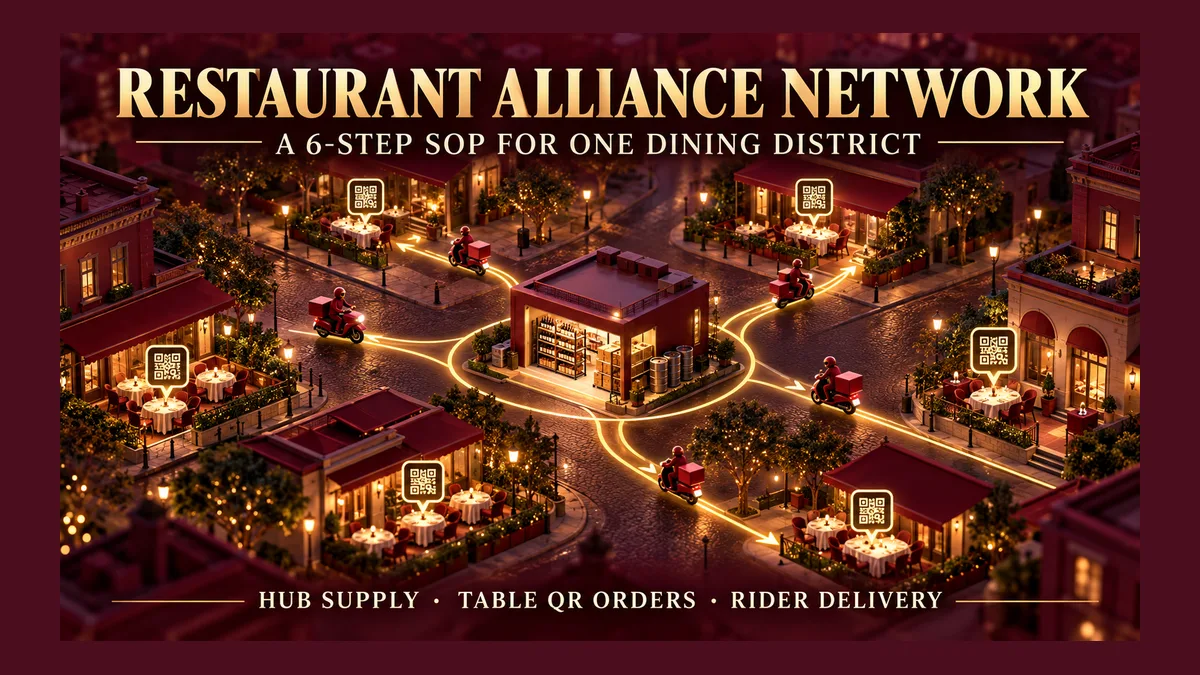
Instant-Retail Restaurant Alliance Network: A Six-Step SOP for Starting in One Commercial District
Regional alcohol distributors do not need to begin instant retail by opening a street-facing store or covering an entire city at once. Start with one commercial dining district: a micro-fulfillment hub holds inventory, restaurants provide table QR-code sales entry points, and riders deliver drinks to the table. Once the closed loop works, add community tobacco-and-liquor stores and expand the supply, fulfillment, and restaurant-sales network step by step.
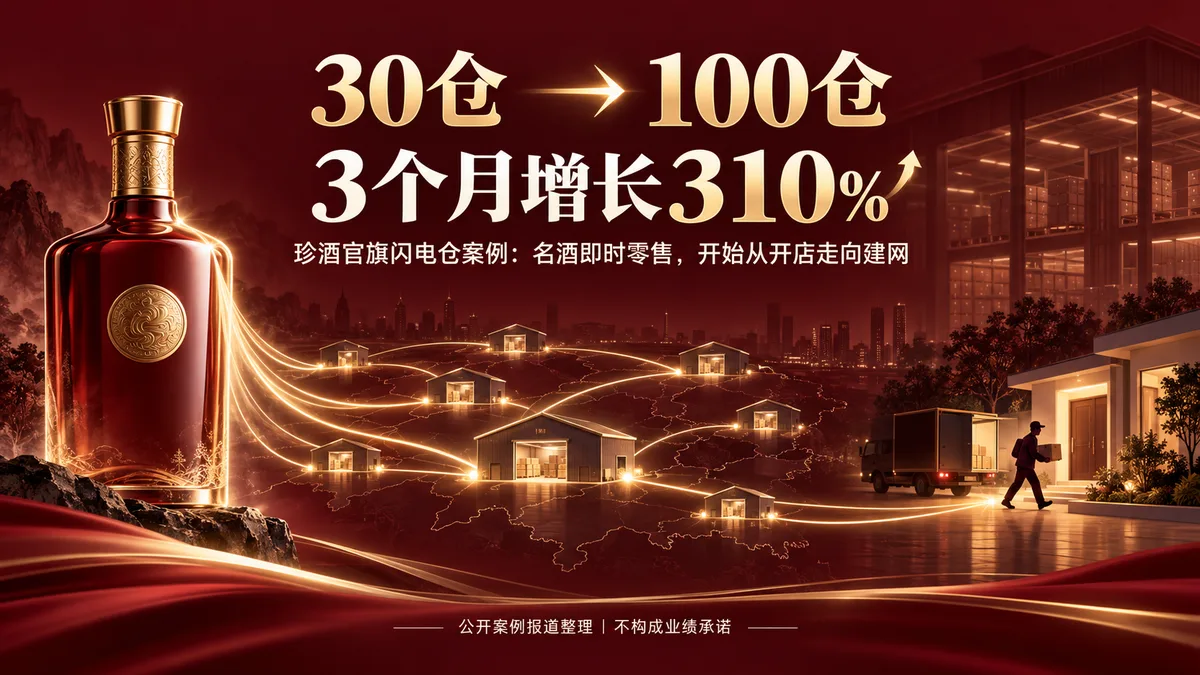
Zhenjiu’s Official Flagship Lightning Warehouses: Did a 310% Three-Month Growth Case Validate a Light-Asset Route for Premium Baijiu in Instant Retail?
At Meituan’s Instant Retail Industry Conference on September 22, 2026, a Zhenjiu case was presented: a 30-warehouse pilot expanded to 100 warehouses across core areas of 18 cities in three months, with sales revenue up 310% sequentially. Assortment reached 3.5 times that of comparable branded liquor stores, while per-store output reached 2.5 times. Premium baijiu’s instant-retail playbook is shifting from “list products on a platform” to “use a warehouse network to build local availability.”
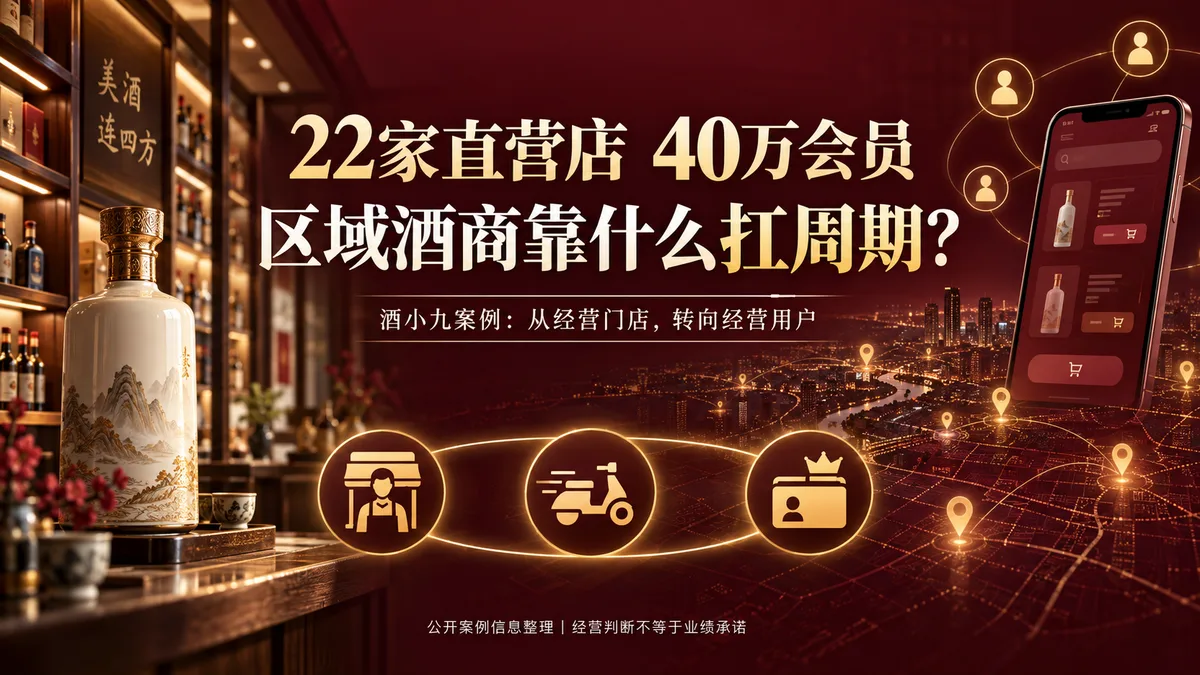
Jiuxiaojiu: 22 Directly Operated Stores and 400,000 Members — Why Regional Liquor Retailers Need to Own Customer Relationships, Not Just Add Stores
Jiuxiaojiu, a liquor retailer in Luohe, Henan, has built more than 400,000 registered users on its own app through 22 directly operated stores—roughly one-sixth of the city’s resident population. Trade-media reports say its revenue and profit both grew in January–August 2026, with private-domain operations and instant retail contributing to performance. The lesson is not simply to open more stores: use store associates to acquire customers, local fulfillment to retain them, and a membership system to turn transactions into durable customer relationships.
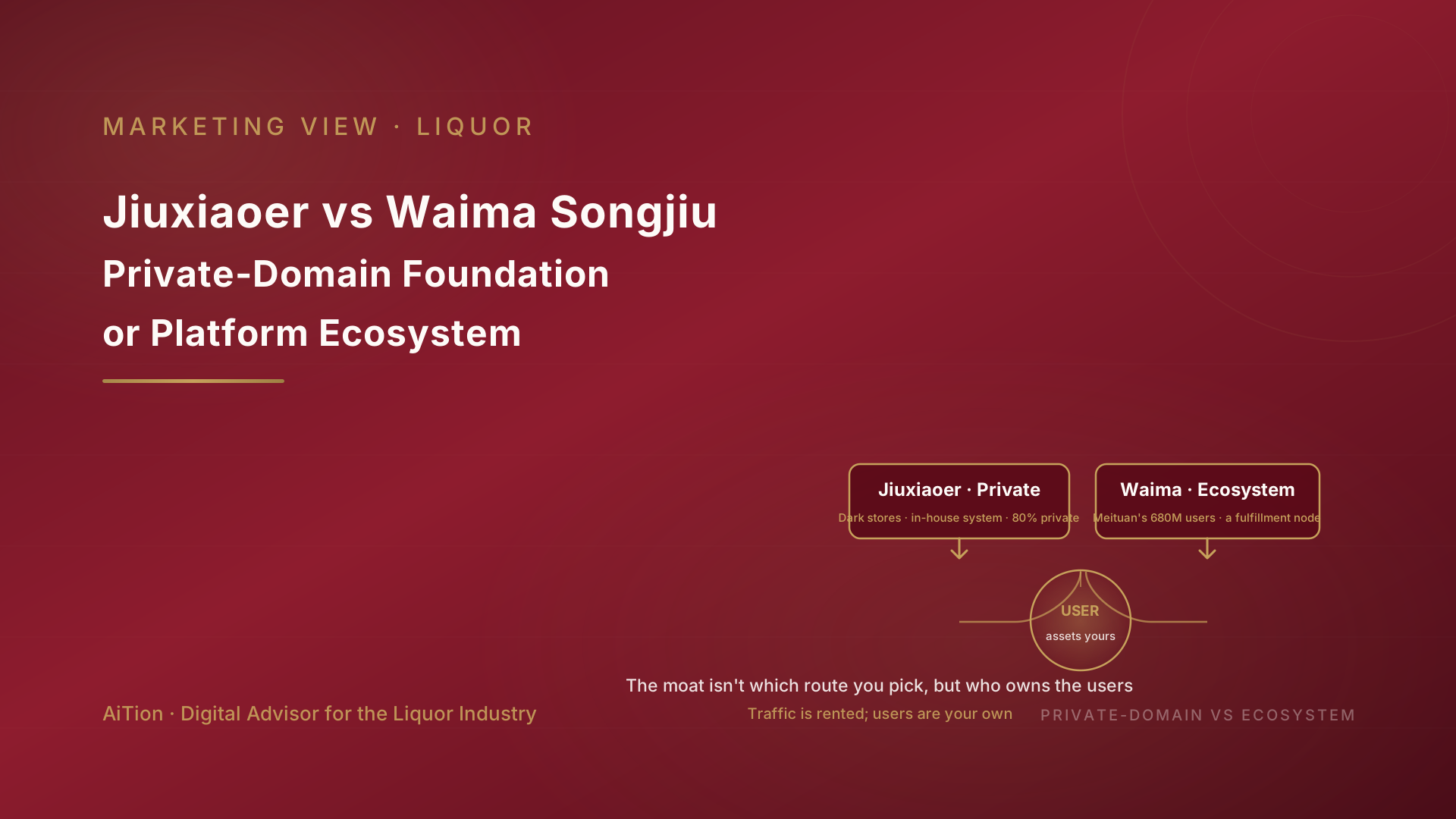
Jiuxiaoer vs Waima Songjiu: Private-Domain Foundation or Platform Ecosystem — Which Is More "Irreplaceable"?
Jiuxiaoer and Waima Songjiu have both crossed RMB 6 billion in GMV — one betting on private-domain, self-built operations, the other leaning on the Meituan ecosystem. This article takes a cool-eyed look at the two routes, and points out that a distributor's real moat is not which route they pick, but whether they manage to hold user assets in their own hands.
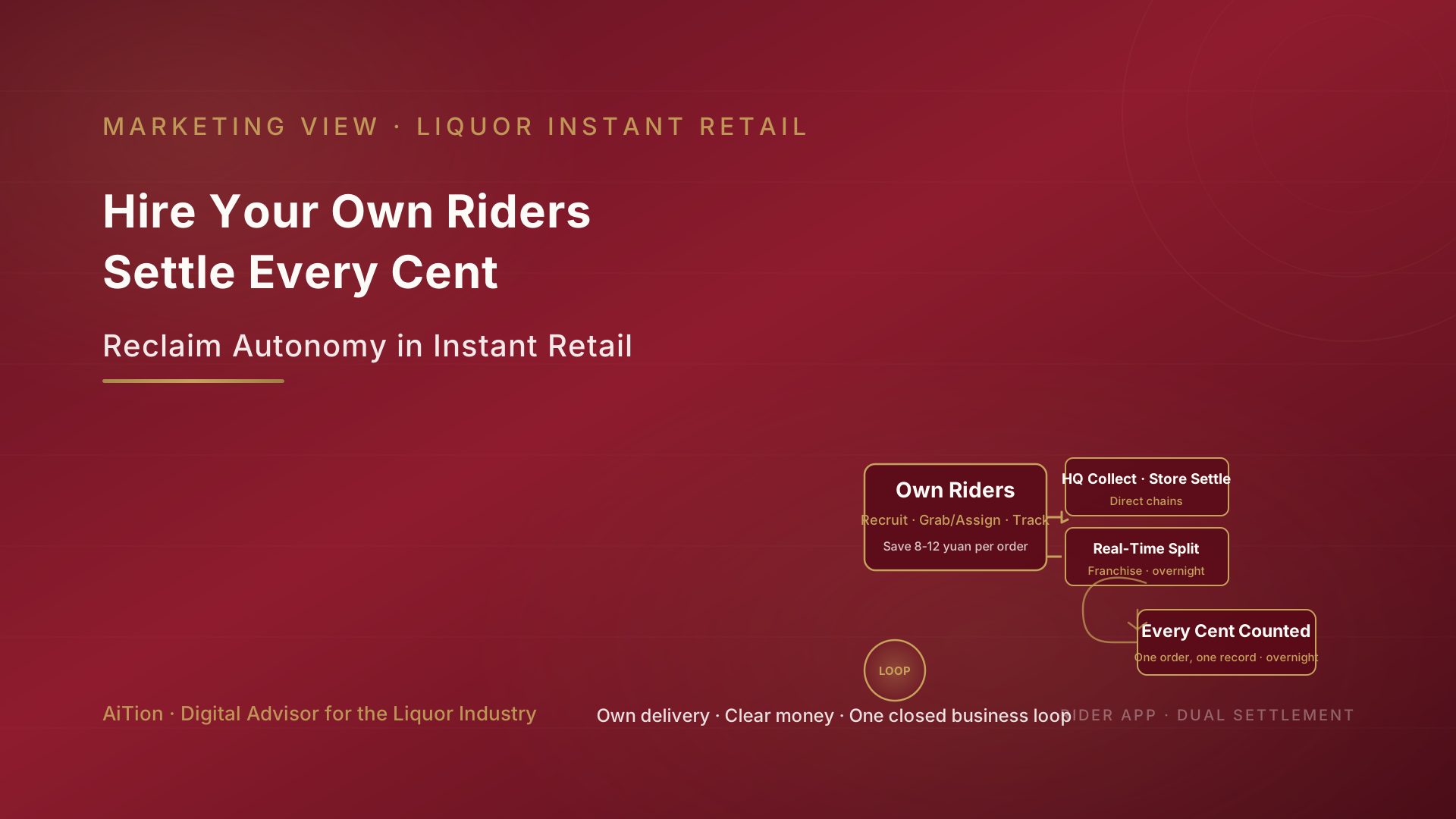
Hire Your Own Riders, Settle Every Cent, and Reclaim Autonomy in Liquor Instant Retail
After two or three years in liquor instant retail, many distributors find themselves working for the platform: the platform takes commission, the riders are not theirs to manage, and fund reconciliation is still done by hand. Version 2.1 of the instant-retail system launches a rider app and dual-mode fund settlement, helping distributors win back control over delivery and money. This article unpacks the upgrade logic and links the full picture through a single wedding banquet order.
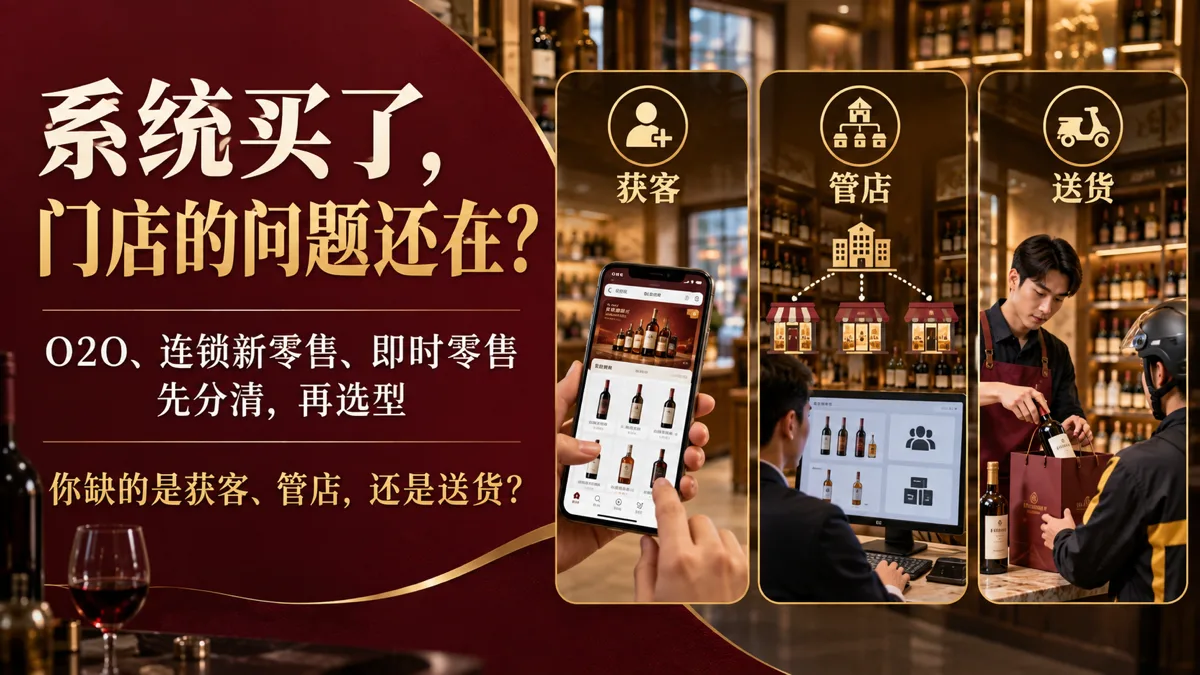
Stop Confusing O2O, Chain New Retail, and Instant Retail: How Should Alcohol Stores Choose a System?
People in the alcohol business have all heard terms like O2O, chain new retail, and instant retail, but they solve different problems: O2O solves "how customers find you," chain new retail solves "how to manage multiple stores together," and instant retail solves "how to get baijiu to customers as fast as possible." This article breaks down the core logic, applicable scenarios, and system capability differences of each concept, helping alcohol stores figure out whether they're stuck on customer acquisition, store management, or delivery before choosing a system—fix the shortest plank first.
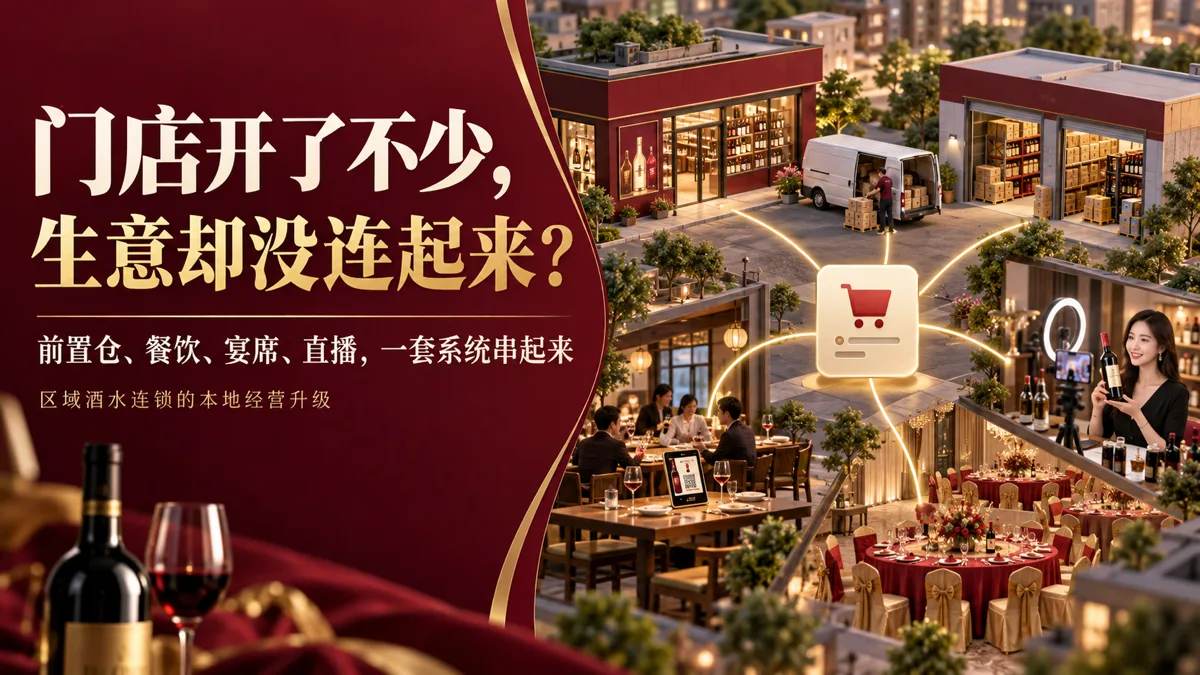
An Instant Retail System for Regional Alcohol Chain Enterprises: Localized Dark Stores, Restaurant Alliances, Hotel Banquets, and Private Domain Live Streaming
The local resources of regional alcohol chain enterprises—stores, loyal customers, restaurant and hotel relationships, delivery capabilities—become more valuable in the instant retail era. This article breaks down how a single instant retail system turns scattered local resources into an operating network: localized dark stores bring orders closer to customers, restaurant alliances turn dining venues into alcohol entry points, hotel banquet processes no longer rely on manual tracking, private domain live streaming helps customers understand before buying, and unified headquarters management keeps stores running smoothly. Six types of enterprises are suited for this model, the core being transforming relationship- and experience-based business into clearer, more stable, and replicable operations.
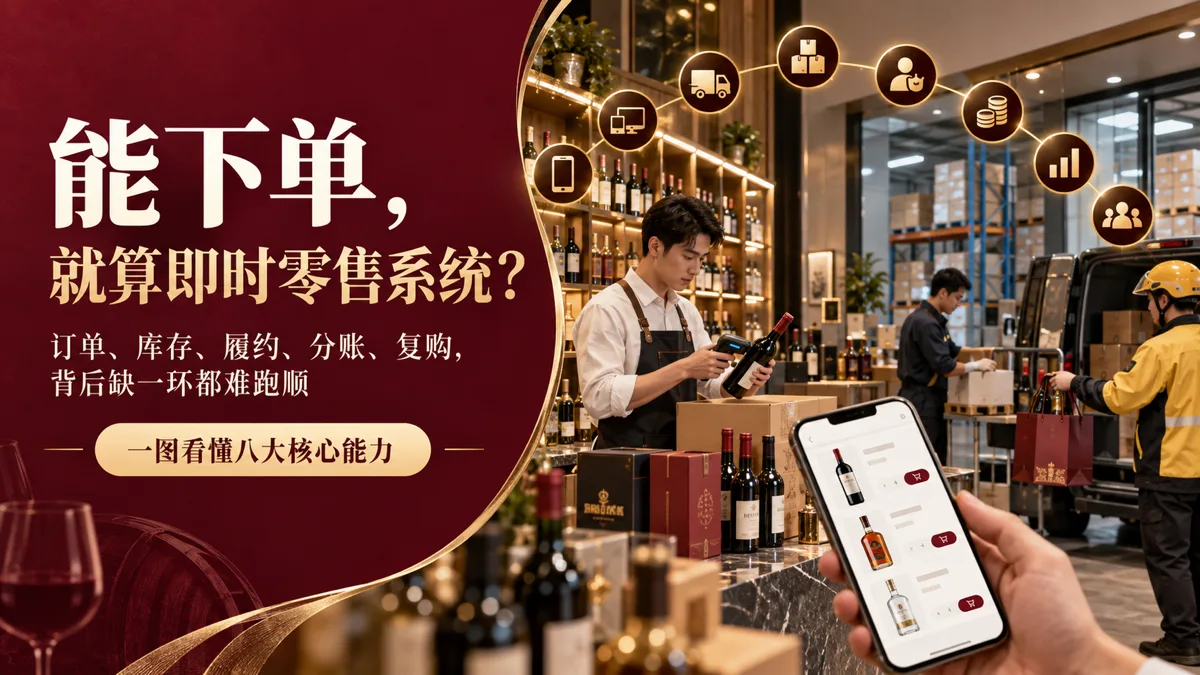
Understanding the Eight Core Capabilities of an Alcohol Instant Retail System
An alcohol instant retail system is, at its core, a digital operating system built around store and dark store fulfillment. This article systematically breaks down eight capabilities—from mini-program order management, platform order unification, store fulfillment, inventory and replenishment, membership and marketing, fund splitting and settlement, data analytics, to enterprise WeChat SCRM—explaining what problem each solves and how it lands, helping alcohol merchants understand the complete capability map of an instant retail system.
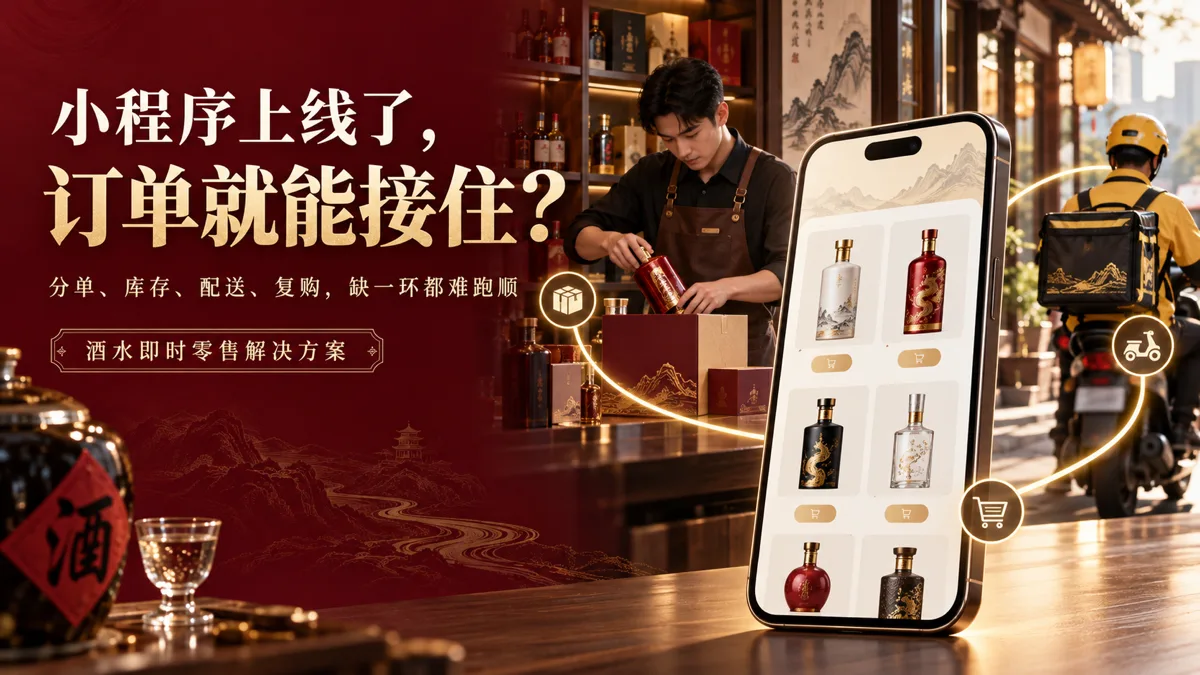
Alcohol Instant Retail Solution: From Mini-Program Ordering to Same-City Delivery, Helping Alcohol Merchants Connect Sales, Fulfillment, and Repurchase Loops
Alcohol instant retail isn't just a delivery problem—it's a system problem spanning online customer acquisition, store fulfillment, inventory coordination, same-city delivery, and member repurchase. This article breaks down six dimensions—entry, order dispatch, inventory, delivery, operations, and scenarios—to show how alcohol merchants can connect sales, fulfillment, and repurchase into a closed loop.
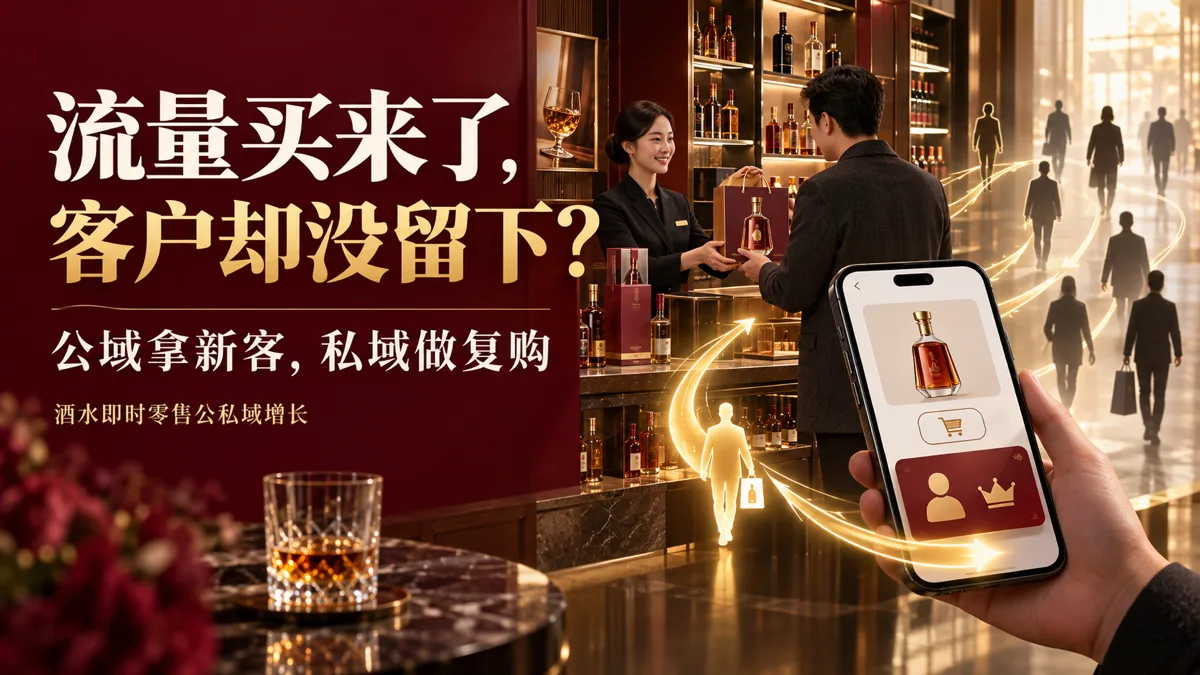
Alcohol Instant Retail: Public-to-Private Domain Growth—Acquire New Customers in Public Domains, Drive Repurchase in Private Domains
Alcohol sales growth can't rely on waiting for customers to walk in. User purchase paths have changed—alcohol merchants need to organize public-domain acquisition, private-domain repurchase, mini-program transactions, and store fulfillment into a sustainable operating loop. This article breaks down the public-to-private growth playbook across eight dimensions: public-domain entry, private-domain capture, scenario segmentation, mini-program transactions, campaign design, store delivery, business-type strategies, and a six-step implementation roadmap.
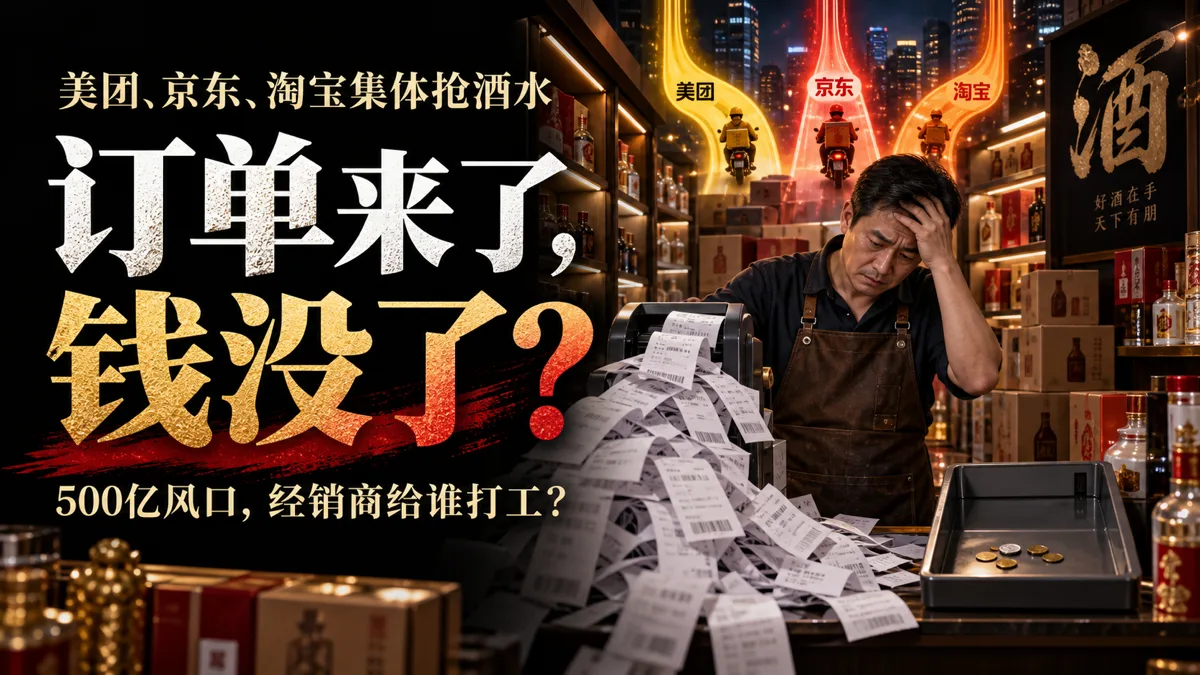
Meituan, JD, and Taobao Enter Alcohol Retail: Behind the 50-Billion-Yuan Instant Retail Trend, Are Traditional Distributors Cannon Fodder or the Closest Link to the Consumer?
The colder baijiu sell-through gets, the more aggressively platforms fight for alcohol. That sounds harsh, but this Spring Festival's data speaks for itself. In Chengdu, someone ordered a bottle of Wuliangye on Chinese New Year's Eve and had it delivered in twenty minutes. Meituan reported that from New Year's Eve through the seventh day of the Lunar New Year, county-level alcohol instant retail orders grew 30% year-over-year, with baijiu and Western spirits doubling outright. You might think the trend has arrived. The more I watch, the more this looks like a reshuffling—not an expansion.