
Industry Insights
Independent, sourced analysis of China's liquor industry — policy, channels, marketing and consumer trends, one real business question per piece.
开瓶才给钱:酒厂这招,经销商得看懂
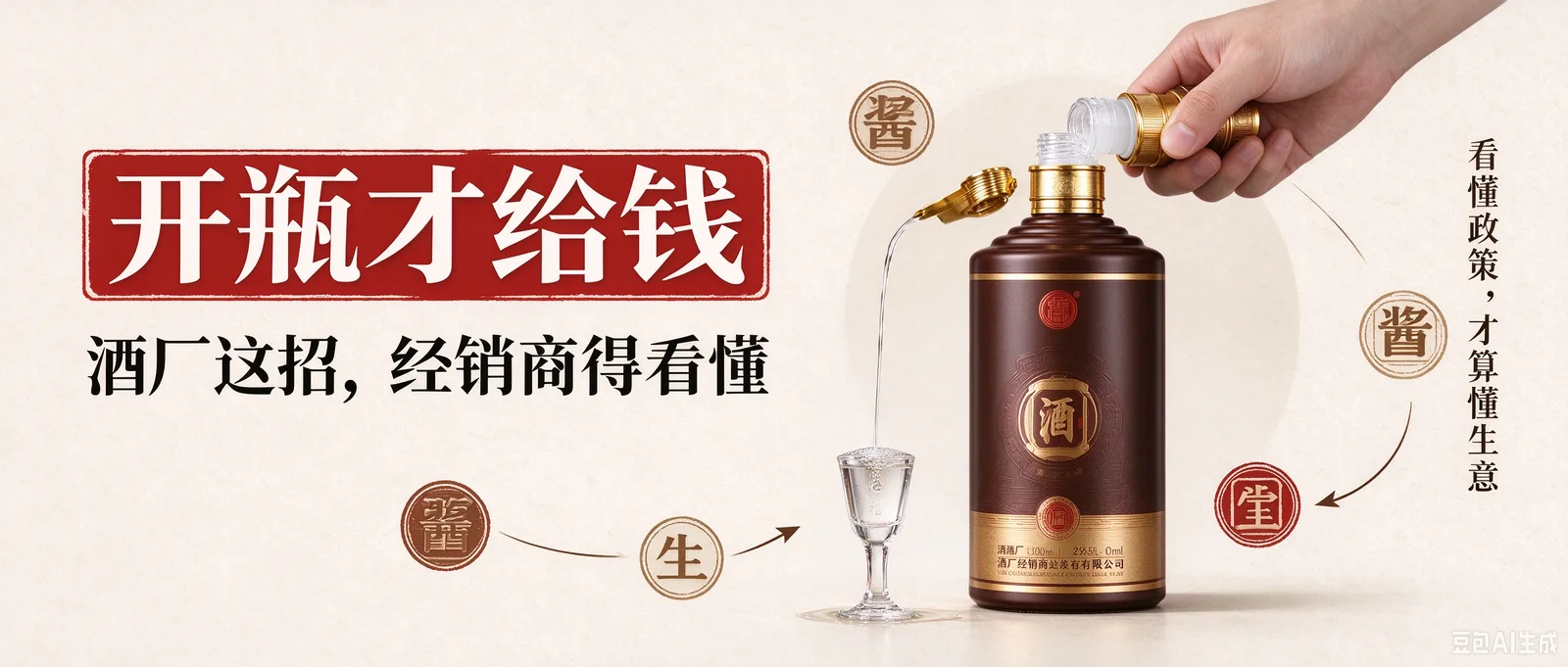
中秋前,洋河、汾酒、国窖、五粮液集体开瓶扫码发红包。但红包必须开瓶才生效——酒厂买的不是你的库存,是开瓶率,是"谁是客户"这个答案。这一层想通了,就知道门店该干什么了
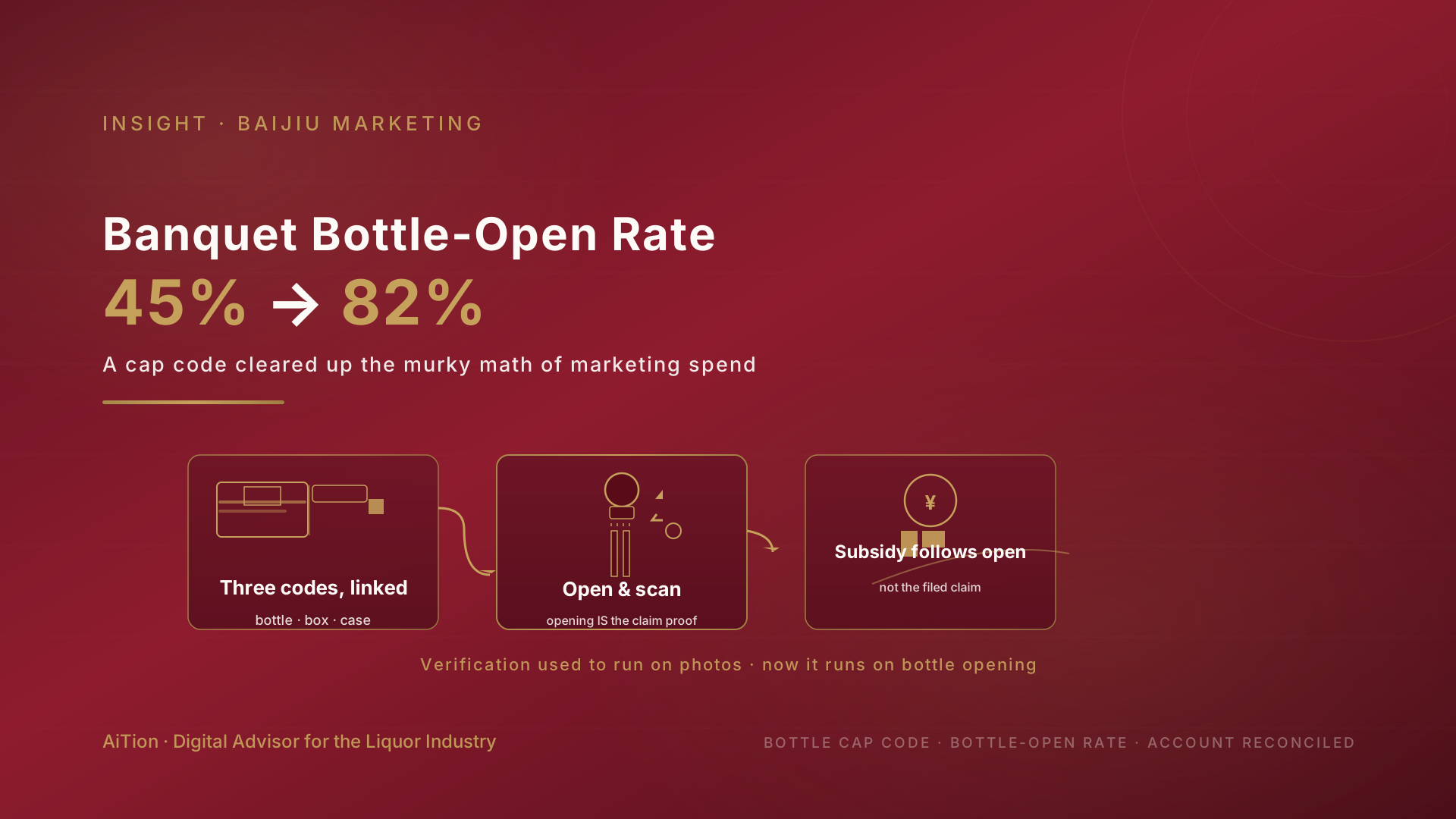
From 45% to 82% Bottle-Open Rate: How a Cap Code Cleared Up the Murky Math of Liquor Makers' Marketing Spend
Traditional liquor makers verify banquet subsidies with photos, snapping empty bottles, table counts, and banners in one go, so the real bottle-open ratio sits far below what the report figures claim. This article breaks down how a "cap code" (a code on the bottle cap) swaps the verification basis from photos to actual bottle opening — subsidy follows the opened bottle, not the filed claim. Named data from Wuliangye, Jiugui, Tanjiu, and Yanghe lines up one by one, and one undisclosed maker pushed its banquet bottle-open rate from 45% to 82%. Once the accounts are settled, as who wins and who chafes recalculates; and two buckets of cold water — the scan rate and the red-packet size — still have to be balanced.
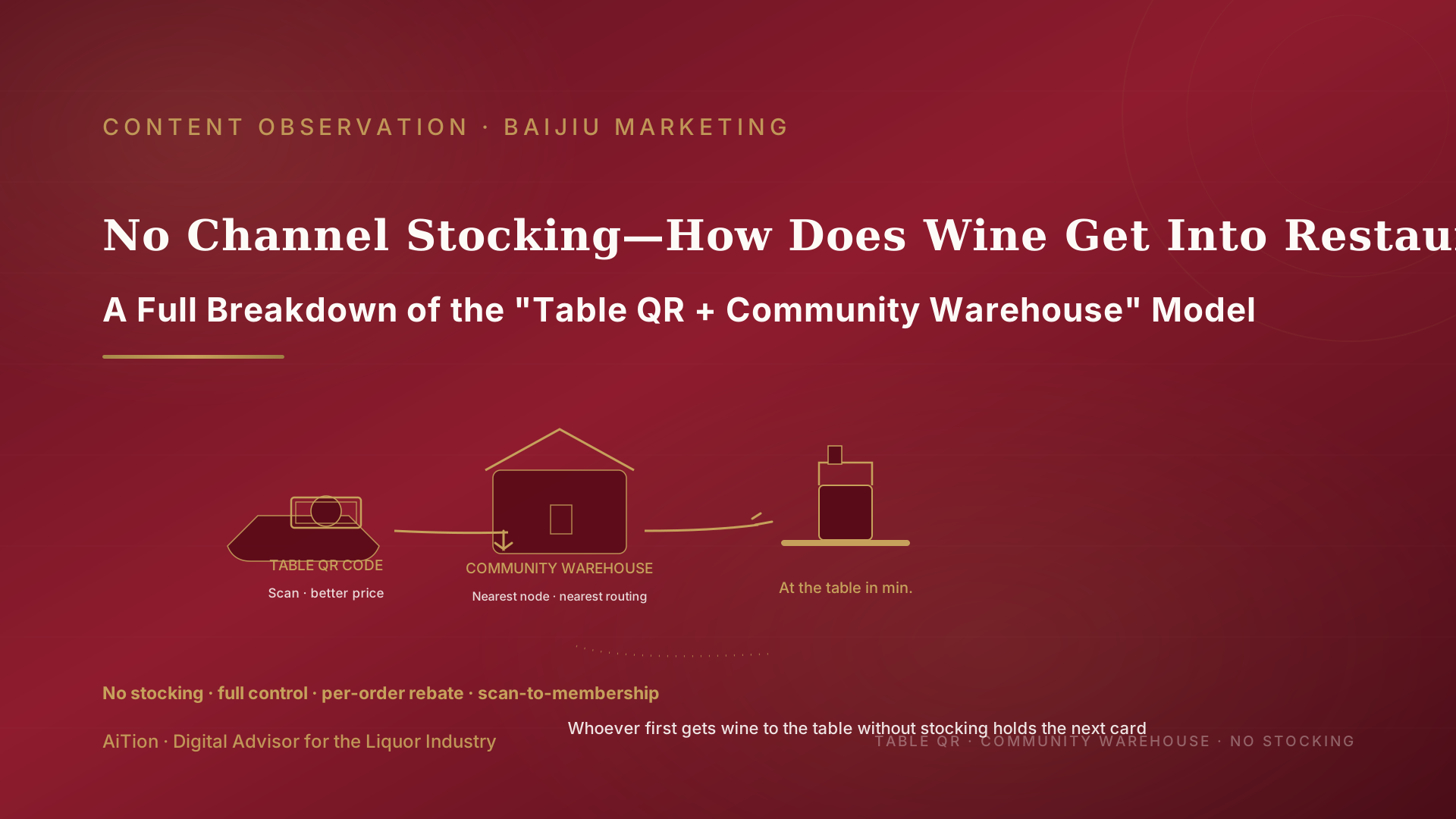
No Channel Stocking, How Does Wine Get Into Restaurants? A Full Breakdown of a Working "Table QR + Community Warehouse" Model
When distributors and stores begin collectively saying "no" to channel stocking, and stock piles up in the distillery as the most stinging reality for regional liquor makers, some people switch to a different playbook: no longer force inventory onto distributors, but open a storefront of their own, spread low-cost community warehouses, and place a QR code on each restaurant table—diners scan, the system auto-locates the nearest community warehouse, and the wine reaches the table within a dozen minutes. This article fully breaks down the "table QR + community warehouse" model—how four roles each get what they want in a zero-inventory closed loop, how it casually unties the "no outside liquor allowed" knot, five traps that can bury you, and its true value: swapping the growth yard-stick from "volume shipped" to "bottle-open rate."
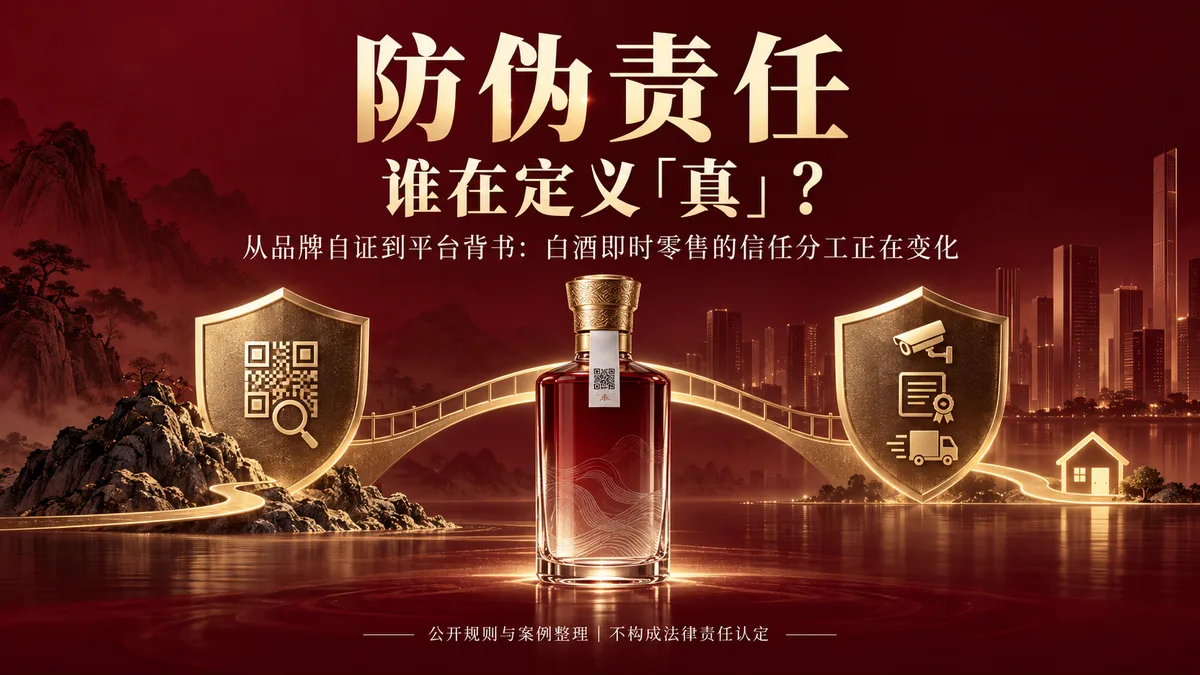
From Brand Self-Authentication to Platform Assurance: How Responsibility for Baijiu Authenticity Is Being Reallocated
On September 24, 2025, Meituan Flash Purchase announced an instant-retail, full-chain authenticity-assurance system with ten or more leading baijiu brands. Its related “real-photo-before-shipment” rule requires merchants to send product photos before dispatching baijiu priced above RMB 300. Platform safeguards are becoming more prominent, but product authenticity, brand-side verification and consumer-relationship operations remain responsibilities that brands cannot abandon.
Gujing and Kouzi Both Opened "Dajiu Pu" Liquor-Dispensing Shops—Is Baijiu Turning into a Bubble-Tea Shop?
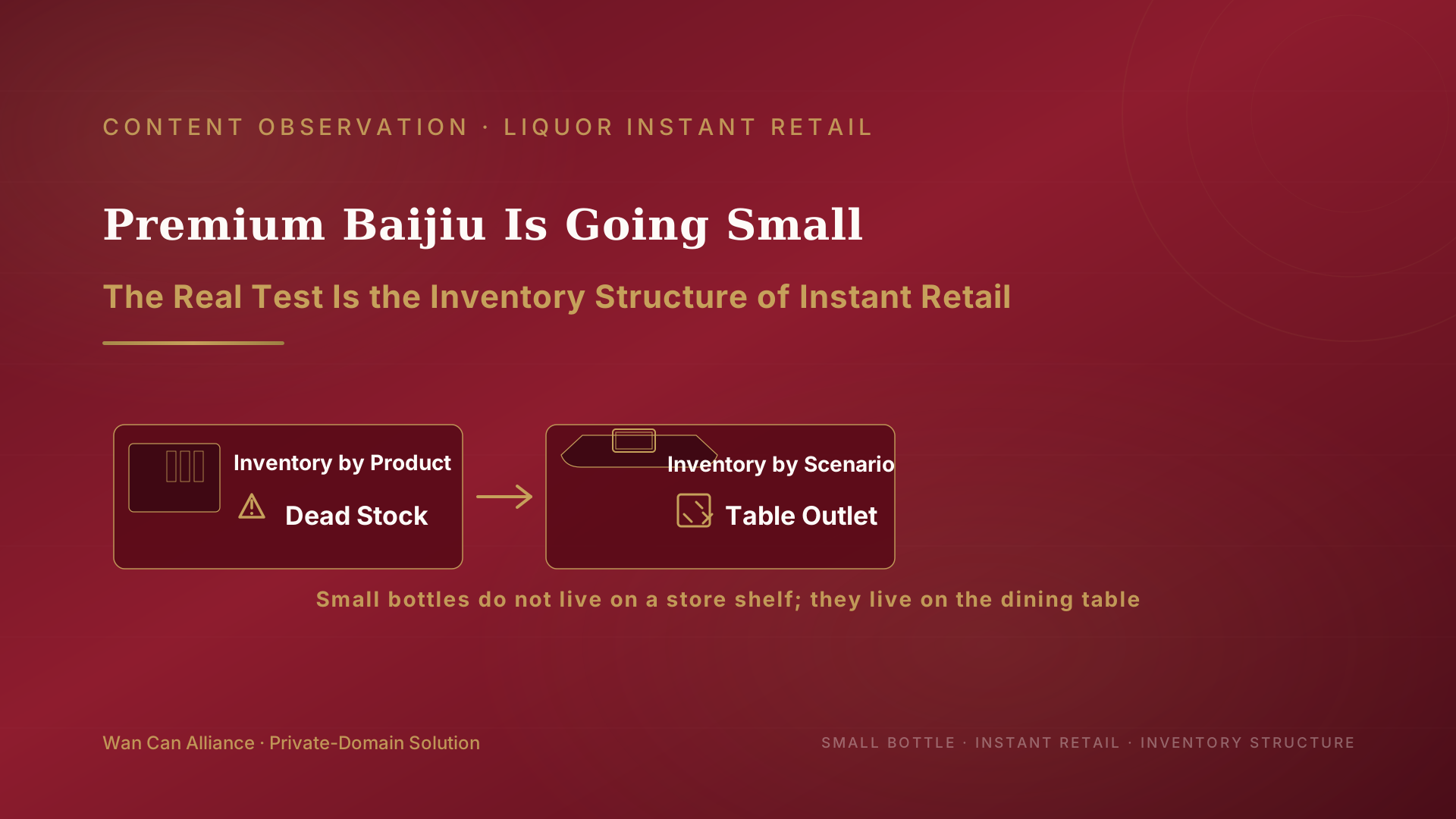
Baijiu is going through a "scenario downgrade": from drinking only over a full table of dishes, to savoring a couple of sips when one person winds down at night. Gujing Gongjiu opened its "Gujing Dajiu Pu," Kouzijiao opened its first "Kouzi Jiufang" community store, and Sichuan Liquor Group, Dukang, and Yangshao all followed, charging by the liang and dispensing on the spot, with a store model that fuses the efficiency per square meter of a bubble-tea shop, the experience of a coffee shop, and the dark store of a convenience store. This article unpacks the instant-retail driver and the store's essence behind Dajiu Pu (recall-your-own liquor shops), argues that it earns not the spread but the "money of being close," and uses online ordering, inventory turnover, and member repurchase to turn "close" into "frequent."
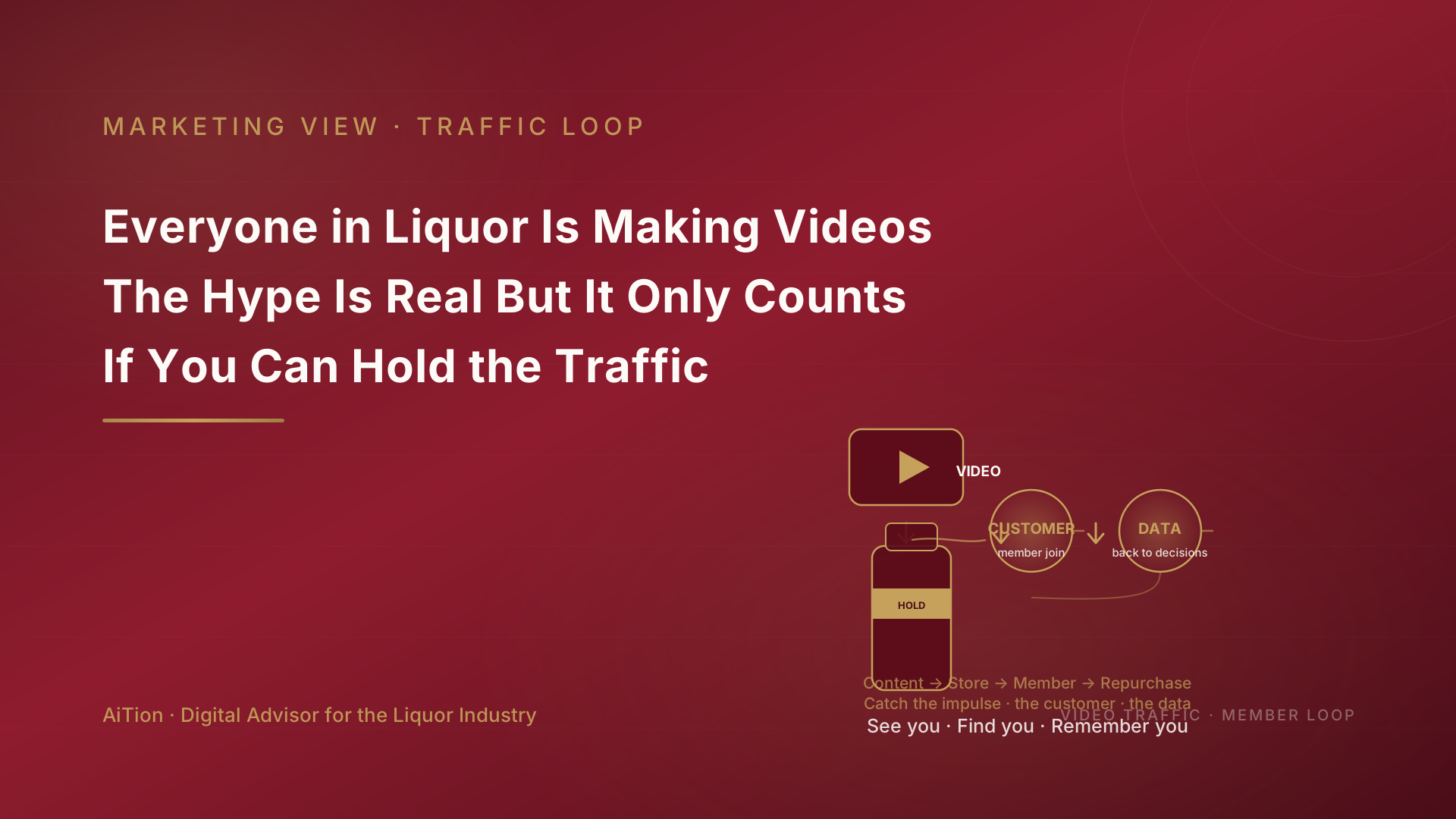
Everyone in the Liquor Industry Is Making Videos—The Hype Is Real, But It Only Counts If You Can Hold the Traffic
Founders of leading distilleries building their personal boss-IP, business teams making videos as an all-hands effort, and distilleries going downmarket to coach terminals on running same-city accounts—video has become an organizational behavior across the liquor industry. But the value of short video lies in the closed loop; a traffic matrix without member conversion and a store fulfillment system often ends with a lot of noise and zero lasting results.
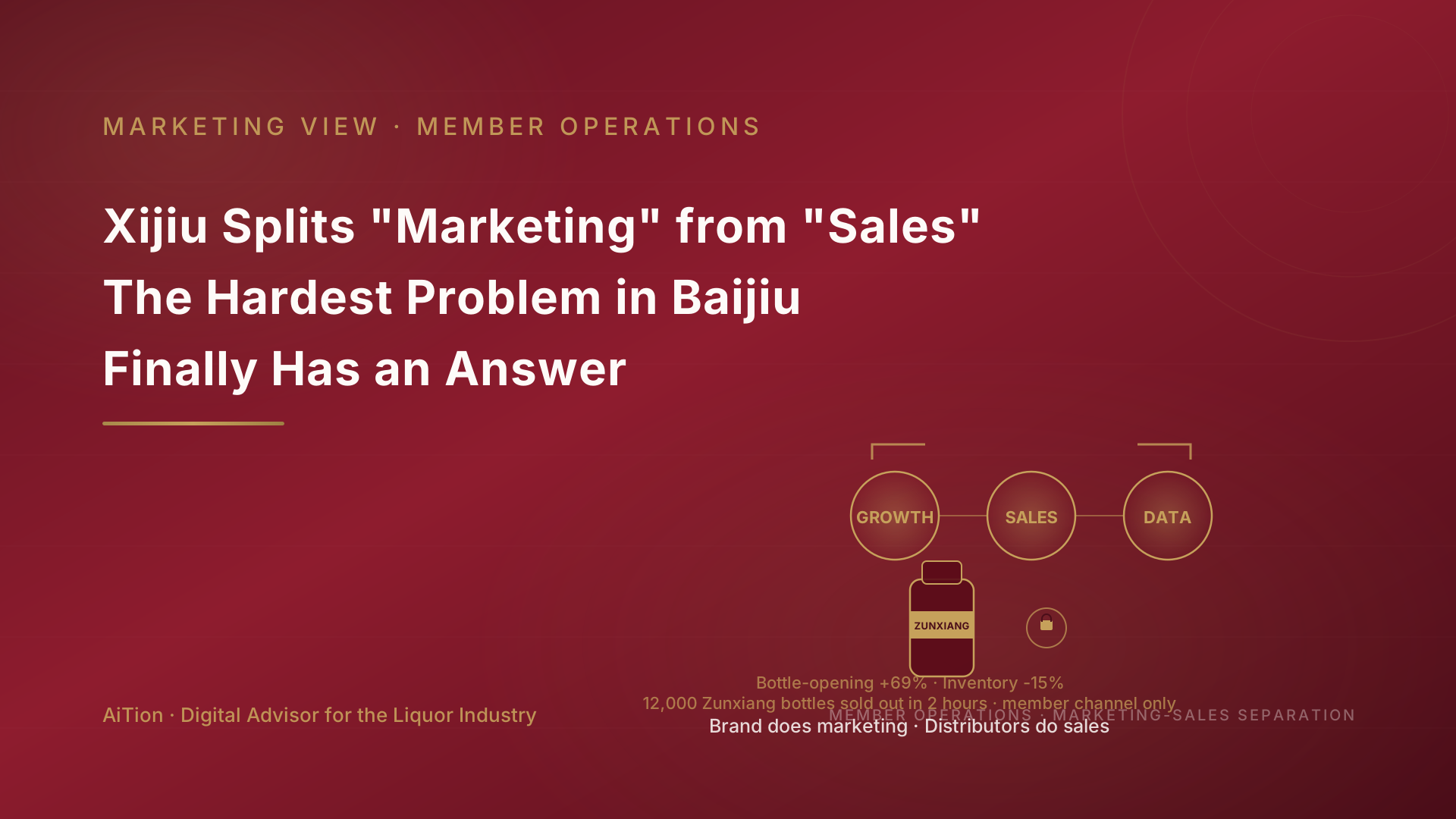
Xijiu Splits "Marketing" from "Sales": The Hardest Problem in Baijiu Finally Has an Answer
Through its Marketing 2.0 reform, Xijiu is advancing the moderate separation of "marketing" and "sales": the 719 Member Festival drew 330,000 participants, 12,000 bottles of Member Zunxiang member-exclusive liquor sold out in two hours, bottle-opening volume rose 69% year-over-year, and inventory fell 15%. This article looks at how Xijiu, with a three-center structure and products that never enter the open market, solves the industry's age-old problem of serving the C-end without cutting into the B-end's pie—so that brand, distributor, and consumer all win.
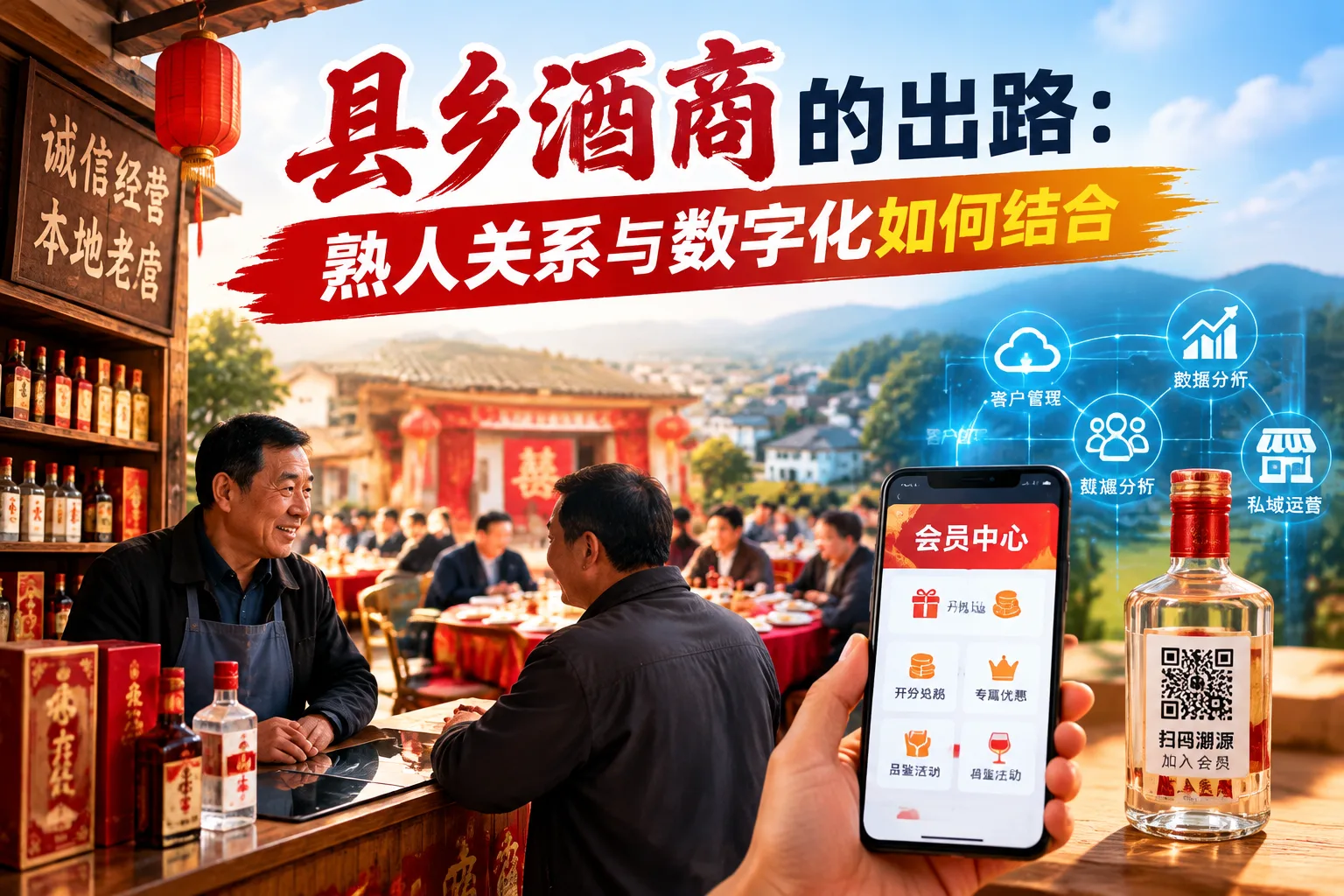
县乡酒商的出路:熟人关系与数字化如何结合
县乡酒商的生意根基在本地熟人社会的人情与信任,平台能用密度和算法覆盖城市,却难切动县域宴席、节庆、人情往来这些应景消费。数字化不是让县乡酒商成为平台的供货商、被抽佣和拿走客户数据,而是帮他们把手里本来的熟客关系,沉淀成可长期经营的客户关系。
Revenue Up 50% in H1: Why Does China Resources Beer Open an Exclusive Product Line Just for Jiu Xiao Er?
China Resources Beer and the instant-retail platform Jiu Xiao Er jointly launched three platform-exclusive custom products, and Jiu Xiao Er's first-half revenue growth approached 50%. The platform uses consumer data to define products in reverse, while the brewer handles R&D and production—a symbiotic model that is rewriting the rules of the liquor distribution channel. This article breaks down how distributors can shift from passive shelf-merchandising to actively running on data, and hold the ground of their local business.
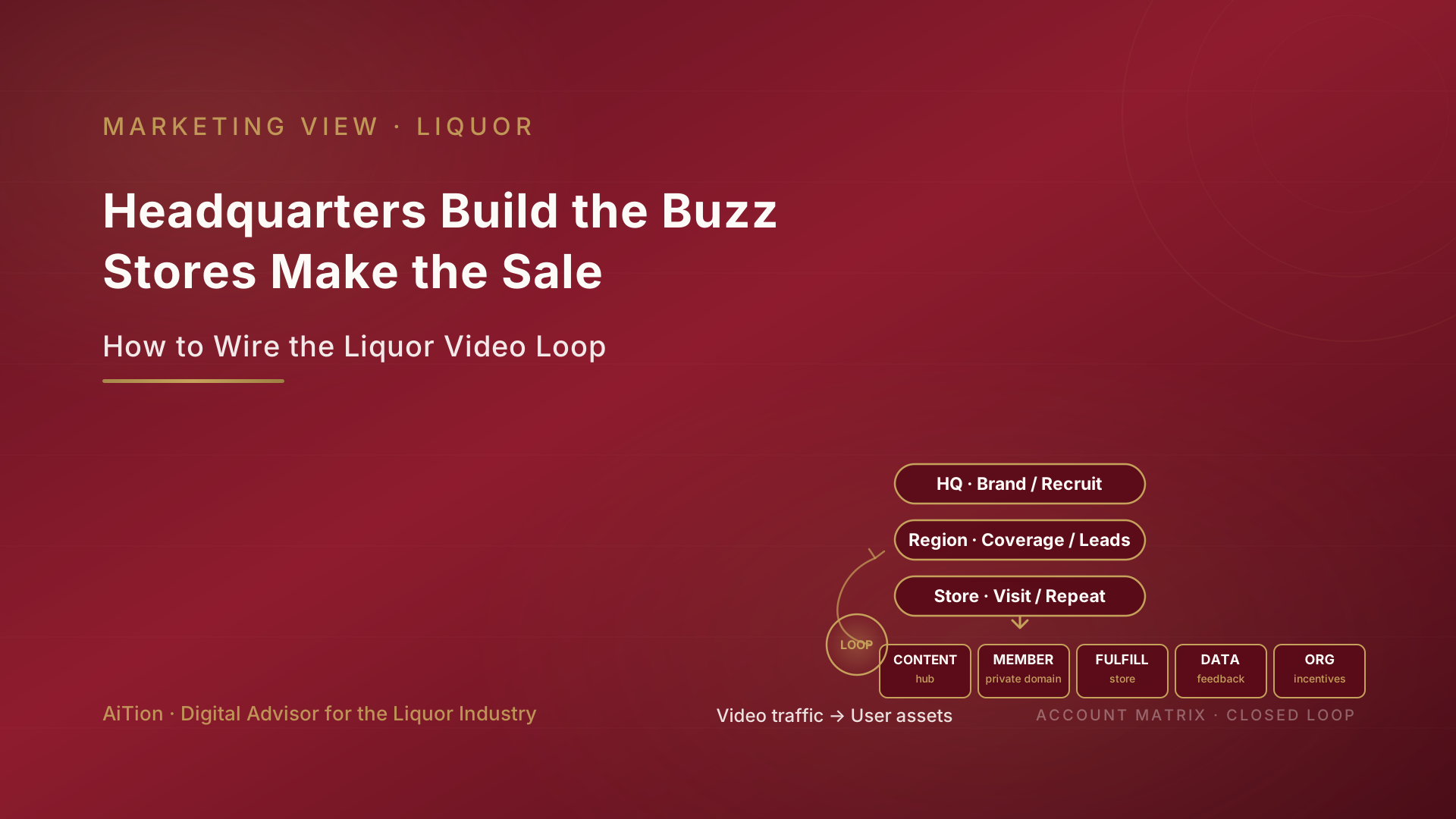
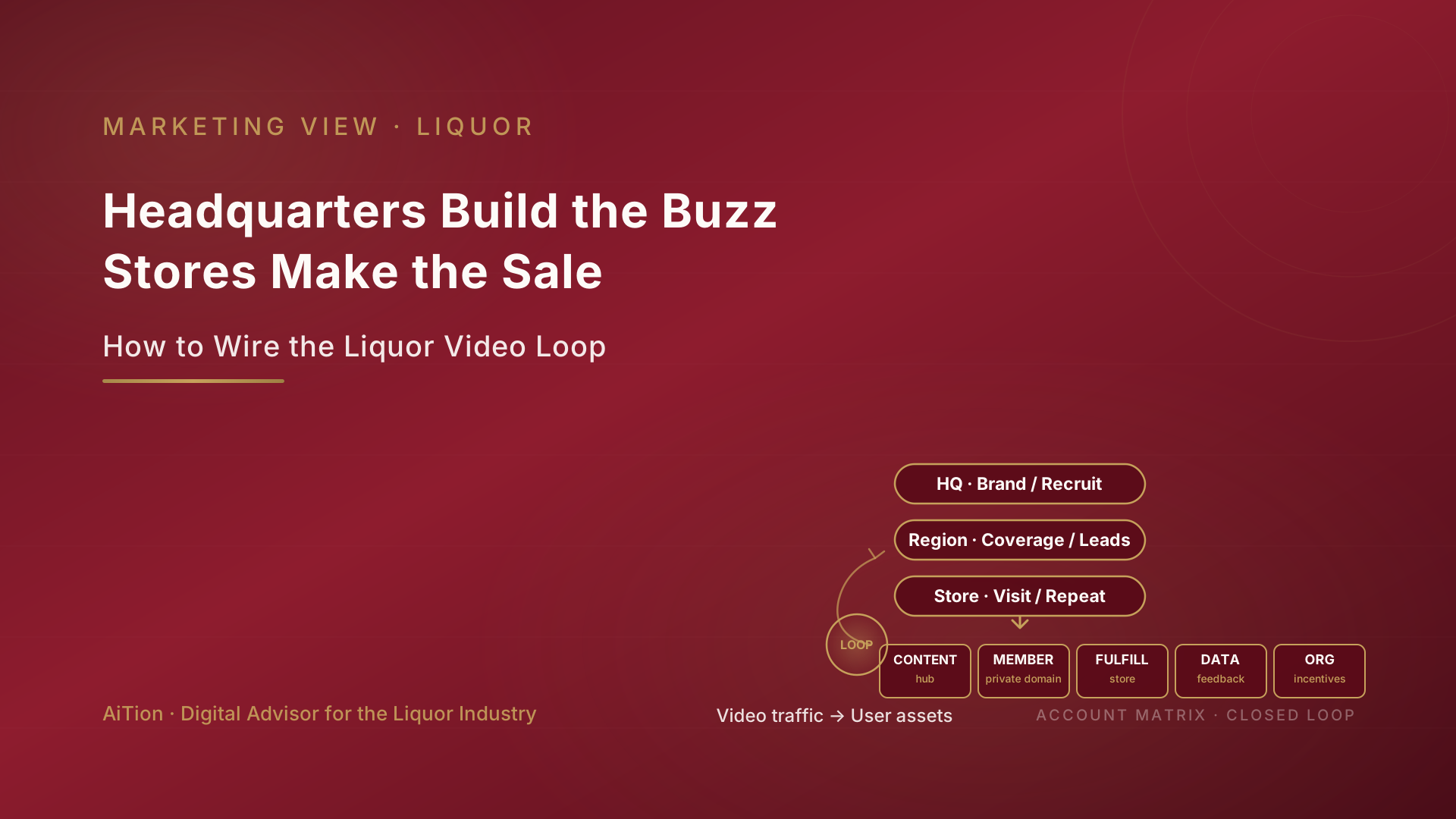
Headquarters Build the Buzz, Stores Make the Sale: That's How to Wire the Liquor Industry's Video Loop
Liquor video-ization has become an organizational behavior, yet most distilleries stall on "traffic with nowhere to go". This article proposes a three-tier account matrix (headquarters, regional, terminal) plus a five-layer infrastructure (content, membership, fulfillment, data, organization) as a complete solution, deployed through consulting with tool accompaniment to turn video traffic into repeatable user assets. It is a ready-to-follow playbook for both liquor brands and distributors.
When Distilleries Start Making AI Short Dramas, Baijiu Marketing Enters a "Content Arms Race"
In the first half of 2026, China's AI drama and animated-drama market hit RMB 22 billion, with Douyin adding 221,900 AI dramas and animated dramas in six months—roughly one every 13 minutes. Distilleries including Huanggou, Guangliang, Wuliangye, Hainan Coconut Island, and Pagoda Brand have all jumped into AI short dramas. But behind the hype, AI only lowers the barrier to making a drama; what decides whether audiences stay hooked is still the content itself. The real test for distilleries is turning the people who watched the drama into their own members—delivering follow-through and accumulating user assets through a "content–consumer–data" triple loop.