
Industry Insights
Independent, sourced analysis of China's liquor industry — policy, channels, marketing and consumer trends, one real business question per piece.
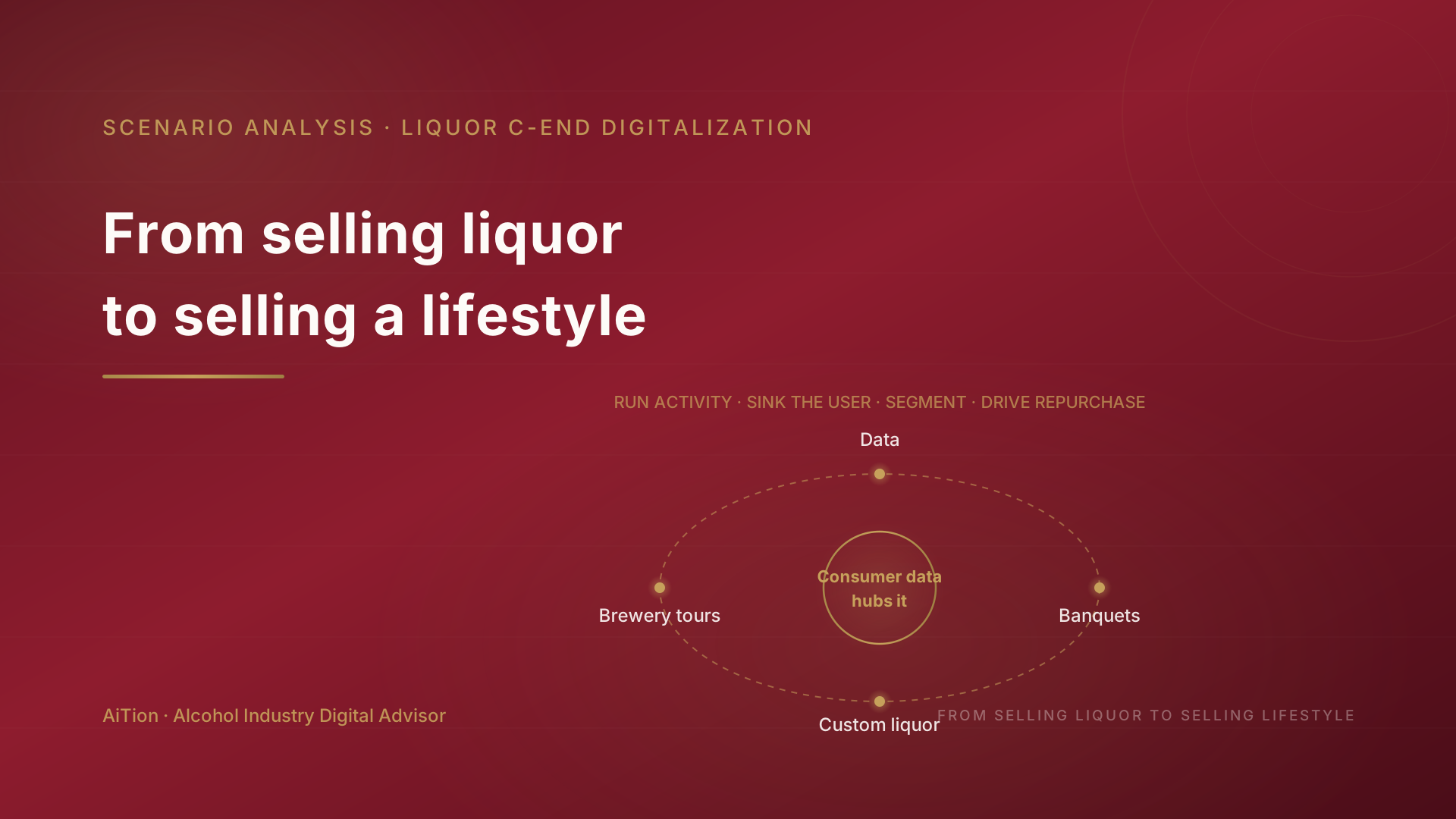
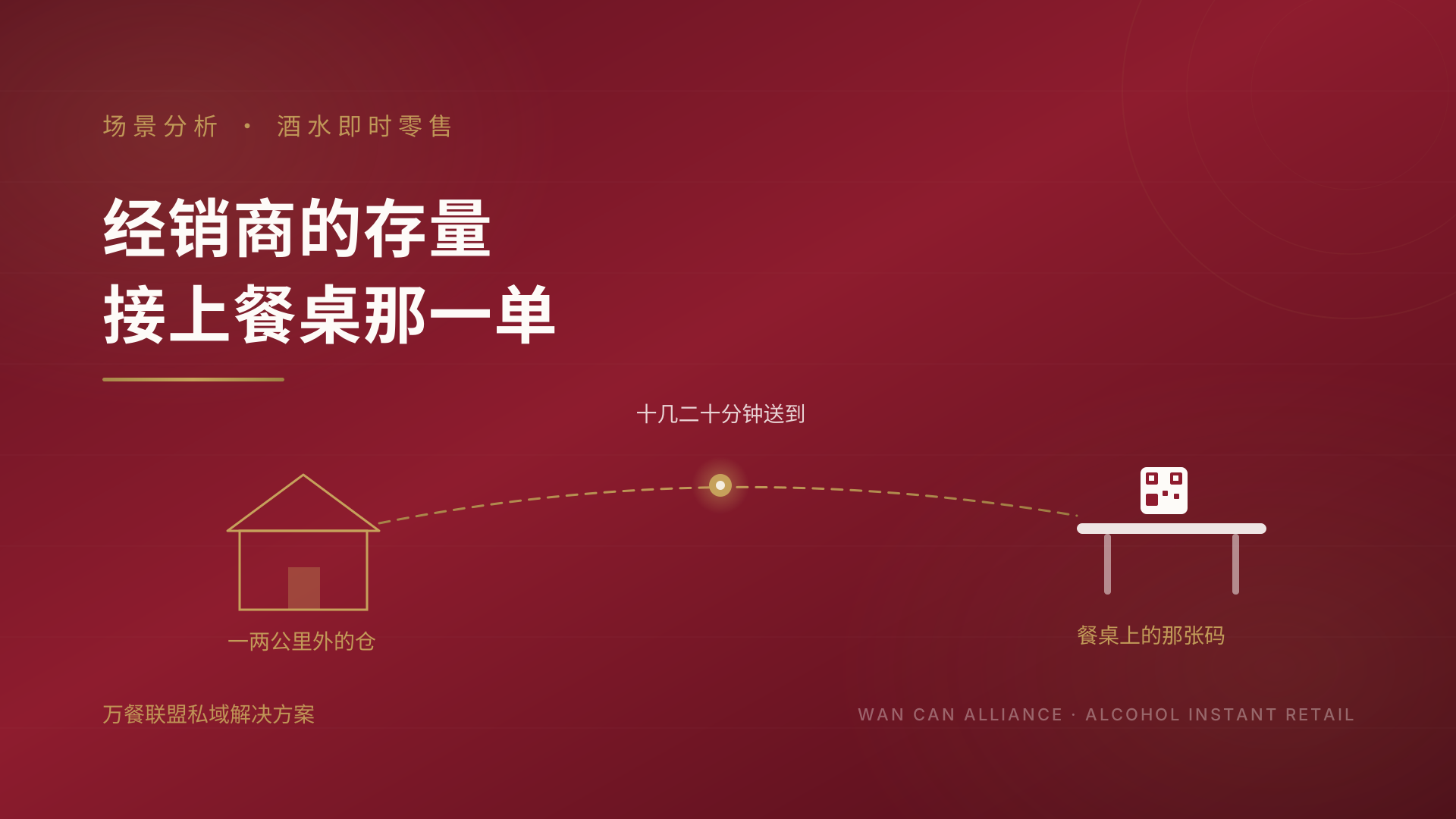
Instant Retail for Regional Distributors and Alcohol Supply Chains · The Wan Can Alliance Private-Domain Solution
Regional distributors face a clear situation: the price spread on famous liquor has been squeezed thin, and stocking outlets means fronting the goods and extending credit. But the warehouses, vehicles, outlets, SKU breadth, and local relationships in their hands are things no one else has. What the Wan Can Alliance does is connect that existing stock to the single order at the dining table.
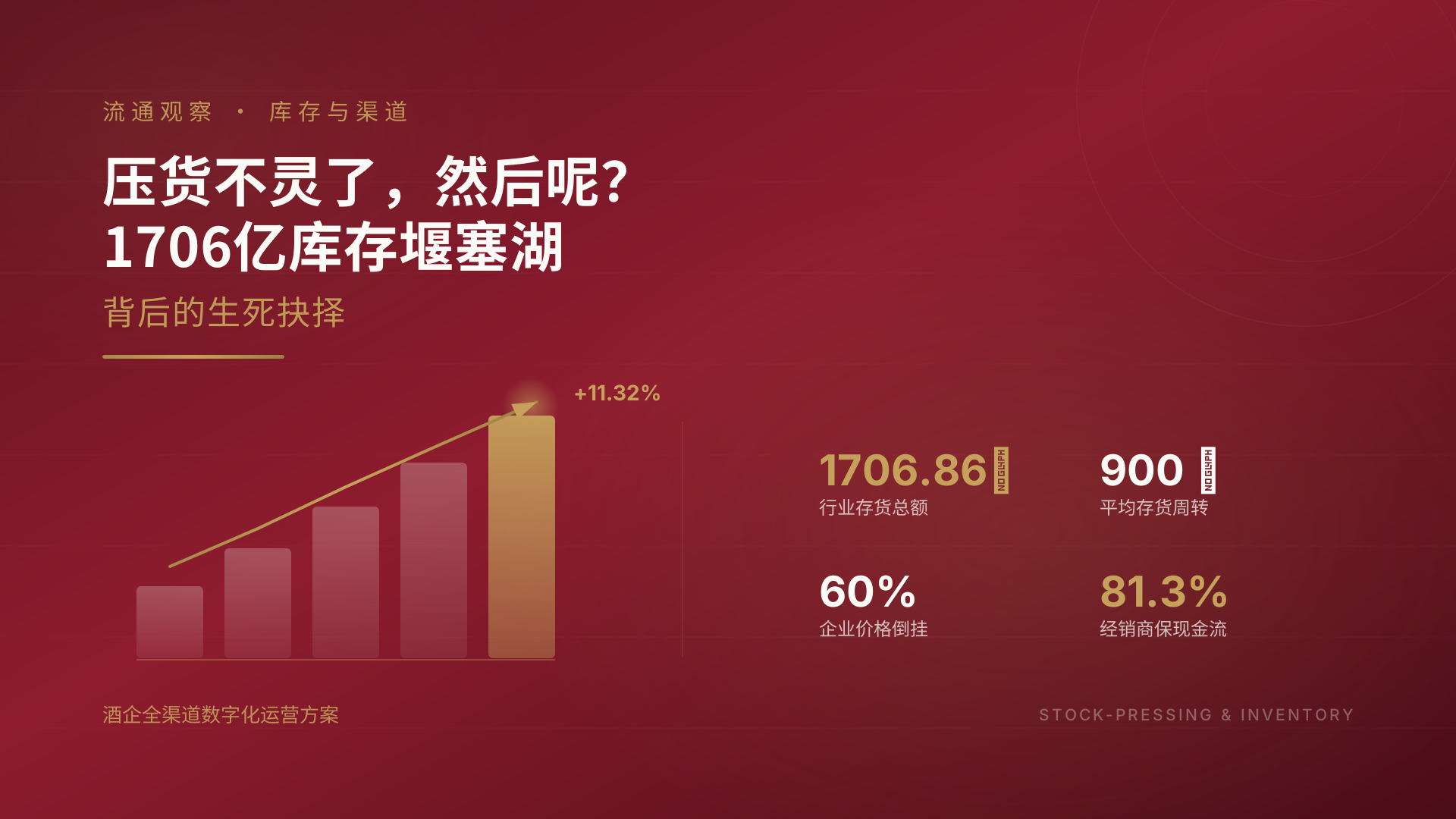
Stock-Pressing Doesn't Work Anymore. So What Now? — The Life-or-Death Choice Behind a 170.7-Billion-Yuan Inventory Barrier Lake
Total industry inventory stands at 170.686 billion yuan, up 11.32% year-over-year; average inventory turnover is 900 days, 60% of enterprises face price inversion, 58% of distributors still see rising inventory, and 81.3% of distributors list protecting cash flow as their core goal for the second half. The logic of the stock-pressing model no longer works—but the real question isn't whether it will return, it's that most distributors' cash flow can't survive twelve months. This article sorts through the collapse camp versus the cyclical camp and lays out three paths forward: brands helping channels sell goods to consumers, distributors shifting from stockpiling for margin to fulfillment and service, and manufacturer-distributor relationships being re-signed to share risk.
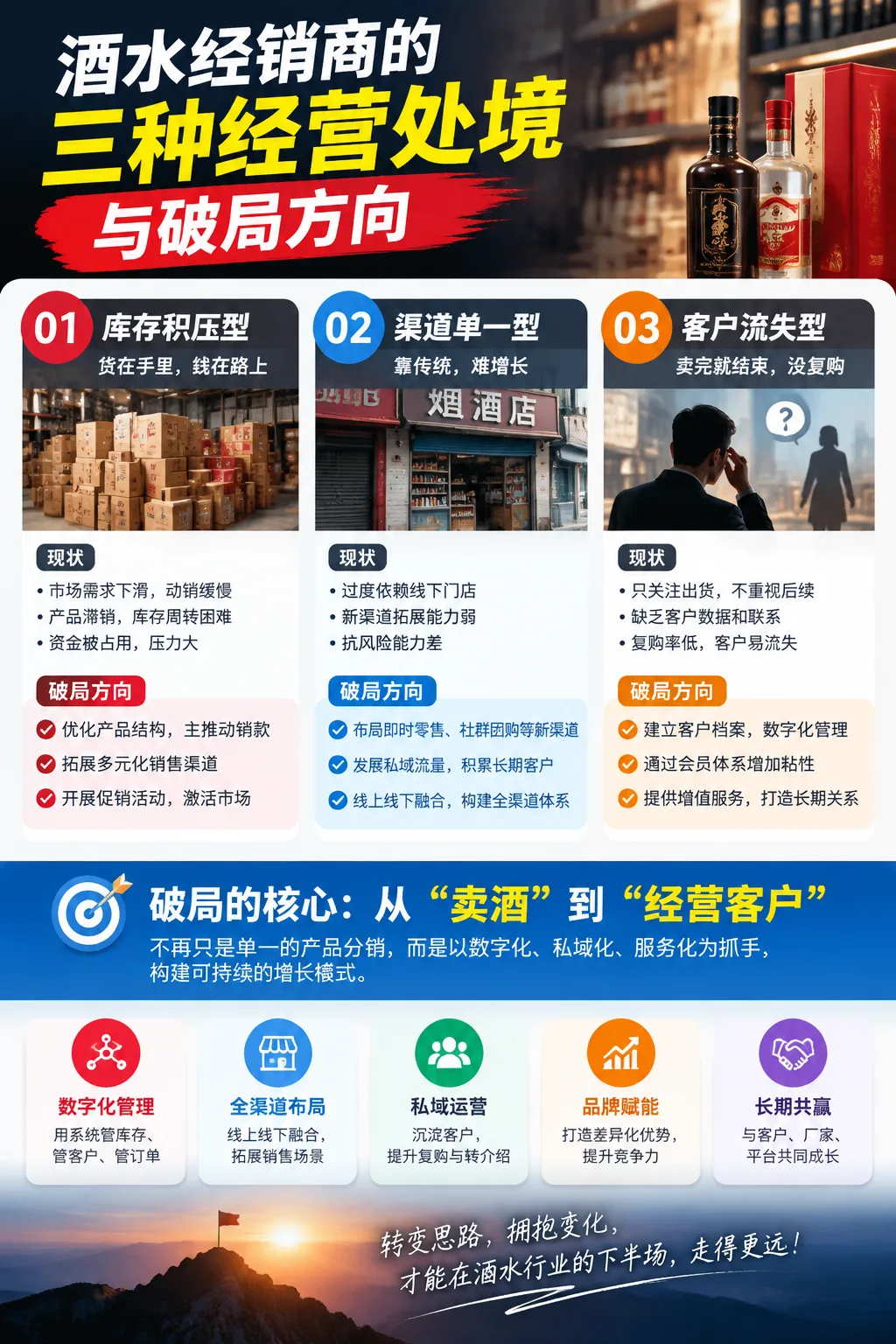
酒水经销商的三种经营处境与破局方向
做酒水这行,不少人的感受是货不缺但动销放缓。已有的货、资源、门店、老客户都没废,缺的只是一个能把它们接起来的工具,让它们从"压着的资源"变成"多出来的增量"。
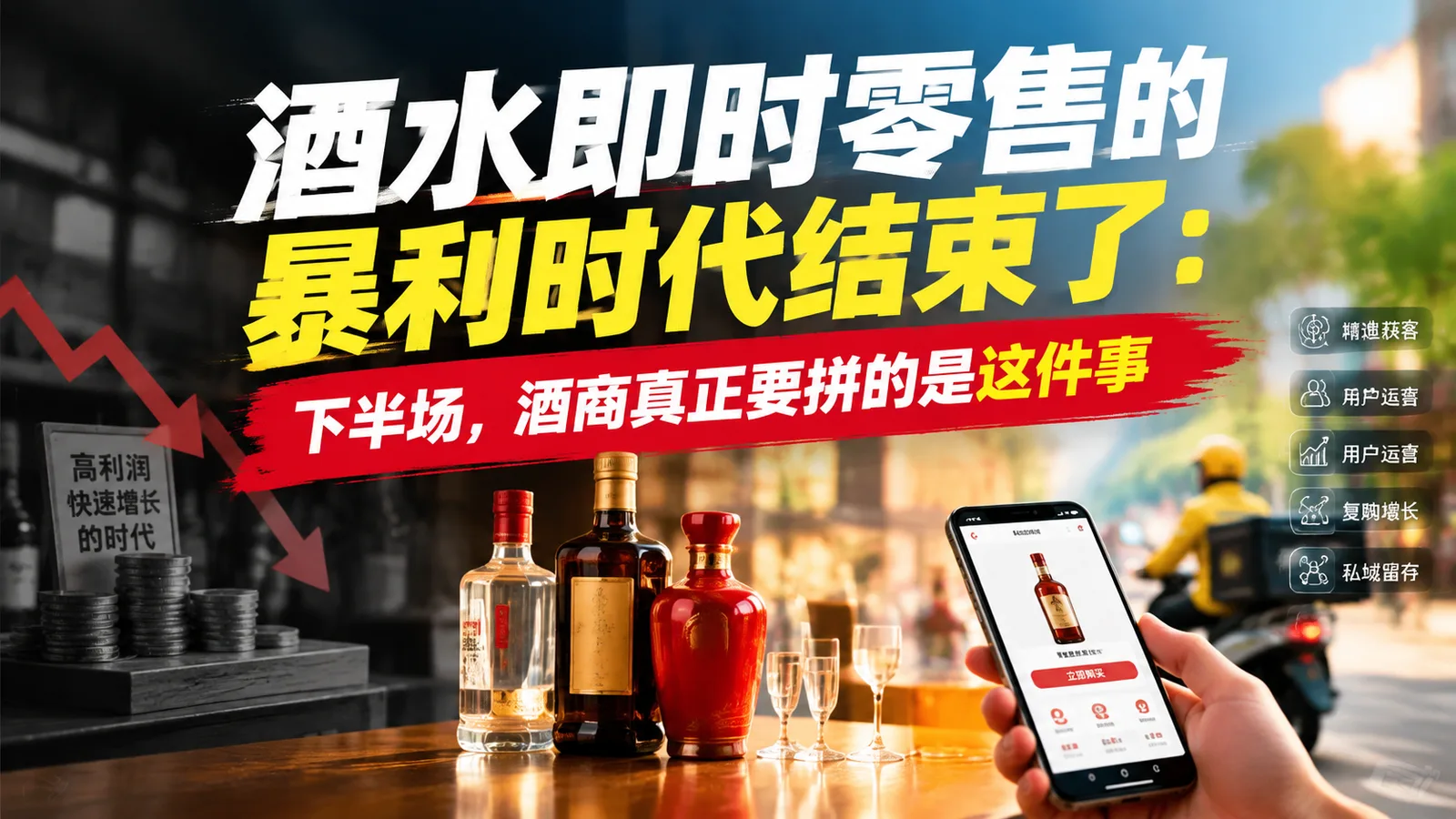
酒水即时零售的暴利时代结束了:下半场,酒商真正要拼的是这件事
我们做这套系统,不是为了帮谁钻平台补贴的空子,也不是鼓动你打价格战。那种靠黄牛套利、低价引流撑起来的虚假繁荣,迟早要塌。 我们想帮的,是踏踏实实做酒生意的老板。把正品保障做扎实,把履约效率做上去,把老客留在自己手里。这不是什么风口捷径,就是老老实实服务实体经济、让生意更健康一点。
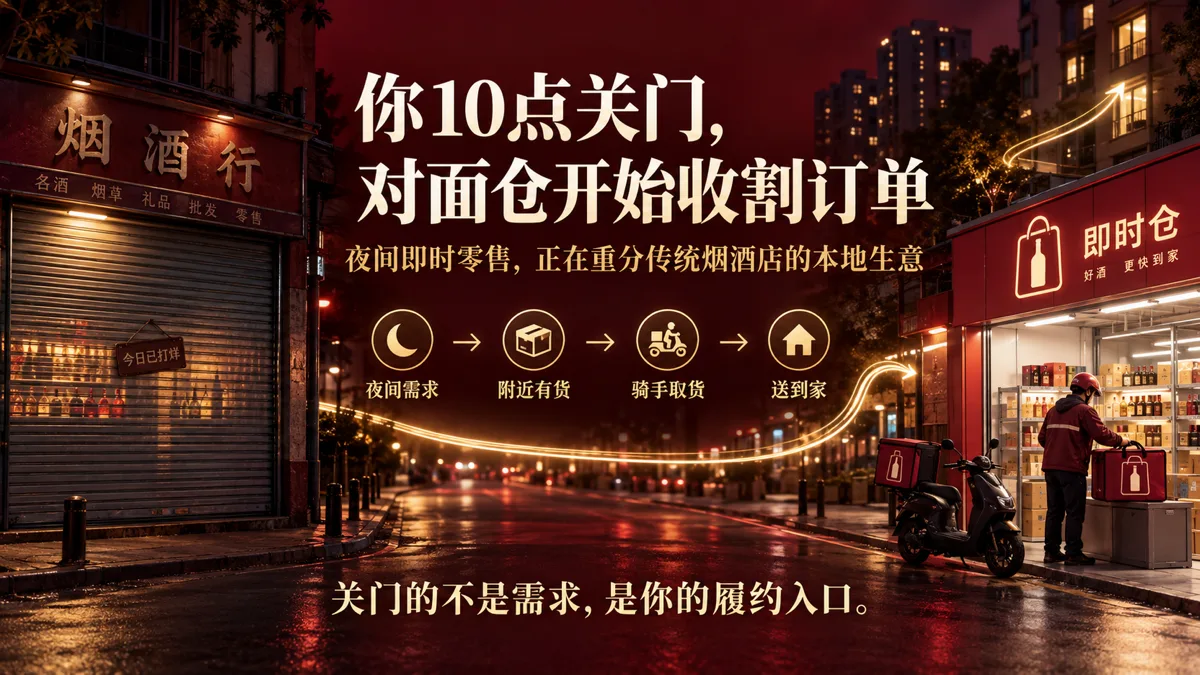
80,000 Lightning Warehouses × 2,800 Counties and Cities × 70% Night Orders: Is the Countdown Starting for Traditional Liquor Stores?
Instant liquor retail is shifting alcohol purchases from planned shopping to late-night replenishment, at-home gatherings, outdoor occasions, and last-minute gifting. Publicly reported data show that around 70% of liquor instant-retail orders on Meituan Flash Buy occur between 6 p.m. and 6 a.m., while 73% are delivered to residential communities. Liquor lightning-warehouse operations are also expanding quickly. This article does not treat “80,000 warehouses” as a universally verified current count. It treats the number as a signal of continuing expansion: for traditional liquor stores, the real challenge is not one more online channel, but a redistribution of local orders, authenticity trust, fulfillment efficiency, and consumer data.
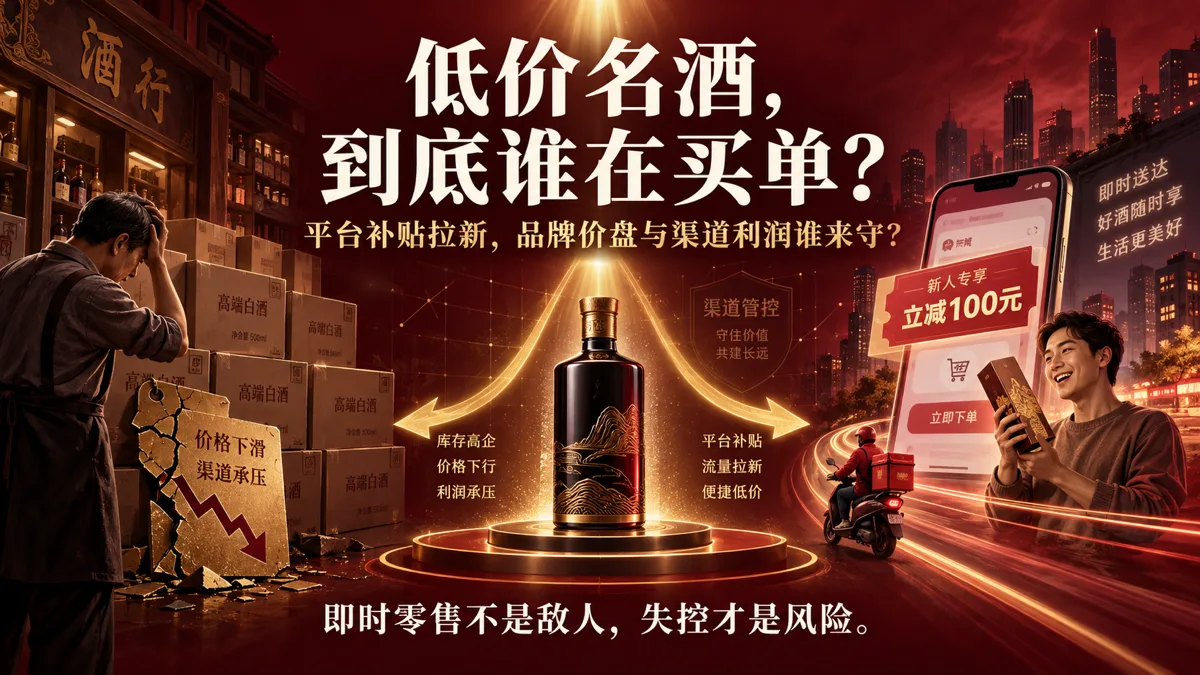
Platform Subsidies Are Breaking Through Premium Liquor Pricing: Is Instant Retail a Lifeline or a Poison Pill?
Instant retail is pulling premium liquor into a more transparent competitive environment defined by lower consumer prices, faster delivery, and platform-led demand. Subsidies and traffic strategies may expand consumer reach, but they can also pressure established pricing discipline, distributor margins, and brand premium. This article examines instant retail’s dual effect on premium liquor channels: it can open new occasions and capture consumer data, while also amplifying diversion, price inversion, and channel conflict when authorization, pricing, and profit-sharing rules are weak. The issue is not whether a brand enters instant retail, but who controls product data, channel rules, and consumer relationships.
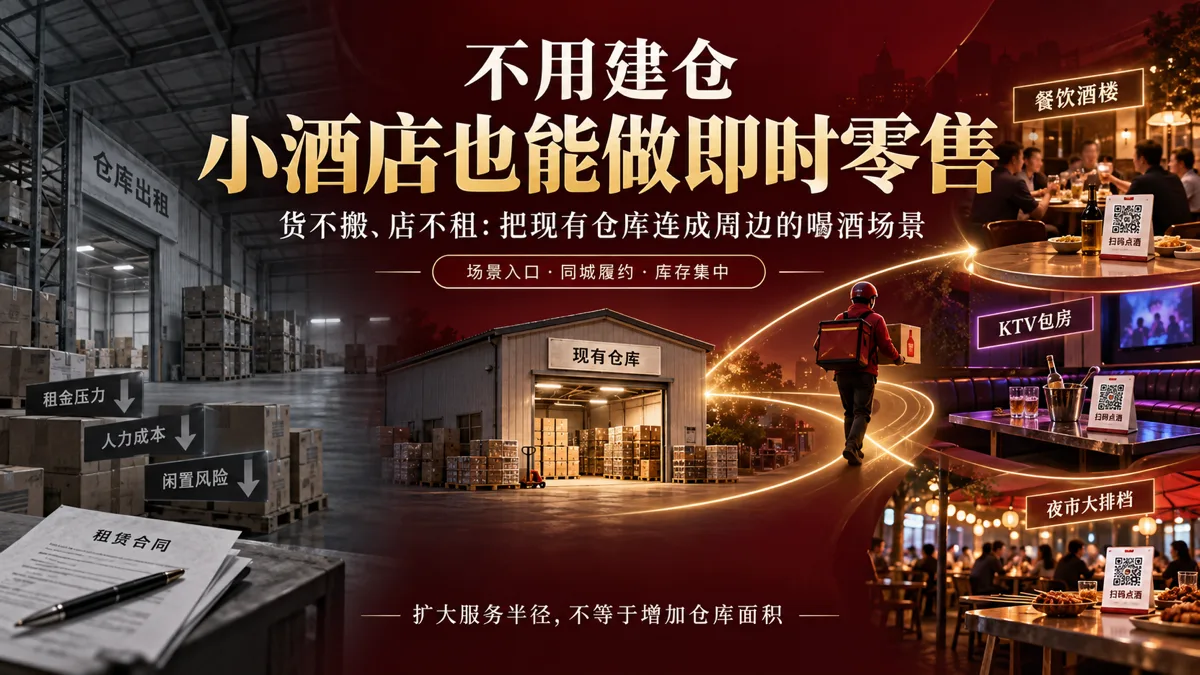
Don't Let "Dark Store" Scare You Off: A Lightweight Playbook for Small Shops Entering Instant Retail
Instant retail is described as a heavy-asset game of "building a warehouse plus a delivery fleet," and individual tobacco & alcohol shops back off the moment they hear it. But a warehouse isn't the only answer. Make your existing warehouse the center, project drinking scenarios into nearby restaurants, KTVs, and late-night food stalls—goods don't move, no store is rented—yet your alcohol sales entry points can multiply dozens of times. This article lays out this lightweight playbook clearly.
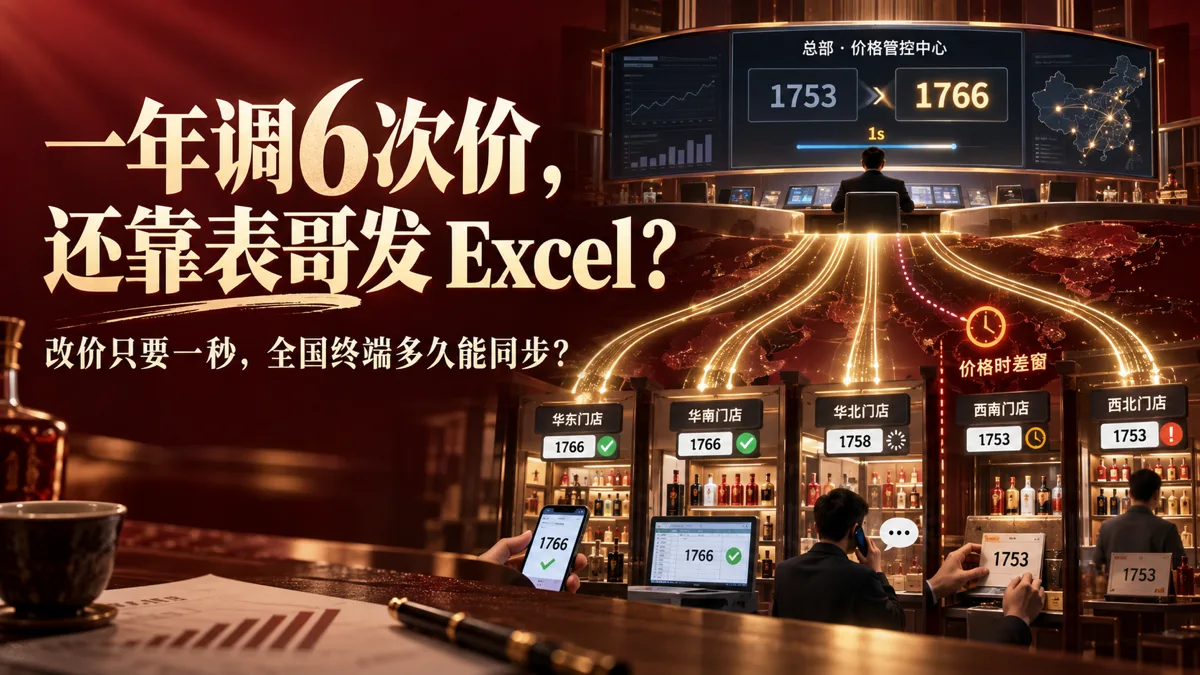
Prices Can Be Adjusted Weekly—Is Your Price System Still Run on Manual Spreadsheets?
Moutai raised prices for the sixth time this year, with Feitian at its self-operated stores climbing to 1,766 yuan. Most analysis stops at the price-signal layer. The real question is: changing a price takes one second—how long does it take to synchronize every terminal nationwide? The more frequent the adjustments, the more price-gap windows channel execution errors create. The barrier to dynamic pricing lies in transmission, not in pricing itself.
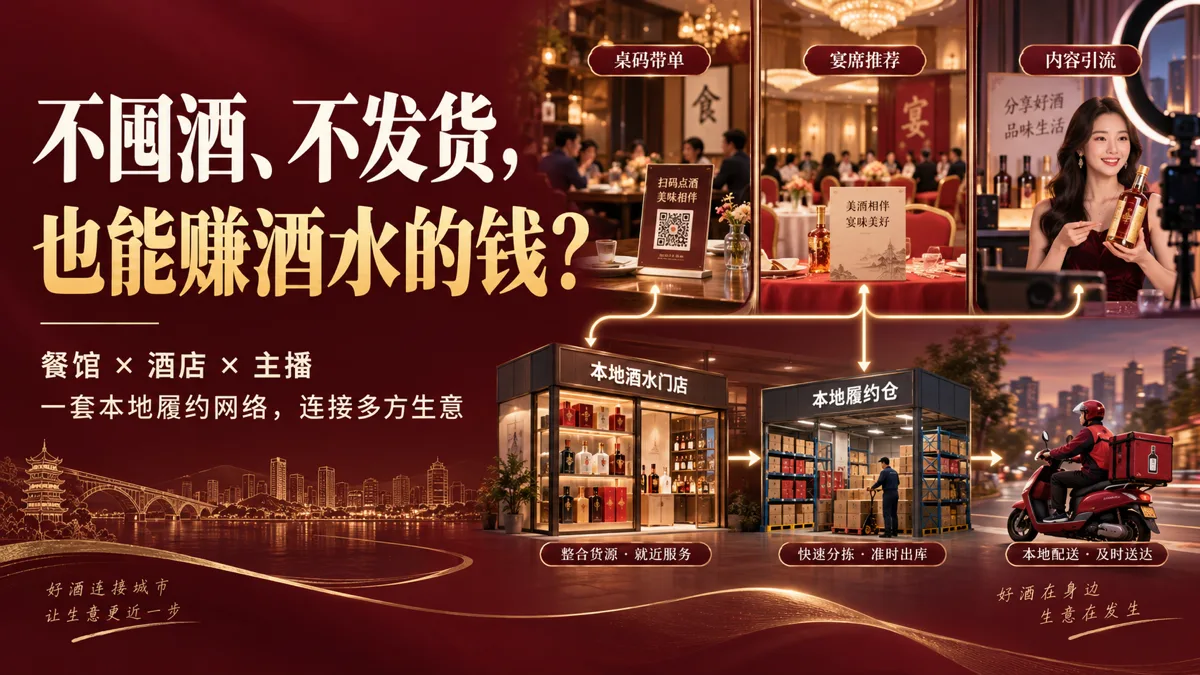
Restaurants Hold No Inventory, Hotels Carry No Stock, Streamers Don't Handle Shipping: An Alcohol Instant Retail Model Where Everyone Profits Together
The traditional alcohol business habitually distributes stock first and sells later—the more scattered the stock, the harder inventory management becomes; the more partners involved, the harder commission calculation gets. This article proposes a model that separates products, traffic, and fulfillment: the platform builds direct stores, franchise stores, and dark stores for unified fulfillment; restaurants place table QR codes and earn a cut without holding inventory; hotels refer banquet clients without stocking and earn commissions; streamers drive traffic without handling shipping; revenue is automatically settled through two systems—payment splitting for enterprise partners and tax-compliant payouts for individual promoters. The core: centralized inventory, distributed customer acquisition, proximity fulfillment, and automated revenue settlement—reorganizing a city's alcohol business.
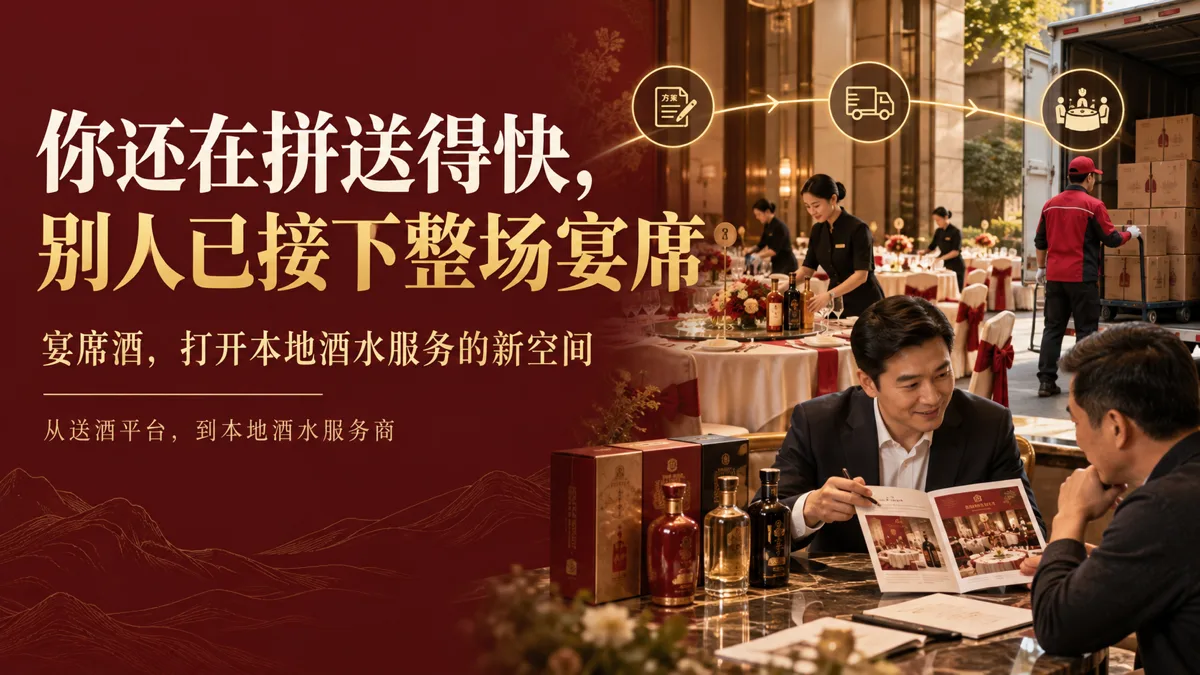
How Can Local Alcohol Instant Retail Enterprises Improve Operations Through Banquet Baijiu Service?
Many local alcohol instant retail enterprises used to focus on one word: fast. But relying only on ad-hoc orders makes you vulnerable to platform traffic and price competition. This article argues that banquet baijiu is a scenario worth attention for local enterprises, outlines four core pillars of banquet baijiu business—locking in demand early, providing scenario solutions, coordinating fulfillment, and completing settlement reviews—and explains that digitalization doesn't replace offline relationships but unifies processes scattered across WeChat and spreadsheets, helping enterprises grow from a delivery platform into a true local alcohol service provider.
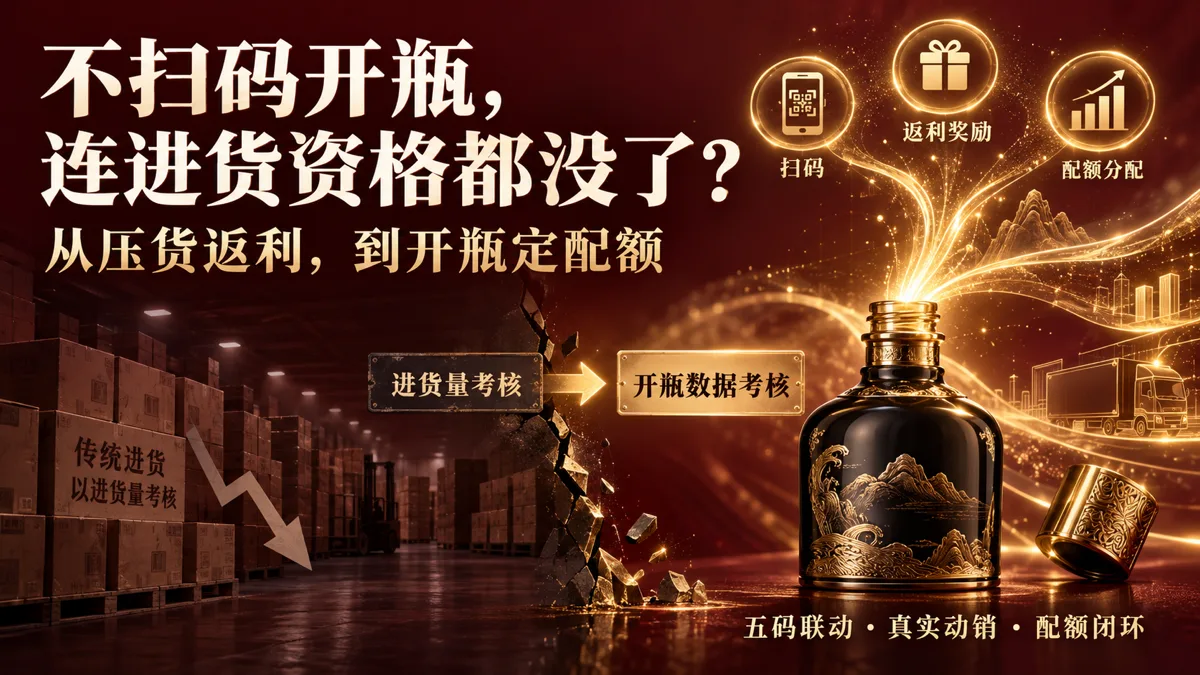
Inventory 38 Days vs Industry 52: How Guojiao 1573 Rewrote Channel Rules with "Bottle-Open Rate"
China Alcoholic Drinks Association data shows 58% of distributors still have growing inventory, and the industry average inventory turnover has soared to 900 days. But Guojiao 1573 is an outlier: distributor inventory compressed to 38 days (industry average 52), price stability rate at 89%, 52% ABV wholesale price steady at 840-860 yuan, and channel efficiency up 40%. The core shift: changing the KPI from "purchase volume" to "bottle-open rate"—if consumers don't open bottles and scan, distributors can't get rebates, increase quotas, or even order goods. Five-code integration has deployed over 50 million cases, with 110 million bottles opened, 40% scan rate, and 50 million members accumulated. Bottle-open data has become the new currency of channel power—whoever completes this transformation earlier holds a card that keeps them at the table in the second half of the zero-sum game.