
Instant Retail for Regional Distributors and Alcohol Supply Chains · The Wan Can Alliance Private-Domain Solution
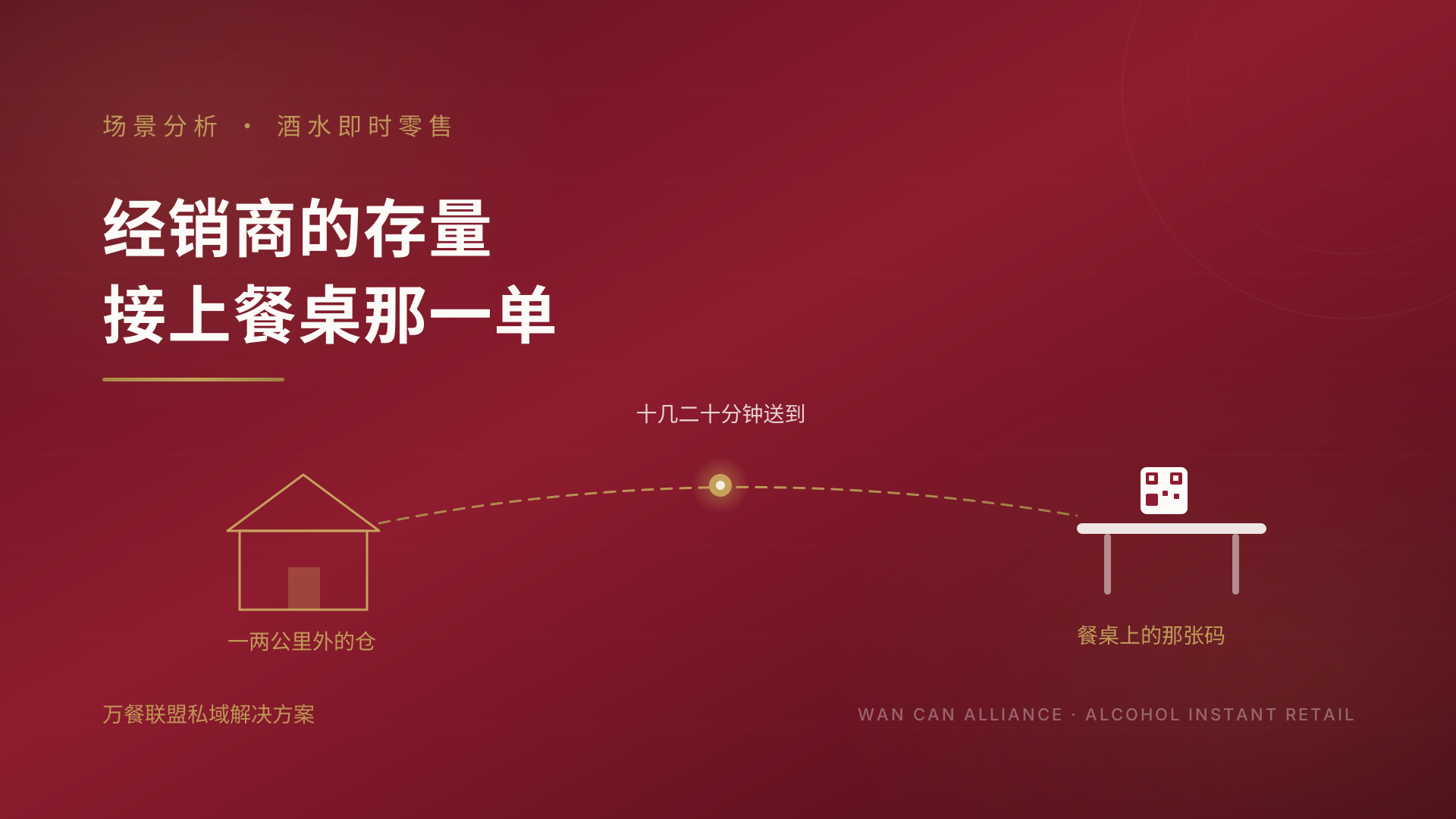
Regional distributors face a clear situation: the price spread on famous liquor has been squeezed thin, and stocking outlets means fronting the goods and extending credit. But the warehouses, vehicles, outlets, SKU breadth, and local relationships in their hands are things no one else has. What the Wan Can Alliance does is connect that existing stock to the single order at the dining table.
1. What Regional Distributors and Supply-Chain Players Already Have
The pressure side is plain to see.
Distributors used to live off the spread. A bottle of famous liquor leaves the factory, passes through several hands to the terminal, and each step keeps a little margin. That path's gaps are now narrowing. Circulation famous liquor has transparent pricing—consumers can compare prices at any time—so the middle spread gets squeezed wafer-thin. A report released in August 2026 by the industry's professional committee shows that 76% of alcohol retail chains have gross margins below 15%, and 46.7% of them fall under 10%. The listed alcohol distribution company reported a gross margin of just 5.36% for its alcohol business in its 2025 annual report. All of these figures have public sources.
The cost side is rising too. Stocking tobacco-and-alcohol shops requires fronting the goods and extending payment terms, plus people and vehicles on the road. Goods placed don't necessarily move; if they don't, you have to shift stock, and every stock shift costs money.
But the few assets distributors have accumulated are exactly what no one else has.
They have warehouses. First-tier and second-tier distributors mostly maintain their own warehouses. The location doesn't need to face the street—a radius of one or two kilometers is enough to cover a city zone's restaurant-dense area.
They have vehicles and drivers. The very delivery route that moves goods to tobacco-and-alcohol shops and wholesale clients is ready-made capacity.
They have outlets. Those who have supplied tobacco-and-alcohol shops hold a terminal directory. These outlets aren't paper resources—they're a network already laid down.
They have breadth. A warehouse can stock daily liquor at a few dozen yuan up to thousand-yuan bottles—aroma types, brands, and price points all covered. A terminal can't; one freezer fills up.
They have local relationships. Teams are mostly county locals who speak the dialect and know whose households are hosting red-and-white events. National chains can't take these ties away even when they sink down to the county level.
They have credit terms and capital capacity. After years of dealing with distilleries and upstream merchants, the purchasing, settlement, and cash-turnover routine is already second nature.
2. What the Wan Can Alliance Model Is About
One sentence says it: turn restaurant terminals into ordering entry points, and turn the distributor's warehouse into the dark store serving this network.
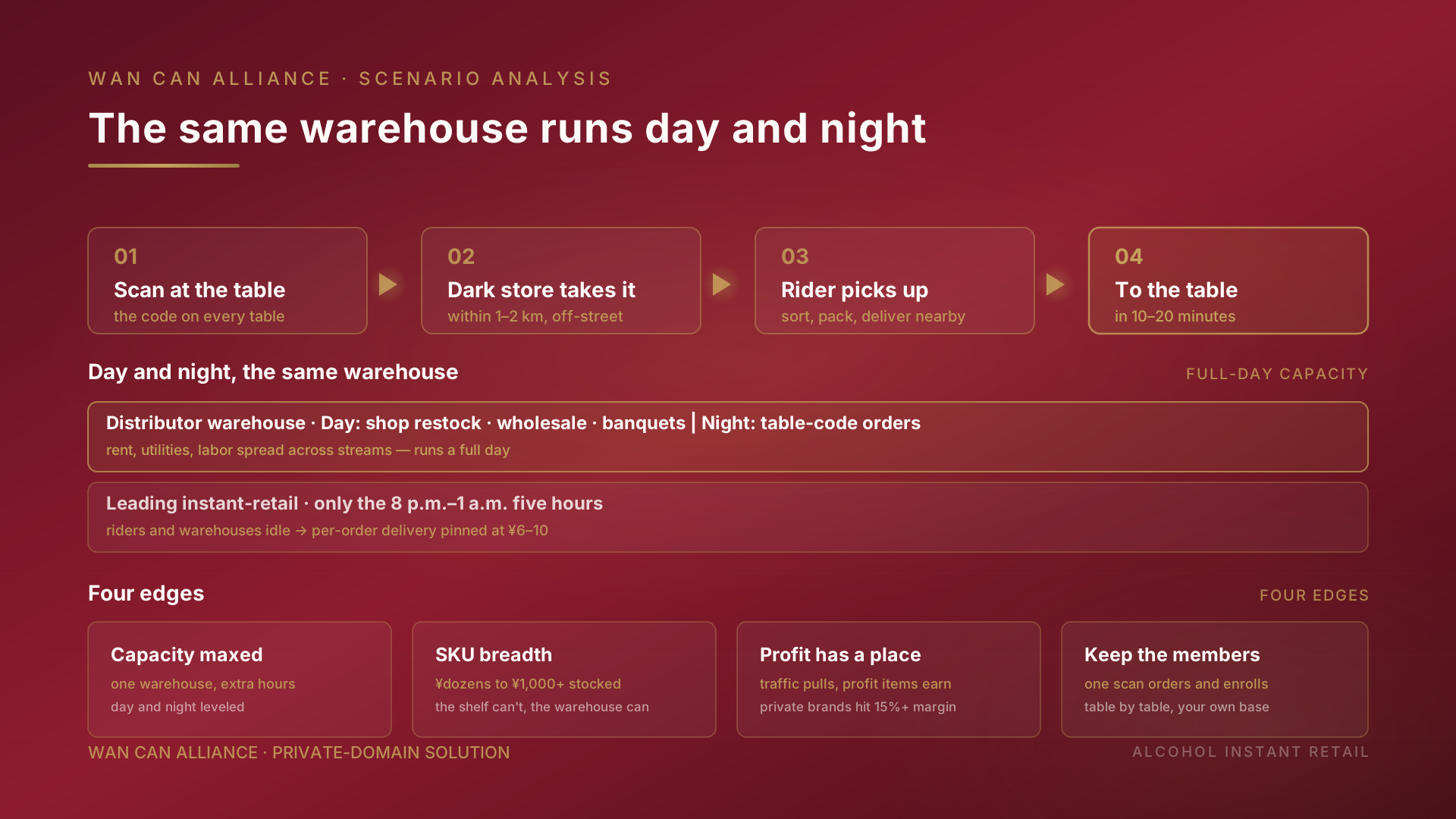
Here's how it works. Every dining table gets a code sticker. When a customer wants a drink, the waiter says one line: "Scan this code—it'll be here in ten to twenty minutes." The order lands at a warehouse one or two kilometers away, the warehouse sorts and packs, and a rider picks up the goods and delivers them to the table.
The restaurant's role is very light. No purchasing, no capital tied up, no delivery—just a code sticker. The waiter says that one extra line, and the order carries a settlement reward for him. He's willing to keep saying it, not because he's a nice person, but because that order carries a reward.
The timing works out too. A full table of dishes going from order to served typically takes ten minutes to half an hour. The alcohol reaches the table while the food is still cooking.
Once an order completes, the money splits several ways: the restaurant takes a transaction share, the waiter gets a per-order settlement reward, the warehouse takes a share per shipment, the rider takes a delivery fee, and the rest goes to the supplier and the operator. These are all single-layer, settled per order, and verifiable order by order—there's no layering or head-hunting. The accounts run through the system, never in cash.
This has to be stated clearly: it isn't asking restaurants to sell alcohol. It's turning restaurants into an entry point. The terminal contributes the scenario and a code; the distributor contributes the warehouse, the delivery, and the product selection.
3. Why Do It—Where the Advantages Lie
Why terminals are willing to cooperate is easy to calculate. A restaurant terminal's drink list has only one shape: beer in the freezer, a few small bottles of bare-bottle liquor behind the register. There are three reasons: too little space to display, can't afford the capital for hundreds-or-over per bottle, and no margin left after passing through several hands. The freezers are mostly funded by beer brands—the brand put up the asset and conveniently claimed the shelf position.
But a terminal not selling mid-to-high-end baijiu doesn't mean the table doesn't drink it. When a table of diners riding the high point of a meal wants to open a bottle, and the owner can't produce it, that order dies on the table.
The distributor's advantages are four.
The same warehouse can run a dozen extra hours a day.
Orders for leading instant-retail brands concentrate in the five hours from 8 p.m. to 1 a.m.; the rest of the time riders and warehouses sit idle, manpower efficiency can't be spread flat, and per-order delivery cost stays pinned at six to ten yuan. The distributor's warehouse is different: daytime takes tobacco-and-alcohol shop restocking, wholesale, group purchases, and banquets; nighttime takes the table-code orders. Rent, utilities, and labor get split across several streams. The same warehouse—others put in five hours; you can run a full day.
SKU breadth becomes a competitive edge here.
The three liquors on the table are squeezed into the band from a few dozen to fifty yuan. A customer who wants to drink something more presentable—the owner can't produce it. Warehouse selection isn't limited by the tabletop: items from a few dozen to over a thousand yuan, multiple aroma types and brands laid out side by side. Only when a customer can order it does the distributor have business to do.
Profit has a place to go.
Circulation famous liquor is a traffic item with transparent pricing; hoping to earn a spread on it isn't realistic. Profit sits at the other end: in that same report, 87% of alcohol chains already run private brands or developed products. Among companies where private brands account for more than 20% of revenue, 40.9% achieved gross margins above 15%. Traffic items bring people in; profit items make the order worth doing. What sells at the table is the single bottle to be opened right now, not the case endlessly price-compared online.
Customers and relationships stay in your own hands.
Doing business on third-party platforms, commissions sit in double digits, and user phone numbers and purchase history remain in the platform's system—a merchant reaching users must pass through that layer. The table code is different: one scan places an order and enrolls a member; what you accumulate is your own membership. Customers bought visit by visit follow the platform; customers built up table by table follow you.
There's another layer the platform can't manage. It can deliver alcohol to a designated address, but once the transaction ends, the relationship ends—it doesn't know who that table is or what occasion it's for. What the distributor can do is another kind of work. Wedding, birthday, and college-admission banquets: match the liquor to the host's budget, set the table, and pour the pours. Corporate group purchases: custom labels. Wine clients didn't finish: help them store it. Can't tell whether an aged liquor is genuine: take a look. One county-town liquor merchant spent twenty-five years representing a single local brand, working every banquet in and out, and more than 60% of local banquet alcohol flows through his hands. His team is almost entirely county locals who speak the dialect and know how to handle human sentiment.
One unpleasant thing must be said up front: on traffic, distributors can't match the few backed by major-platform entry points—their customer-acquisition cost is naturally lower. No need to dance around that. What can be defended are the other three: their warehouses run longer, customers are stored in their own hands, and local work is done more deeply.
4. Sequence Matters More Than Resources
The warehouse is ready-made, the outlets are ready-made, and the goods are ready-made. What's easy to get wrong is the sequence.
Sign up stores first—not a penny spent. Pick a business district dense with restaurants, sign two or three dozen first, and sign up the scenario and one code. Don't expect to take a whole street at one go—some owners will say "why don't you just supply me directly"—so start with the stores you already know.
Let the warehouse follow the stores. Those with warehouses convert them to dark stores; those with storefronts go warehouse-and-store integrated. Not facing the street isn't a weakness—a one-to-two-kilometer radius is enough.
Separate the product tiers. Keep a clear line between traffic items and profit items; don't give away your good products as traffic items.
Lock the profit split in advance. The restaurant takes a transaction share, the waiter gets a per-order settlement reward, the warehouse takes a share per shipment, the rider takes a delivery fee, and the accounts run through the system. Start riders with crowdsourced delivery rather than building your own.
Lock down your turf. Make profit items exclusive supply, to reduce the chance an owner bypasses you and sources directly from the distillery.
When the sequence is right, that's when the code is stuck in the right place.
Statement
This article is an industry observation; the model is a proposed design. Profit-sharing terms are governed by the agreement and constitute no promise of returns.