
Stock-Pressing Doesn't Work Anymore. So What Now? — The Life-or-Death Choice Behind a 170.7-Billion-Yuan Inventory Barrier Lake
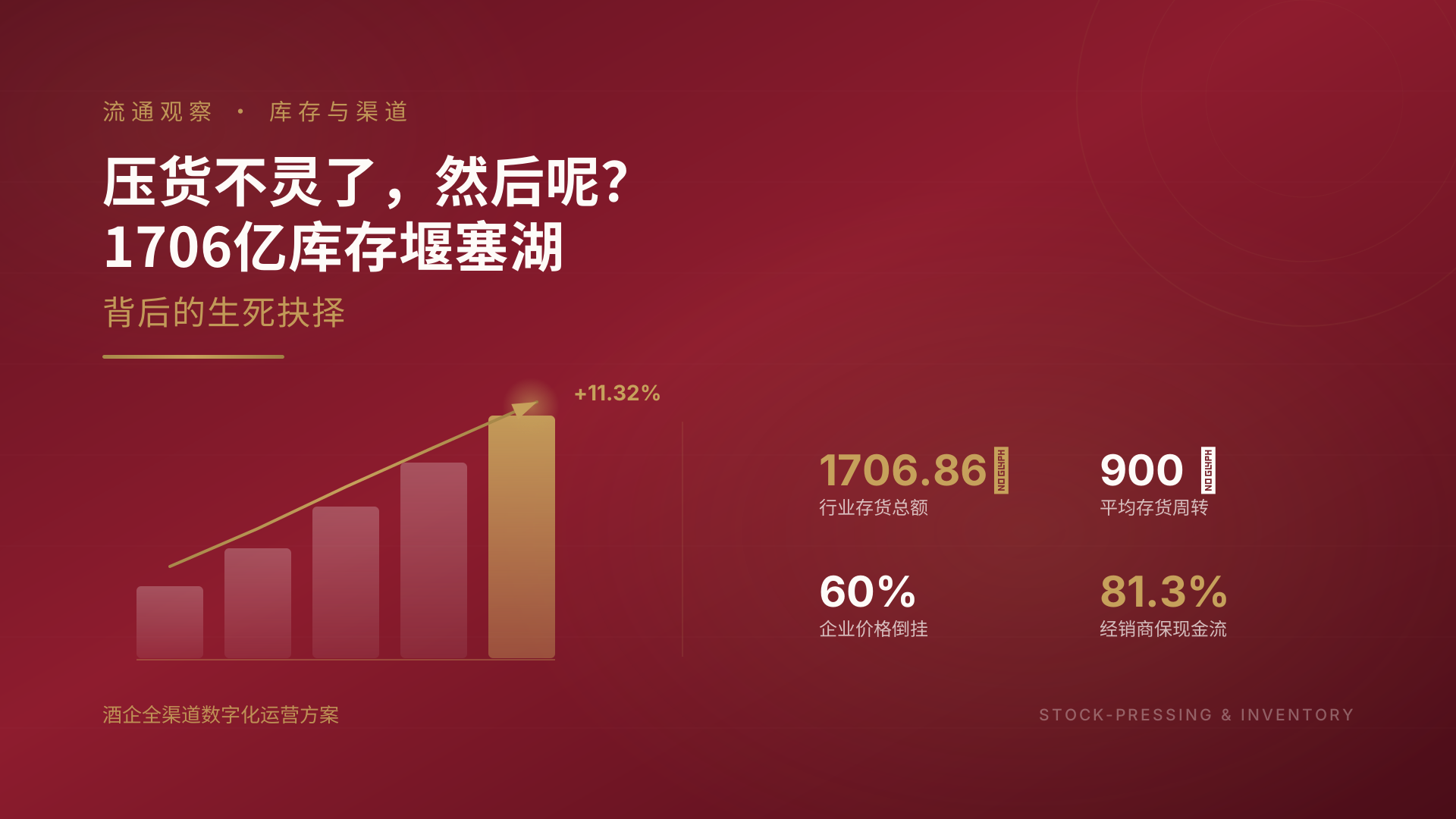
Total industry inventory stands at 170.686 billion yuan, up 11.32% year-over-year; average inventory turnover is 900 days, 60% of enterprises face price inversion, 58% of distributors still see rising inventory, and 81.3% of distributors list protecting cash flow as their core goal for the second half. The logic of the stock-pressing model no longer works—but the real question isn't whether it will return, it's that most distributors' cash flow can't survive twelve months. This article sorts through the collapse camp versus the cyclical camp and lays out three paths forward: brands helping channels sell goods to consumers, distributors shifting from stockpiling for margin to fulfillment and service, and manufacturer-distributor relationships being re-signed to share risk.
Introduction: 5 Million In, 3 Million Out
A distributor in Henan who's been in baijiu for 15 years paid in 5 million yuan last year. At year-end, his inventory was worth 3 million.
The brand came knocking again this year for payment. He replied, "Can you let me sell off last year's inventory first?"
Don't you find that line absurd? A distributor with 15 years in the business, crushed to death by his own brand. Not eliminated by the market, not beaten by competitors. 5 million in, 3 million out—where did the 2 million in between go? Nobody compensated him. The brand says, the market's bad, we all shoulder it together. The distributor says, what did you shoulder? You got the payment, you got a pretty number on your financials. Me? I got a warehouse full of baijiu I can't sell.
You call that shouldering it together?
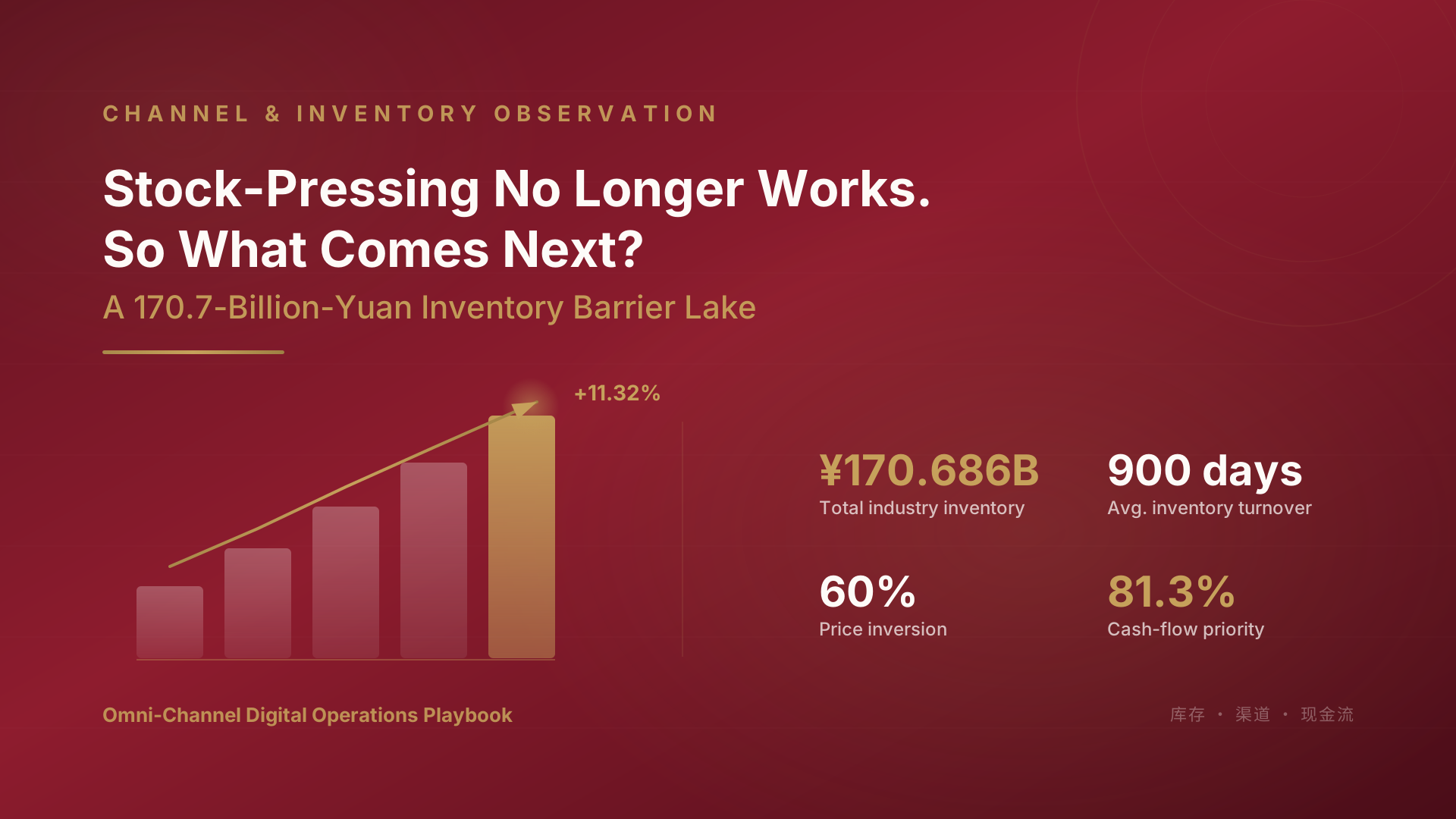
You don't need me to recite the China Alcoholic Drinks Association's latest data—you can guess it. Total industry inventory: 170.686 billion yuan, up 11.32% year-over-year. 58% of distributors' inventory is still growing. Average inventory turnover of 900 days, stretched another 10% from last year. 900 days. Savor that number. The goods you paid for will take nearly three years to sell through entirely. Three years. What did a bottle of Moutai cost three years ago?
60% of enterprises face price inversion. That means the purchase price is higher than the selling price. Every bottle you sell, you book a loss. 81.3% of distributors say their core goal for the second half isn't profit—it's protecting cash flow. Translated: don't talk to me about how to make money next year; first tell me where this month's payment is coming from.
In Weijiu's survey questionnaire, one line has been quoted countless times because it's too true: "Paying in is like rolling a snowball backwards—it gets smaller and smaller."
You thought it was an investment. It turned out to be a tax.
Stock-Pressing Ran for So Long for a Reason
Stock-pressing ran for so many years for a reason. Let me first say a fair word for the brands.
The logic is simple. The brand sets an ex-factory price, leaves the distributor a profit margin, and tells you: come, pay in, stock up, and when the market rises and peak season arrives, you earn the spread. In a bull market, this logic was flawless. Moutai and Wuliangye you stockpiled gained 10% in half a year—stock-pressing was effortless money.
Why were distributors willing to pay in? Because they believed two things. First, the brand would become more valuable. Second, consumers would come and buy.
Now both things have gone wrong at the same time.
The brand didn't become more valuable. With 60% price inversion, even Moutai's market price is falling—whoever stockpiles loses. And consumers aren't coming. Not that no one drinks—the buying channel changed. They buy in livestreams, on instant retail platforms, through Pinduoduo's billion-yuan subsidy. You stockpiled a warehouse of baijiu waiting for customers to walk in, while the customer orders on their phone and it's delivered to their door in 30 minutes.
Both core screws of the stock-pressing machine have come loose.
Moutai's former vice president Liu Huashuang pierced the veil directly with four words: "The era of channel stock-pressing is over." Note his wording—he said "is over," not "is almost over." Zhang Deqin was even more direct, publicly stating a shift "from channel-is-king to consumer-is-king." Even Moutai says this, and you still expect stock-pressing to come back?
You're still waiting. They've already left.
Collapse Camp vs. Cyclical Camp: Both Missed "Time"
Right now two camps are arguing fiercely. One says stock-pressing is dead; the other says it's playing dead.
The collapse camp holds three cards.
Card one: consumption downgrading is structural, not cyclical. Young people drink craft beer, low-ABV drinks, milk tea—baijiu's social scenarios are narrowing. This isn't economic fluctuation; it's cultural migration. Will young people come back to baijiu once the economy improves? Don't kid yourself.
Card two: the 170-billion-plus inventory barrier lake—even if not a single new bottle were produced from now on, just digesting existing inventory would take at least two years. Nobody will stop production, so this barrier lake only gets deeper.
Card three: price inversion has spread from individual brands to the entire industry. 60% of enterprises are hit. The premise of stock-pressing is that brand premium covers the cost of stockpiling—now the premium is evaporating and costs are climbing. This arithmetic no longer works.
The cyclical camp's counterattack is also strong.
They say: in 2013, when official banqueting was restricted, Moutai fell to 819 yuan a bottle, and how many distributors fled overnight in fear? And those who stayed? How many times over did they earn later? Is your memory really that bad?
Baijiu's social-currency attribute has never changed. Chinese people use baijiu for favors, for face, for relationships. As long as this demand exists, brands have bargaining power. With bargaining power, they can press stock. Today you feel you're dying; once the market warms up, and the brand raises prices, controls volume, and gives you quota—what's your first move? Pay in.
They also say: you made money when times were good because you shouldered it with the brand during the hard times. Now you can't bear it and want to run—on what grounds should you get a share when the market returns? Stock-pressing has always been a two-way bet. If you can't afford the gamble, don't sit at the table.
Both sides make sense. But both sides missed one thing.
Time.
The cyclical camp says stock-pressing will come back—I believe it. The question is, how long will it take? One year? Three? Five? Most distributors' cash flow won't survive twelve months. Tell a man "hold on, brother, five years from now you'll thank today's you," and he can't even scrape together next month's payment. You talk to him about five years? He's calculating how to make payroll next week.
So whether stock-pressing is dead doesn't matter. What matters is that before it "revives," you're already dead.
Three Paths: If Not Stock-Pressing, Then What?
Fine. The question is now clear. You say no more stock-pressing—so what do you do?
Don't give me macro strategy. Look at three paths directly.
Path one. Brands shouldn't just dump goods on distributors and call it done—you have to help distributors sell goods into consumers' hands. Scan-based marketing, membership systems, private domain repurchase. These words used to be how internet companies pitched investors; now they're distilleries' lifeline. Whoever builds their own user assets first won't need to hit targets through stock-pressing. Why do you think Moutai built iMoutai? Not for one more sales channel—it's to know who actually buys Moutai. Distributors used to be a wall between brand and consumer, and the brand couldn't see consumers at all. Now that wall is collapsing. Do you want it to collapse completely so you see nothing, or do you want to tear it down yourself?
Path two. Distributors should stop expecting to earn spreads from stockpiling. Old-era profit came from information asymmetry and stockpiling capability; new-era profit comes from fulfillment and service. Banquets, group buys, corporate customization, distillery tours. Platforms can't do these, instant retail can't do these—only people on the front line can. I know distributors whose banquet channel profit has already overtaken traditional wholesale profit this year. While you're still agonizing over whether to pay in, your peer has already set up thirty tables at the hotel next door.
Path three. Re-sign the manufacturer-distributor relationship.
The old contract was four words: pay in, ship out, profit and loss your own. The new contract needs three additions: share inventory risk, share terminal data, and do user operations together. Some brands are already trying it. Distributors aren't forced to pay in; settlement is based on actual sell-through. Of course, few brands dare to do this, because it amounts to the brand admitting that the previous stock-pressing model made distributors carry the fall. It's a face issue.
But tell me: face or survival—which matters more?
Conclusion: A Is Inertia, B Is Transformation
The stock-pressing model won't disappear entirely. As long as brands need to hit targets and distributors want to gamble on the market, someone will keep playing this game.
But it's no longer the industry's mainstream narrative.
Moutai has announced a shift toward consumers. Wuliangye is testing new approaches. Small and mid-sized brands can't press stock at all anymore. Distributors have no cash flow—what are you going to press, air? 81.3% of distributors say they're protecting cash flow, which translates to one thing: I don't want to gamble with you anymore.
Distilleries face only one multiple-choice question.
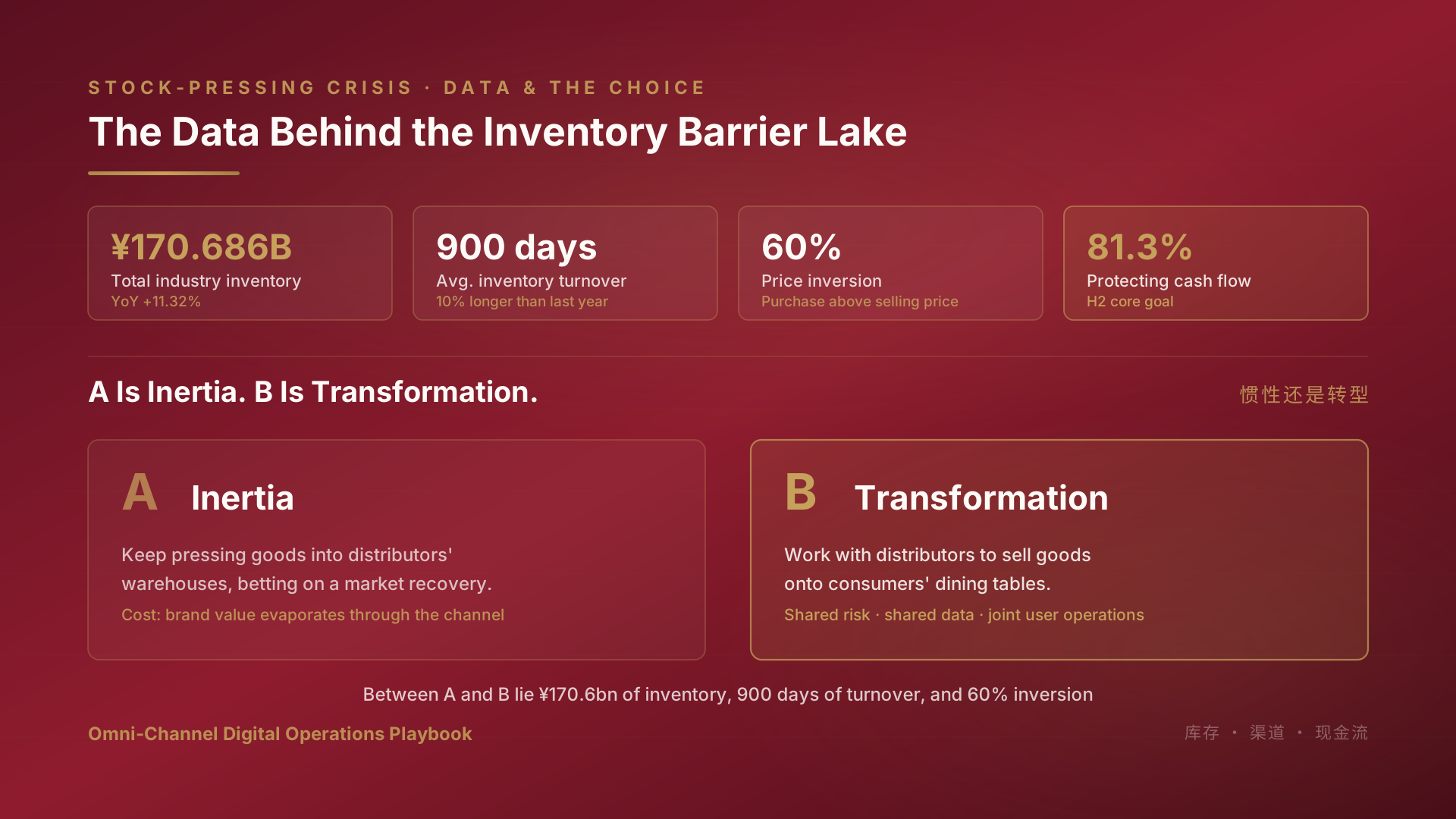
A: Keep pressing goods into distributors' warehouses and bet on a market recovery.
B: Work with distributors to sell goods onto consumers' dining tables.
A is called inertia. B is called transformation.
Between these two words lie 170.6 billion yuan in inventory, 900 days of turnover, and 60% price inversion. Not an exaggeration to say: between them lies life and death.
As for how to transform, I have a practical playbook for distilleries' omni-channel digital operations—from building user assets to channel control to instant retail implementation, broken down in detail. If you need it, comment "playbook" below and I'll send it to you.
Data Sources
[The images in this article were AI-generated; data sources: China Alcoholic Drinks Association 2025 interim report (total inventory 170.686 billion yuan, 58% of distributors with rising inventory, 60% of enterprises with price inversion, average inventory turnover 900 days); Weijiu's 106-distributor survey questionnaire (81.3% listing cash flow protection as core goal); China Times / Phoenix Net "Storm Eye" related reports (distributor's "rolling a snowball backwards" account and the 5-million-to-3-million case); public statements by Moutai former vice president Liu Huashuang and Moutai chairman Zhang Deqin (the era of channel stock-pressing is over / from channel-is-king to consumer-is-king).]
Related Reading
Stop Confusing O2O, Chain New Retail, and Instant Retail: How Should Alcohol Stores Choose a System?
Restaurants Hold No Inventory, Hotels Carry No Stock, Streamers Don't Handle Shipping: An Alcohol Instant Retail Model Where Everyone Profits Together
Traditional Regional Alcohol Distributors Are Being Pushed into a Corner!
New Baijiu Industry Observations: The Dominant Logic of Alcohol Distribution Is Shifting from Channel Stocking to Terminal Sell-Through and Consumer Operations