
From Brand Self-Authentication to Platform Assurance: How Responsibility for Baijiu Authenticity Is Being Reallocated
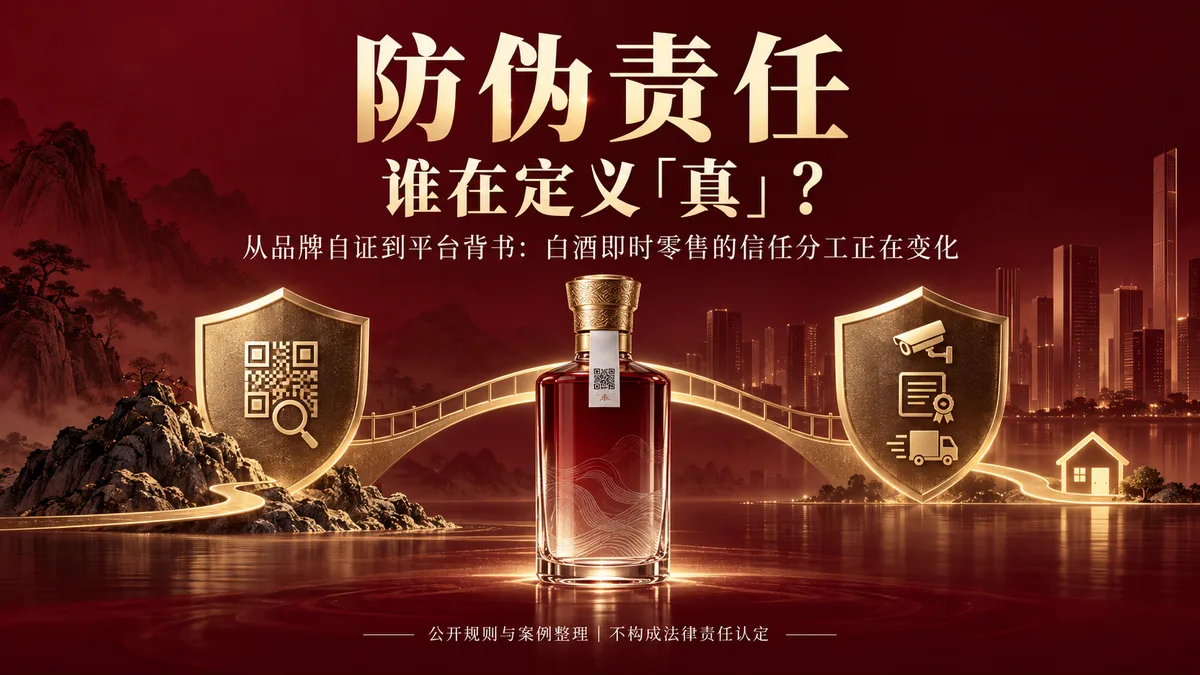
On September 24, 2025, Meituan Flash Purchase announced an instant-retail, full-chain authenticity-assurance system with ten or more leading baijiu brands. Its related “real-photo-before-shipment” rule requires merchants to send product photos before dispatching baijiu priced above RMB 300. Platform safeguards are becoming more prominent, but product authenticity, brand-side verification and consumer-relationship operations remain responsibilities that brands cannot abandon.
Facts and responsibility boundary: Information on the full-chain system, real-photo-before-shipment, Waimai Jiujiao’s “one bottle, one code” program and Meituan Famous Liquor Store’s “authenticate before shipping” service comes from public media coverage and platform disclosures. Reports used both “ten brands” and “more than ten brands” to describe the full-chain system. The named list visible in those reports contains nine brands—Moutai Sauce Aroma, Fenjiu, Yanghe, Gujinggong, Jiannanchun, Xifeng, Jinshiyuan, Langjiu and Shuijingfang—while the complete list was not disclosed. This article does not guess at an additional name. “Responsibility reallocation” in the title is a commercial observation about consumer trust and transaction-assurance roles; it does not mean statutory product-quality or consumer-protection obligations automatically move from brands or merchants to the platform.
Ten Premium Brands Joined an Authenticity-Assurance Initiative
On September 24, 2025, Meituan Flash Purchase announced what it described as instant retail’s first full-chain authenticity-assurance system for baijiu, developed with multiple leading brands. Public reports used either “ten” or “more than ten” as the participant count and named Moutai Sauce Aroma, Fenjiu, Yanghe, Gujinggong, Jiannanchun, Xifeng, Jinshiyuan, Langjiu and Shuijingfang among them.
The purpose is direct: address the most immediate concern when consumers buy high-value baijiu online—where the product came from, whether it may have been switched in transit, and whether the delivered bottle is authentic.
A related “real-photo-before-shipment” rule is more concrete. Public reporting says merchants selling baijiu priced above RMB 300, as well as certain wine and spirits brands, must send consumers photographs of the actual item before shipment. The photos may show the product’s appearance and anti-counterfeit or traceability codes. Merchants that do not comply may lose eligibility to sell high-priced alcoholic products.
The platform’s safeguards have been developing in stages. In June 2026, Waimai Jiujiao launched “one bottle, one code, full-process authenticity assurance,” creating visual authenticity records for more than 400 liquor categories and describing safeguards across six stages: sourcing, inbound receiving, warehousing, outbound handling, delivery and receipt. Meituan Famous Liquor Store’s “authenticate before shipping” service originates from a partnership with China Light Inspection & Certification Co., Ltd. A September 2026 report said it covered six brands: Moutai, Jiannanchun, Luzhou Laojiao, Xijiu, Fenjiu and Wuliangye.
From a brand perspective, stronger platform-side transaction safeguards can reduce consumer anxiety around buying liquor online. But the platform is not “taking over” every authenticity issue. It is adding more evidence, traceability and remedies around the transaction.
Counterfeit Liquor Is Not Only an Anti-Counterfeiting Technology Problem
What exactly do consumers fear when buying liquor online?
It is not only whether an anti-counterfeit code is sophisticated enough. Premium liquor may have multiple layers of verification across closures, bottles, cartons and traceability codes. Yet recovered genuine bottles, substituted contents, forged packaging or switching during circulation can create situations where a code alone does not explain the whole risk.
The harder question is the channel: which parties handled a bottle from production to delivery, where it was stored, when custody changed, and whether any anomaly occurred. Authentication technology helps identify; channel traceability helps investigate where an anomaly may have entered.
Product photography, authentication, unique identifiers and fulfillment records turn transaction-side verbal claims into evidence consumers can see. They can reduce risk and provide a stronger basis for after-sales disputes. They do not eliminate all counterfeit risk, nor do they replace a brand’s own production, channel and authentication controls.
Platform Assurance First Protects the Platform’s Transaction Trust
When consumers receive suspected counterfeit liquor through a platform, they often blame the platform first. For the platform, authenticity assurance is not philanthropy; it is foundational infrastructure for trust in high-value transactions.
That is why the rules are moving upstream: merchant authorization, source-of-supply checks, real-product photography, third-party authentication, delivery traceability and after-sales remedies each reduce uncertainty at a different order stage.
Brands that join gain a clearer consumer-facing assurance experience, while also adapting to the platform’s listing, evidence and service rules. Instead of saying “the platform is responsible for authenticity instead of the brand,” a more accurate description is this: the platform is increasingly helping define the authenticity-assurance experience that consumers can see in instant retail.
Brand verification and platform safeguards can complement each other. But if a platform and a brand disagree about a product lot, code, source or authentication result, the explanation, remedy and final dispute process must be agreed in authorization chains, service terms and incident-handling procedures.
How Visible Does the Brand’s Own Anti-Counterfeiting System Remain?
A more practical question is: whom will consumers remember?
A customer who receives real-product photos before dispatch, then sees a traceability code or an authentication certificate at delivery, may simply conclude: “Buying liquor on this platform feels safe.” That means the platform’s service experience is strengthening transaction trust.
Brands should not respond by abandoning their own verification and consumer-operations entry points.
One-product-one-code, multi-level code association, opening scans and scan-to-reward programs were never only about anti-counterfeiting. Their deeper purpose is to create a direct connection when a consumer opens the bottle: identify the product and occasion, obtain consent, establish membership and provide later benefits or service.
If consumers rely solely on the platform’s photos or authentication while the brand’s scan experience offers little value, brands lose a direct route to consumers. Scan rates, member identification and repeat-purchase operations may all weaken.
The value of one-product-one-code is therefore not simply “proving this bottle is genuine.” It is a data entry point linking product, channel, consumer and long-term operations. Naturally, data collection, membership registration and later outreach must follow principles of necessity, explicit consent and transparent purpose.
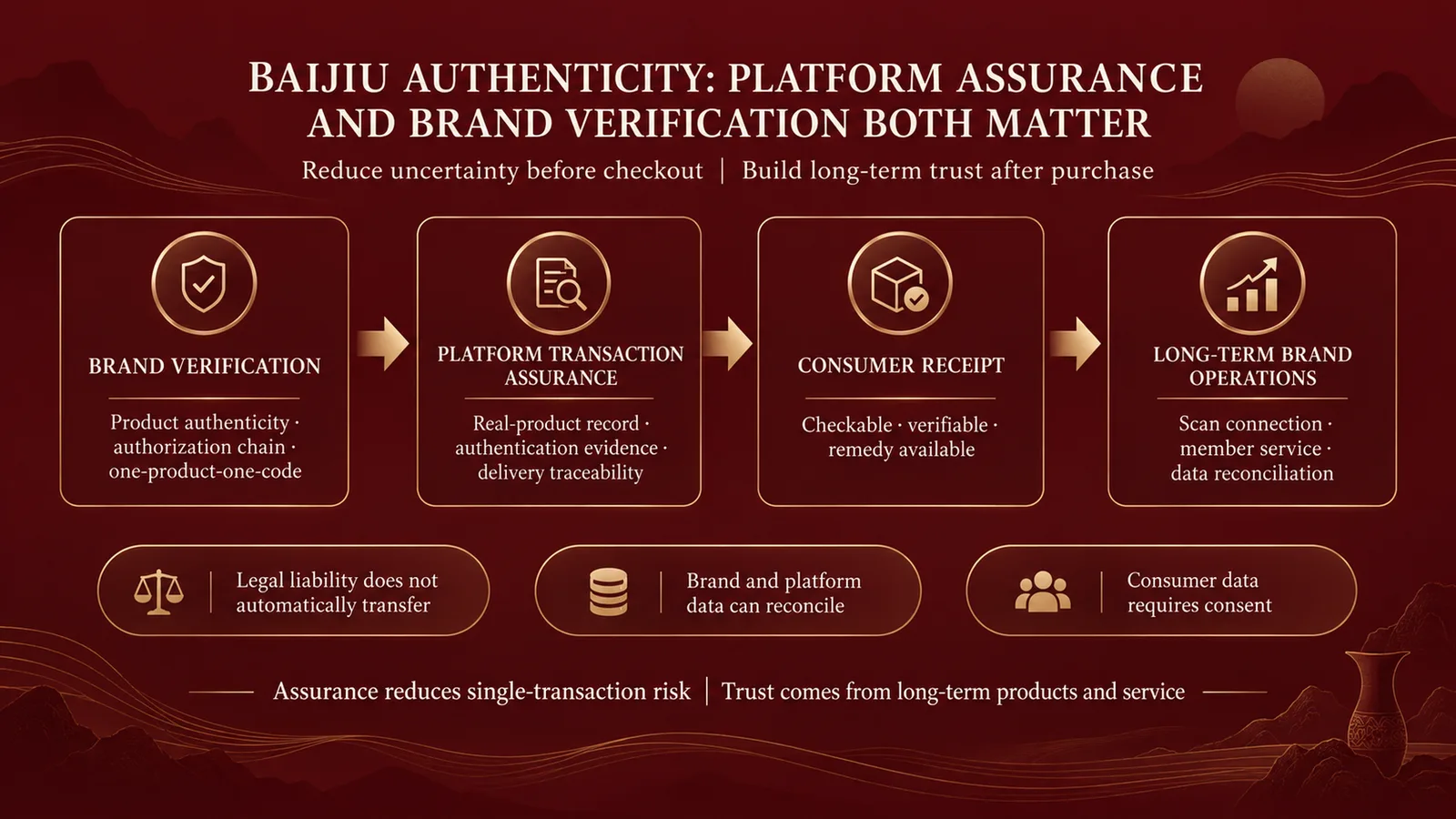
Who Defines Authenticity? Brands Need a Clear Answer
This is not an argument for brands to reject platform assurance. Platform rules are an important channel-entry and consumer-protection mechanism, and brands should cooperate actively.
The key is role clarity. Platforms are well suited to improve visibility around transactions and fulfillment. Brands still need to manage product authenticity, authorization chains, channel discipline and long-term consumer relationships.
At a minimum, liquor brands should protect four capabilities:
Keep proprietary verification active. Brand-side scans remain a direct connection with consumers and should complement pre-purchase platform assurance.
Make the post-scan experience valuable. With consent, a scan can lead to membership, benefits, content and service rather than only display “verification successful.”
Reconcile platform and brand data. Assurance records, product identifiers, authorization sources, orders and channel data need a reconciliation mechanism to support anomaly investigation and diversion control.
Define responsibility before disputes arise. Platform decisions, brand rechecks, after-sales handling, refunds, compensation and evidence retention should be set out in authorization, supply and service agreements.
Platform photography and authentication create confidence before checkout. Brand verification, product experience and member relationships create a longer connection after purchase. The first reduces uncertainty in a single transaction; the second determines whether a brand can accumulate durable trust.
Authenticity assurance may be a ticket into the channel. Trust remains the brand’s long-term asset.
Sources and Verification Notes
Sina Finance: Meituan Flash Purchase introduces a full-chain baijiu authenticity system: used to verify the September 24, 2025 announcement, the “ten/more than ten” participant wording and the publicly named brands.
21st Century Business Herald: authenticate-before-shipping expanded to six brands: used to verify the China Light Inspection partnership, the six covered brands and the service logic.
21st Century Business Herald report reprinted by Eastmoney: real-photo-before-shipment: used to verify the pre-shipment product-photo rule for baijiu priced above RMB 300.
Jiemian: Waimai Jiujiao’s one-bottle-one-code program: used to verify the 400-plus liquor categories and the six publicly described assurance stages.