
Gujing and Kouzi Both Opened "Dajiu Pu" Liquor-Dispensing Shops—Is Baijiu Turning into a Bubble-Tea Shop?
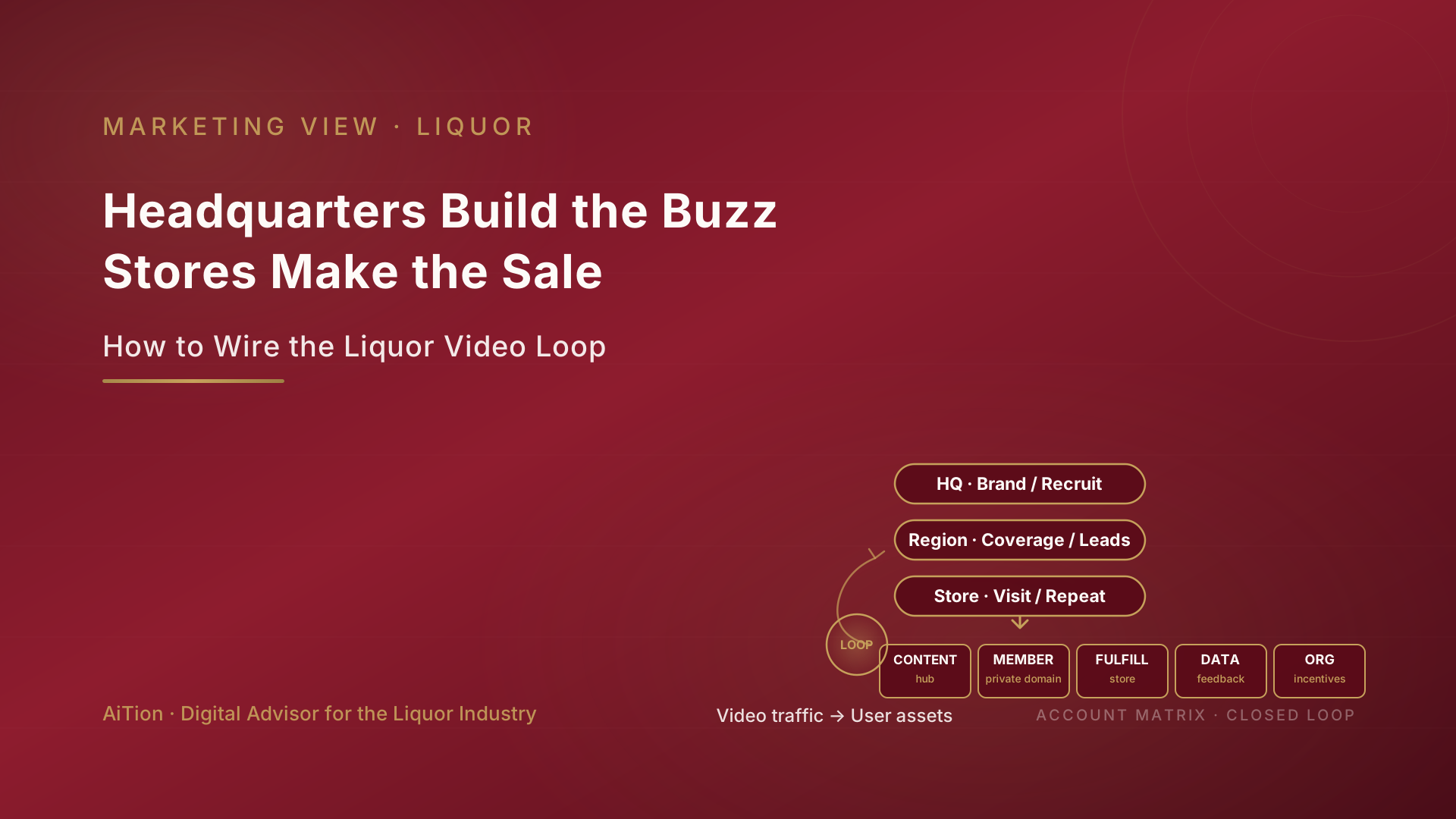
Baijiu is going through a "scenario downgrade": from drinking only over a full table of dishes, to savoring a couple of sips when one person winds down at night. Gujing Gongjiu opened its "Gujing Dajiu Pu," Kouzijiao opened its first "Kouzi Jiufang" community store, and Sichuan Liquor Group, Dukang, and Yangshao all followed, charging by the liang and dispensing on the spot, with a store model that fuses the efficiency per square meter of a bubble-tea shop, the experience of a coffee shop, and the dark store of a convenience store. This article unpacks the instant-retail driver and the store's essence behind Dajiu Pu (recall-your-own liquor shops), argues that it earns not the spread but the "money of being close," and uses online ordering, inventory turnover, and member repurchase to turn "close" into "frequent."
I. Ten Minutes Standing in Front of a Dajiu Pu
Last weekend, I stood for ten minutes in front of a Dajiu Pu.
Behind the glass counter stood a row of white porcelain jars. Among the queuing customers, an auntie carried a 2.5-liter plastic jug, a young person scanned to pay, and a middle-aged man in a suit stopped by on his way. The shopkeeper drew a cup, scooped and poured, pulling the wine thread fine and long. Smelling that grain-fermenting aroma, it suddenly struck me that baijiu has never felt this down-to-earth in all its life.
The wind has already blown into the big plants. Gujing Gongjiu opened its "Gujing Dajiu Pu," Kouzijiao opened its first "Kouzi Jiufang" community store, and Sichuan Liquor Group, Dukang, and Yangshao each have their own Dajiu Pu. Sell by the liang, dispense fresh on the spot; the store model fuses the efficiency per square meter of a bubble-tea shop, the experience of a coffee shop, and the dark store of a convenience store. Some brands directly position themselves as a multifunctional terminal of "experience store + retail store + dark store."
II. The Driver Behind It: Instant Retail
The driver behind it is instant retail. In 2025, the instant-retail market for liquor surpassed RMB 50 billion, and is expected to expand at roughly 50% per year in coming years; of Meituan Shanshan's liquor-drink orders, 73% are delivered to residential complexes, and orders from 23:00 to 3:00 deep at night grew over 30%. Dajiu Pu brands such as Banmoxia and Tangsanliang have already enabled mini-program ordering and delivery fulfillment—the store itself is a dark store.
III. The Fad Theory and the Leek Theory
Some shout fad; some shout leek.
The fad theorists say: Gujing opened, Kouzi opened, Dukang opened too—the giants are all coming in, what are you waiting for? The leek theorists say: sell wine by the liang, how much gross margin can there be? After rent, labor, and shrinkage, you'll probably have worked for nothing.
Both are right, and both only half right. The real meaning of Dajiu Pu is to drag baijiu from the "low-frequency, high-ticket, strongly social" gifting-and-banquet scenario into the "high-frequency, low-ticket, everyday" self-drinking scenario. Baijiu used to be the decorous guest who only showed up for festivals; now it wants to be the daily neighbor you meet every day.
If you hold a tobacco-and-liquor shop or a famous-brand liquor store in your hands, this is both a divider and a new entry point. If you have no outlet in the community, the Dajiu Pu next door will swallow all the "just-want-a-couple-sips-now" orders—they deliver in 30 minutes.
IV. A Cold Bucket of Water
Here's a cold bucket of water: Dajiu Pu isn't one-thrives-then-every-one-thrives.
In the industry's early days, no one's model has fully run. Sell by the liang, and packaging, logistics, and settlement all have to change; sell fresh on the spot, and shrinkage, quality control, and hygiene standards all need new rules. I've seen Dajiu Pu run as "upgraded bulk-liquor stalls," and seen them run as "community taverns + delivery warehouses," with gross margins differing by double. The difference isn't the decoration; it's whether online ordering, inventory turnover, and member repurchase are treated as part of the business.
The opportunity is that baijiu is going through a "scenario downgrade": from needing a full table of dishes to drink, to being able to have a couple of sips alone at night. What catches this scenario isn't the big supermarket, but the point closest to the consumer. Dajiu Pu, community stores, and dark stores are essentially the same species wearing different faces.
V. Run Dajiu Pu with the New Brain of a Bubble-Tea Shop
When running a Dajiu Pu, don't use the old bulk-liquor sales brain; use the new bubble-tea shop brain.
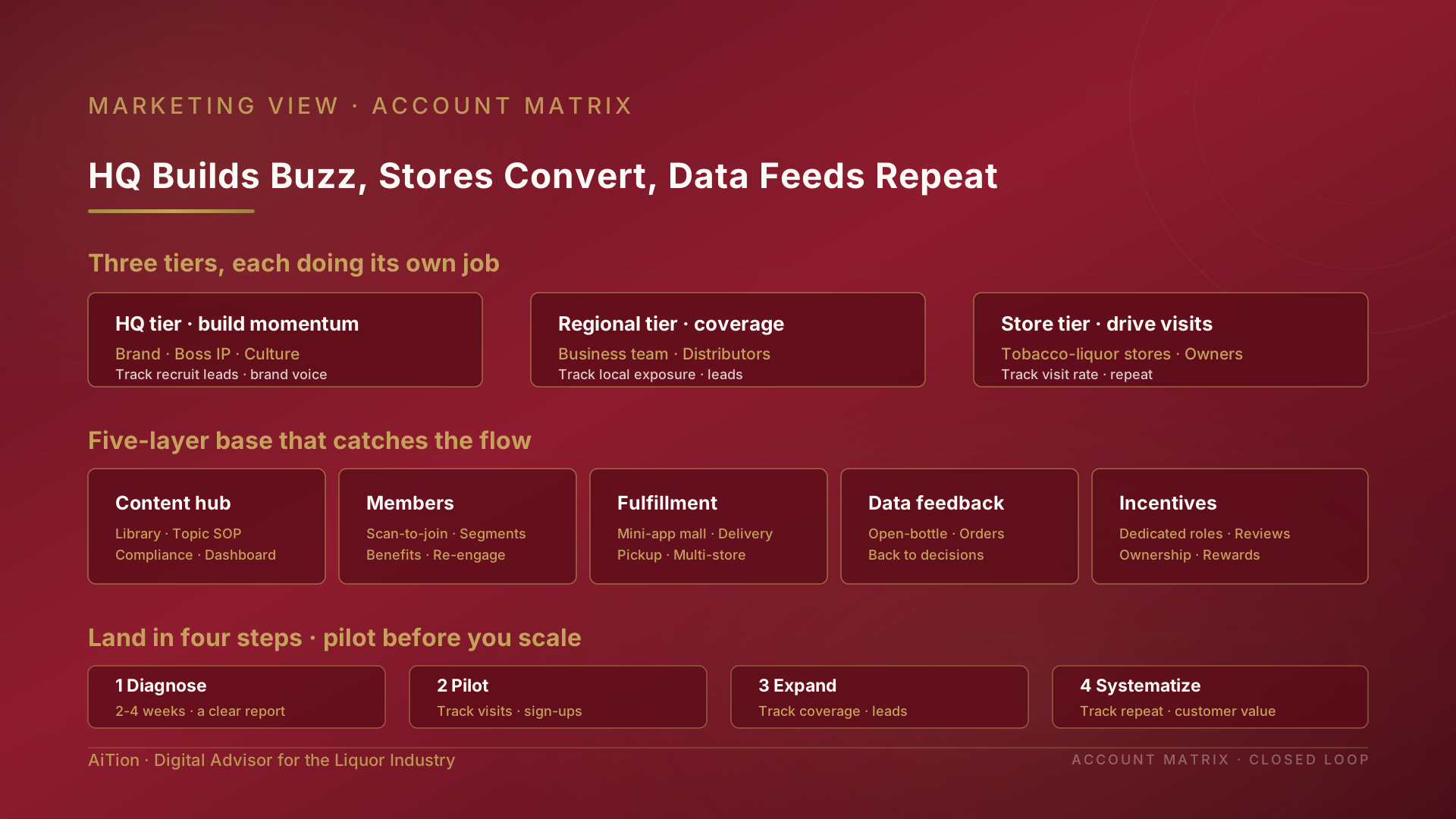
At the store level, one instant-retail system manages multiple stores, dark stores, online ordering, delivery order-taking, and inventory transfer. Headquarters can see each outlet's real-time inventory and shrinkage: restock what sells, stop losses on what doesn't. At the consumer level, turn "getting a fill" into a member action: first scan sends a liang free, points from repurchases redeem wine, and add birthday reminders and running-out-of-wine reminders, turning neighbors from "buying on the way past" to "buying because they remember." At the product-level, build SKUs by community demographics: stock more daily-grain liquor where seniors are numerous, and put small bottles and low-alcohol lines near office towers.
In one line: Dajiu Pu doesn't earn a spread; it earns the "money of being close." And once you're close, you use data to turn "close" into "frequent."
VI. Public Information and Front-Line Observations from System Delivery
In public information, Banmoxia and Tangsanliang have already run a "store + mini-program + delivery" playbook (source: Tencent News, 2026-08-21); delivery platforms disclose that in lightning-warehouse mode, per-warehouse costs in second- and third-tier cities are over 10% lower than in super-first-tier cities, with net margins reaching up to 15% or more (per platform merchant-recruitment wording; yet to be verified).
When we deliver instant-retail systems for regional liquor distributors, the most common pitfall is "running online with an offline mindset": treating delivery as an extra, inventory as a secret, and members as phone numbers. When an online order comes and inventory doesn't match; when the rider arrives and the goods can't be found. What the system solves isn't "whether there's a platform to sell on," but whether the three lines of inventory, fulfillment, and settlement can be seen clearly on one screen. Get the three lines straightened out first; then talk about growth.
VII. Two Recommendations
Whether Dajiu Pu is a fad isn't clear yet; but "baijiu moving into daily life" is already a known card.
Two recommendations. First, run a pilot in the one community you know best, verify the model at low cost, and don't open ten at once; second, first wire your existing tobacco-and-liquor shops and famous-brand stores into instant retail, make "30-minute delivery" a baseline service, and only then consider whether to open a new format.
The cost of trial and error is controllable; the cost of missing out is not.
Conclusion
Swallows once nested in the halls of the mighty Wang and Xie families now fly into everyday homes. This cup of "old-time wine," baijiu, now crouches by the vegetable market, waiting to keep you company after work. If you want to see how your own store can catch this wave of "after-work drinks" business, come talk—we'll lay both the accounts and the system on the table for you.
Appendix: Data and Case Sources
Brand moves: Gujing Gongjiu opened its "Gujing Dajiu Pu," Kouzijiao opened its first "Kouzi Jiufang" community store, Sichuan Liquor Group, Dukang, and Yangshao each set up Dajiu Pu (source: official brand announcements)
Instant-retail scale: in 2025, the liquor instant-retail market surpassed RMB 50 billion, expected to expand at roughly 50% per year in coming years (source: industry-institution estimate)
Meituan Shanshan: 73% of liquor-drink orders delivered to residential complexes, orders from 23:00 to 3:00 growing over 30% (source: platform official disclosure)
Banmoxia and Tangsanliang: have run a "store + mini-program + delivery" playbook (source: Tencent News, 2026-08-21)
Lightning warehouses: per-warehouse costs in second- and third-tier cities over 10% lower than super-first-tier, net margins up to 15% or more (platform merchant-recruitment wording; yet to be verified)
Consumer-trend analysis (baijiu downgrading from gifting/banquet to everyday self-drinking; Dajiu Pu/community stores/dark stores as the points closest to consumers) is this article's framework
【Note: The images in this article were AI-generated; data sources: official brand announcements, China Alcoholic Drinks Association, industry-institution estimates, and platform disclosures. 】