
Headquarters Build the Buzz, Stores Make the Sale: That's How to Wire the Liquor Industry's Video Loop
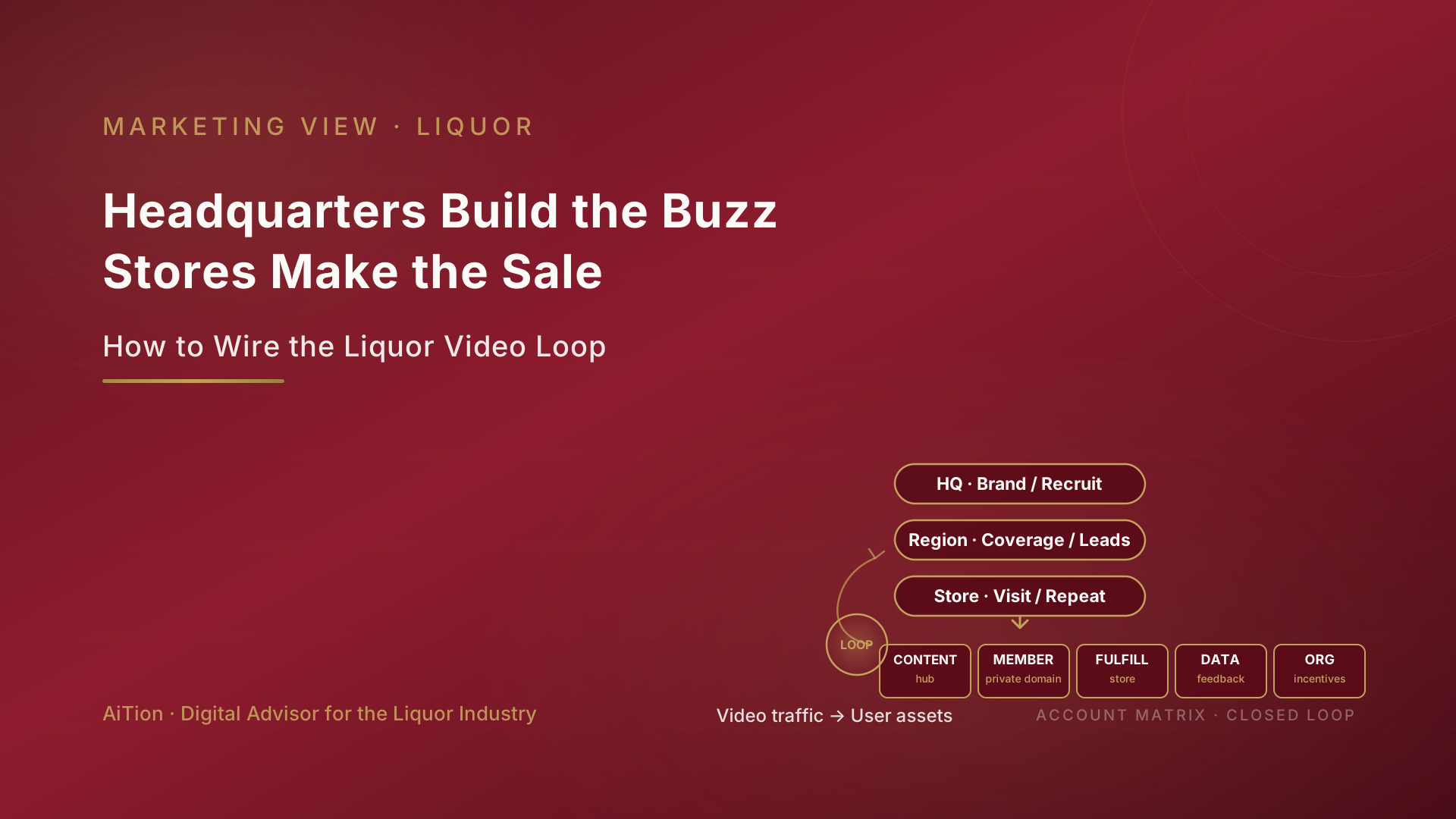
Liquor video-ization has become an organizational behavior, yet most distilleries stall on "traffic with nowhere to go". This article proposes a three-tier account matrix (headquarters, regional, terminal) plus a five-layer infrastructure (content, membership, fulfillment, data, organization) as a complete solution, deployed through consulting with tool accompaniment to turn video traffic into repeatable user assets. It is a ready-to-follow playbook for both liquor brands and distributors.
I. Lively on the Surface, Stock Still Sitting in the Warehouse
Recently a few distillery friends talked about short video, and their expressions were subtle. The budget was approved, the team was built, the videos were shot, and the view counts looked fine. But when you asked how much liquor was actually sold, the air suddenly went quiet.
One friend who works a regional market put it plainly. Last month he had his business team shoot three videos per person per week. They shot them, and they published them — but after that, nobody knew what happened next.
That is the real picture of liquor video-ization today. The bustle is real, and after the bustle, the stock is still sitting in the warehouse.
II. Three Breakpoints, Broken One Ring at a Time
Videos get shot, but the liquor doesn't move. If you take the chain apart, there are at least three breakpoints.
The first is the breakpoint between content and the store. A user scrolls to a liquor store's video on Douyin and wants to place an order, but can't find the entry point, so they swipe away. The second is the breakpoint between the store and membership. A customer walks in, checks out, and walks out — that transaction is over, and who bought it or whether it was drunk is anyone's guess. The third is the breakpoint between membership and repeat purchase. Even if you add them on WeChat, with no tags and no segmentation, you don't know who should be pushed a new product and who should be offered a discount.
Three breakpoints, chained one to the next. If any link fails to connect, all the videos shot before it were in vain. View counts are for outsiders; the breakpoints are what you yourself need to fix.
III. One Main Thread, Turning Video into an Asset
The core of the solution can be compressed into one sentence. Turn video traffic into user assets.
Spelled out, that's three sentences. Three tiers of accounts create content; private-domain plus stores receive the traffic; data feedback guides the business. Content makes people see you, private-domain and stores make people buy from you, and data makes you understand your business better over time.
That sentence looks simple; the difficulty is in execution. It is difficult because it asks three forces — the distillery, the distributor, and the terminal store — to pull together as one.
IV. Three Tiers of Accounts, Each Doing Its Own Job
Many distilleries run short video with just one account, posting anything and everything. Today the boss's speech, tomorrow a product ad, the day after a factory tour — a mess. When users click in, they can't tell who you are or what you sell, so they swipe away.
The three-tier account matrix is the fix for that mess.
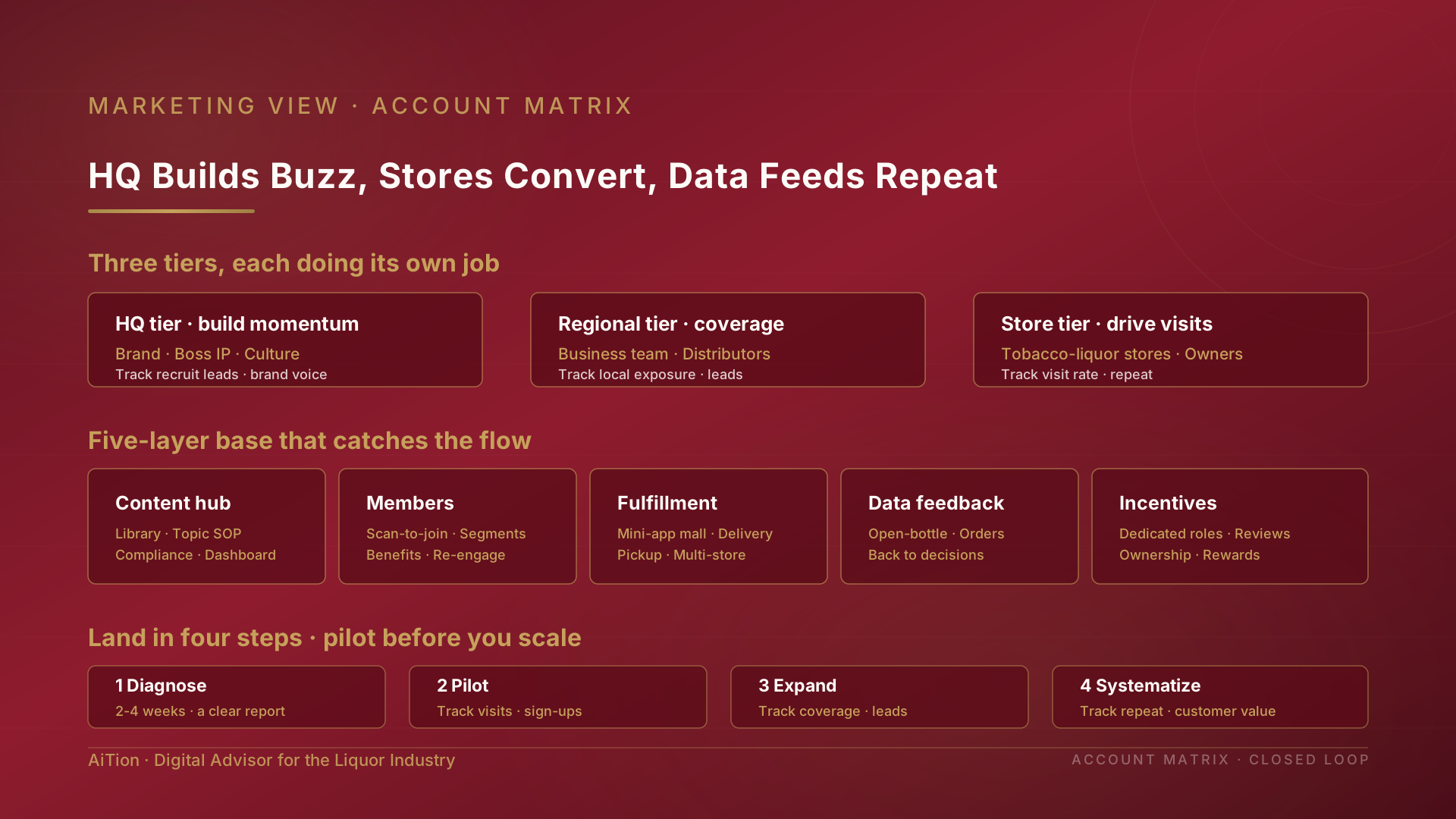
The headquarters tier is the official brand account, the boss IP, and the culture account. The content covers brand narrative, brewing craftsmanship, and dealer-recruitment policy; its job is to build brand momentum and bring in distributor inquiries. The key metrics for this tier are dealer-recruitment leads and brand voice.
The regional tier is the business team accounts and the distributor accounts. The content covers local market movements, regional activities, and channel policy; its job is to achieve same-city coverage by landing headquarters content locally. The metrics for this tier are same-city exposure and lead conversion.
The terminal tier is the tobacco-and-liquor stores and the store-owner accounts. The content covers store scenes, banquet cases, and in-store perks; its job is to catch local traffic and get people into the store. This tier sits closest to consumers and converts the highest, with store-visit rate and repeat purchase as the metrics.
The three tiers each do their own work, without overlap. Headquarters builds the buzz, the terminal makes the sale, and the regional layer sits in between as messenger and amplifier.
Three support mechanisms go with them, and all are necessary. Position accounts by tier — one account should not post everything. Have headquarters supply the content centrally, with terminals only localizing the copy, lowering the store's creation bar. Grade the assessment by tier — headquarters is judged on leads, regional on coverage, terminal on store visits, not a one-size-fits-all click-count ruler.
V. Five-Layer Infrastructure, Catching the Flow
Accounts are set up, content is ready, traffic is coming — someone has to receive it. Catching the flow rests on a five-layer infrastructure.
The first layer is the content hub. Raw-material library, topic SOP, compliance review, and an effect dashboard — one system governs the output of every account. Headquarters supplies the ammunition; terminals adjust the aim. Without a hub, ten accounts run ten different ways and headquarters can't manage them even if it wants to.
The second layer is private-domain membership. Scan-to-join, tag-based segmentation, a benefits system, and repeat-purchase outreach. Followers coming in from the public domain should be recognized and operated within the private domain. This layer decides whether traffic is a passerby or a regular.
The third layer is store fulfillment. A mini-program mall, same-city delivery, in-store pickup, and multi-store coordination. When a user finishes a video and wants a drink, let them get it in the fastest possible way. This layer catches the impulse.
The fourth layer is data feedback. Bottle-opening data, member behavior, order data, and content performance all flow back to the backend. Which video actually brought in buyers, and which regional account converts best, must both be visible. Without data feedback, content production is shooting blind.
The fifth layer is organizational incentives. Dedicated roles, assessment mechanisms, and an incentive plan. The thing most feared in an all-hands initiative is three-minute enthusiasm. Who shoots, who reviews, who edits, who reviews the results — responsibilities land on individuals, and interests are tied to outcomes. The Yishun approach of building a stage for employees and letting store managers act as owners is worth referencing.
The five layers look like five separate systems, but they are really one machine. The content hub feeds the input, private-domain and stores do the processing, data feedback does the quality control, and organizational incentives supply the fuel.
VI. Pilot First, Then Scale
No matter how good the plan, you can't swallow it all in one bite. The recommended rollout pace is four steps.
Step one, diagnosis. Over two to four weeks, take stock of the account situation, the channel situation, and the data situation. Which accounts are really working and which are just going through the motions, how many members are already accumulated, and how far the stores' fulfillment capability has come. Produce a diagnostic report, then settle the implementation plan. Starting without knowing your own baseline is most likely a waste of budget.
Step two, pilot. Pick one city and a few stores, and run through the small closed loop of "same-city account to store to member". The city doesn't need to be big and the stores don't need to be many; first clear the path. This step tracks two numbers: store-visit rate and membership sign-ups.
Step three, expand. Once the pilot works, copy the model to other regions, roll out the regional matrix, and let headquarters' content hub take shape. This step tracks same-city coverage and lead conversion.
Step four, systematize. Once the matrix stabilizes, use data to drive segmented operations and get the repeat-purchase system running. This step tracks repeat-purchase ratio and customer value.
This pace suits being advanced through consulting with tool accompaniment. Consulting solves the direction problem — the diagnostic report, the implementation plan, and the operations SOP are all consulting work. Tools solve the execution problem — membership, fulfillment, live streaming, and dashboards all have ready-made infrastructure to plug into. Accompaniment solves the persistence problem, because with someone overseeing the pilot period, the team won't quit halfway.
VII. Three SOPs, Established Early
Along the road to implementation, three sets of SOP are better established the sooner.
The content SOP. Where do topics come from, who supplies the raw material, who writes the script, how often to publish, and how to block non-compliant words. Settle it, write it down as a document, and have everyone follow it. Content production can't rely on inspiration; it relies on an assembly line.
The live-streaming SOP. How to obtain the qualification, where the price red line sits, which lines the Advertising Law forbids, and how to guard the protection of minors. Live streaming is the link most prone to compliance issues, so drawing the red lines in advance is a hundred times better than patching things up after an incident.
The outreach SOP. How to activate new customers, how to wake up dormant users, and how to maintain high-value customers. Three kinds of people, three kinds of playbooks — one blanket blast won't do for everyone.
Add one fixed cadence: the monthly review meeting. Put content data, member data, and store data on the table and go through them item by item. Which account to stop, which content direction to invest more in, and what to do next month — all decided in the meeting.
VIII. What to Use to Measure This Plan
Many teams report by leading with view counts, follower counts, and likes. Those metrics look lively, but they stand far from the business.
For this plan, I recommend tracking only business metrics. Private-domain monthly active users, repeat-purchase ratio, store-visit rate, dealer-recall leads, and customer value. Five numbers, and each one ties directly to money. View counts are the face; these five numbers are the substance.
Here's a real-world reference. After one leading liquor company launched its member-community mini-program, private-domain monthly active users rose from a little over ten percent at the start of the year to around 30%, and among private-domain users the share who had purchased more than twice — the repeat-purchase ratio — approached 60%, well above that of the public-domain channels. Doing the same user operations, the public domain buys traffic while the private domain accumulates assets — that is how the gap gets widened.
IX. Don't Expect Video to Cure Every Ill
With the plan laid out, let me splash two basins of cold water.
The first: video can't save the product. Product homogenization, thin channel margins, and inventory backlog are all floor-level problems; video is only an amplifier. When the product is poor, the better the videos are, the faster the fallout.
The second: video doesn't solve the root of slow sell-through. If terminals don't push and distributors aren't motivated, content seeding alone won't turn a planted seed into a pulled crop. Channel governance and profit distribution must move together with the content matrix.
One more premise: private domain first, traffic second. Before the member-receiving and store-fulfillment infrastructure is in place, don't rush to crank up the content budget. If the traffic arrives and can't be caught, it's like pouring water into a leaky bucket.
X. Three Questions, Answered Before You Begin
If you're about to get started, don't rush into a budget-setting meeting. First answer three questions.
Can the store catch the traffic when it comes? Can buyers become members after their purchase? And does repeat purchase have data to back it up?
If you can answer yes to all three, congratulations — your foundation is solid and you can spend your video budget with confidence. If you can't, shore up the foundation first.
For this plan, our way is consulting with tool accompaniment. First diagnose, then pilot, then scale, and finally systematize. Don't rush, but do get moving. Ship it, then improve it, then perfect it. The liquor video-ization train has already left the station; those who boarded early are holding user assets, and those who boarded late are left with nothing but video inventory.
If you're wondering how to connect video traffic with store business, or want to talk about how this three-tier account matrix might land at your company, leave a comment below. No course-selling, no empty promises — just how it's actually done.
Appendix: Data and Case Sources
Leading liquor company case: after launching its member-community mini-program, private-domain monthly active users rose from a little over ten percent at the start of the year to around 30%, and the share of private-domain users purchasing more than twice approached 60% (the case names an anonymous leading liquor company, unnamed)
The Yishun approach: building a stage for employees and letting store managers act as owners (echoing the Gansu Yishun all-hands matrix cited in the article "Liquor Industry's All-Staff Video Push")
The three-tier account matrix, five-layer infrastructure, and four-step roll-out pace (diagnosis — pilot — expansion — systematization) form the methodological framework proposed in this article
【Note: the images in this article were AI-generated. 】