
Hire Your Own Riders, Settle Every Cent, and Reclaim Autonomy in Liquor Instant Retail
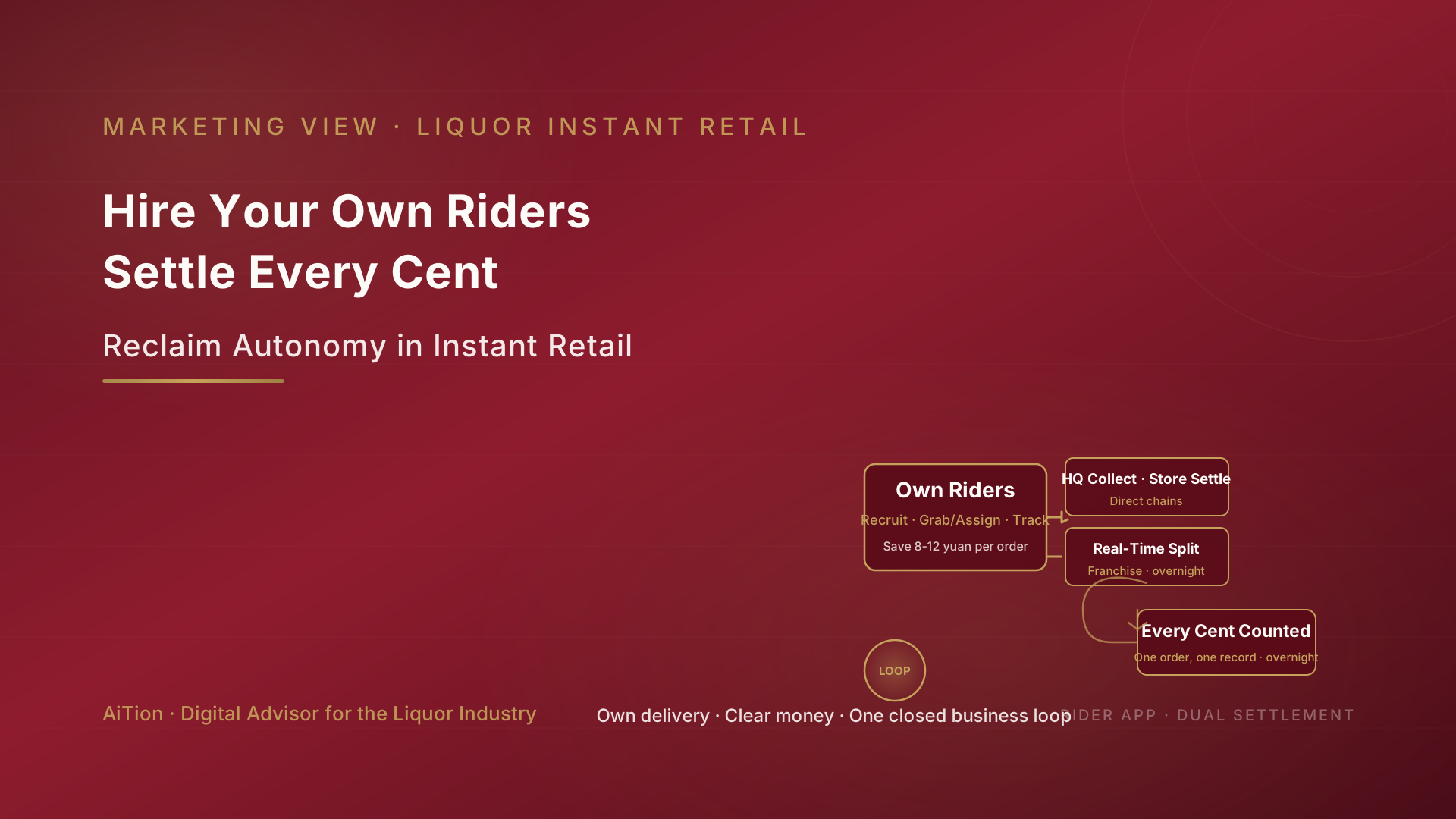
After two or three years in liquor instant retail, many distributors find themselves working for the platform: the platform takes commission, the riders are not theirs to manage, and fund reconciliation is still done by hand. Version 2.1 of the instant-retail system launches a rider app and dual-mode fund settlement, helping distributors win back control over delivery and money. This article unpacks the upgrade logic and links the full picture through a single wedding banquet order.
I. The Age of Working for the Platform Is Over
Liquor merchants doing instant retail have all done that math at some point.
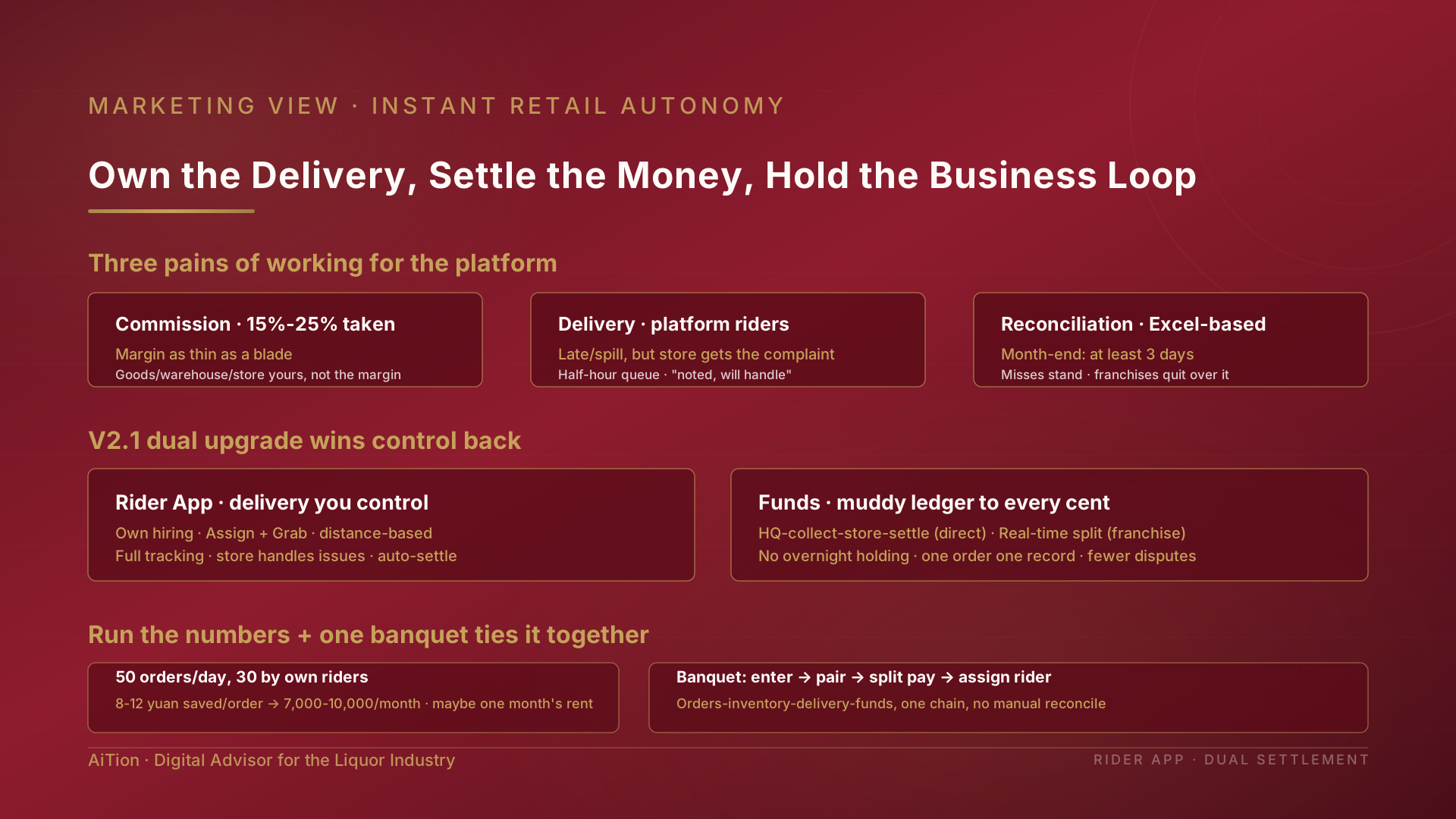
For every order delivered to a consumer, the platform takes 15% to 25% in commission, then a rider delivery fee is deducted, leaving the remaining margin as thin as a blade. You provide the goods, you provide the warehouse, you provide the store — but the delivery is the platform's rider, the money flows into the platform's account, and the consumer data stays on the platform's backend.
The goods are yours, the store is yours, but the right to distribute the profit is not in your hands.
It's not only a money problem. The delivery experience is what really rankles. The rider is late, spills something, misses an item, acts rudely — and the consumer lodges the complaint against your store. You call the platform's support line, wait in queue for half an hour, and get the reply "noted, it will be handled." Then nothing happens.
Then there's the pain nobody talks about: reconciliation. With multi-store operations, the fund flows between headquarters and stores all run on Excel. Monthly reconciliation alone takes at least three days, line by line, and when something is missed or wrong, all you can do is accept it. Some franchise stores have even threatened to quit over unclear accounts.
After two or three years in instant retail, many distributors look back and realize they have actually been working for the platform.
Handing the lifeblood of your business to someone else isn't cooperation; it's contract manufacturing.
II. The Rider App: Delivery Is Finally Something You Control
The instant-retail system has just been updated to V2.1. This upgrade is not a patch of minor features; it targets the three places that hurt distributors most: delivery, money, and operational detail.
Delivery first. V2.1 launches a rider app, so distributors can have their own riders.
That sounds simple, but for a liquor merchant who has done instant retail for two years, the weight of this needs to be savored.
Riders are recruited on your own instead of relying entirely on platform dispatch. Dispatch supports both grab-order and assign modes — the system assigns when you're busy, and riders grab when you're idle. Delivery fees are calculated by distance, so costs are crystal clear. From pickup to drop-off, the whole ride is tracked in real time, and when something goes wrong the store handles it directly, without queuing on the platform's support line.
Delivery fees are also settled automatically by the system, so what each rider is owed is visible at a glance, with no month-end wrangling over accounts with the platform.
One thing should be made clear. The point is not to throw out third-party capacity entirely. When order volume surges in peak hours, third-party riders remain the fastest supplement. But in off-peak hours — which is most of the time — using your own riders means every cent of commission saved is real profit. More importantly, when delivery goes wrong you can handle it yourself right away, instead of waiting for the platform's support process to run its course.
Run the numbers. A chain liquor store does about 50 orders a day, of which 30 are delivered by its own riders. Saving 8 to 12 yuan in platform commission per order adds up to 7,000 to 10,000 yuan a month. The sum isn't huge, but for quite a few stores it could be exactly one month's rent.
The commission saved is profit; the delivery right reclaimed is sovereignty.
III. Fund Settlement: From a Muddy Ledger to Every Cent Counted
Now the money side.
V2.1's fund settlement supports two modes: headquarters-received-store-settled, and real-time virtual split.
In headquarters-received-store-settled settlement, money first enters the headquarters account and is then distributed to each store by rules. It suits direct-sales chains, where headquarters exercises unified control over funds. Store balances are visible in real time, and withdrawals are self-operated, without waiting days for an approval process.
Real-time virtual split suits franchise chains and loose alliances better. When an order's payment completes, the money is split across each party's account in real time, never held overnight. The salesperson's commission, the store's cost of goods, and the headquarters' service fee are each settled separately. One order maps to one settlement record, with nothing cloudy.
Previously, month-end reconciliation took three days. Now every order settles overnight, and you can see where every cent went the moment you open the backend. Anyone who has run multi-store operations knows this is not about saving time — it's about cutting disputes and protecting partnerships. Many franchise relationships have been destroyed by unclear books.
Clear books make partnerships last; transparent money settles people's minds.
IV. One Wedding Banquet Order Ties Every Upgrade Together
V2.1 also refines several features: freer banquet pairing, more flexible commission configuration, and multi-permission store staff. Listed alone they read like a feature checklist; placed in a real scenario, they become clear.
Picture a chain liquor store taking a wedding banquet order.
A store employee logs in with their own account and, within the scope of their permissions, can enter the banquet information directly. Previously this operation had to go through headquarters approval, costing a day or two of back-and-forth. Now the store handles it on its own, because V2.1 lets you configure different permissions for store staff — who can change prices, who can log orders, who can view financial data — clearly separated.
Once the banquet information is entered, the system automatically matches a liquor pairing plan. The main wine, the festivity wine, and the return-gift wine are put together in one stop, with no need to assemble crates by hand. That is what "freer banquet pairing" means: not handing you a bigger SKU list to choose from, but having the system automatically recommend combinations based on banquet type and the quantity of liquor used.
After the order is confirmed, commissions are split in real time to the salesperson and the store by preset rules. No manual headquarters calculation, no month-end makeup. If the order also involves same-city delivery — say the groom calls at the last minute to have two extra crates sent to the hotel — the system directly assigns the job to your own rider. The rider picks up, delivers, and drops off, fully tracked. The delivery fee and the cost of goods are settled separately, each running its own ledger.
Across the whole flow, from order-taking to delivery to splitting money, no one has to run back and forth to reconcile accounts in the middle. The banquet liquor system and the instant-retail system are connected: orders, inventory, delivery, and funds form one complete chain.
This is precisely what many distributors lack. Not one particular feature, but a chain that strings every link together. However many features you have, if each runs on its own and the data doesn't flow, efficiency still won't go up.
Conclusion: Time to Hold the Business Loop in Your Own Hands
What instant-retail distributors fear most is not competition; it's realizing that after three years, they hold nothing in their hands.
The users are in the platform's hands, the delivery is in the platform's hands, and the money also passes through the platform's hands. The store is yours, but the business closed loop is not.
What V2.1 does, in plain terms, is help distributors fill in that loop. The riders are yours, the delivery is yours to manage, the money is yours to settle, and store staff each mind their own job. It's not about abandoning the platform; it's about having a second set of things you control, beyond it.
The platform has its value, and the traffic and capacity supplement are genuinely useful. But a distributor cannot stand on the platform's leg alone. Self-owned delivery capacity, autonomous settlement, and store autonomy — these are the foundations for doing business standing up.
Traffic is rented; assets are your own.
If you're doing liquor instant retail and want to talk about how to get self-owned delivery capacity running, how to land fund splitting in a compliant way, or how to connect banquet business with instant retail, leave a comment below. No empty talk, only what's actually done.
Appendix: Data and Case Sources
Platform commission ratio: platform takes 15% to 25% on liquor instant-retail orders
Self-owned rider cost estimate: a chain liquor store doing about 50 orders a day, 30 delivered by its own riders, saving 8 to 12 yuan per order, for 7,000 to 10,000 yuan saved a month
V2.1 dual-mode fund settlement: headquarters-received-store-settled (direct-sales chains) and real-time virtual split (franchise chains/loose alliances), both as system-capability descriptions
The wedding banquet scenario is an illustrative use case linking the rider app, permissions, banquet pairing, and commission-plus-delivery settlement
【Note: the images in this article were AI-generated. 】