
Meituan, JD, and Taobao Enter Alcohol Retail: Behind the 50-Billion-Yuan Instant Retail Trend, Are Traditional Distributors Cannon Fodder or the Closest Link to the Consumer?
Strip Away "Selling Liquor" and Look at What's Really Happening
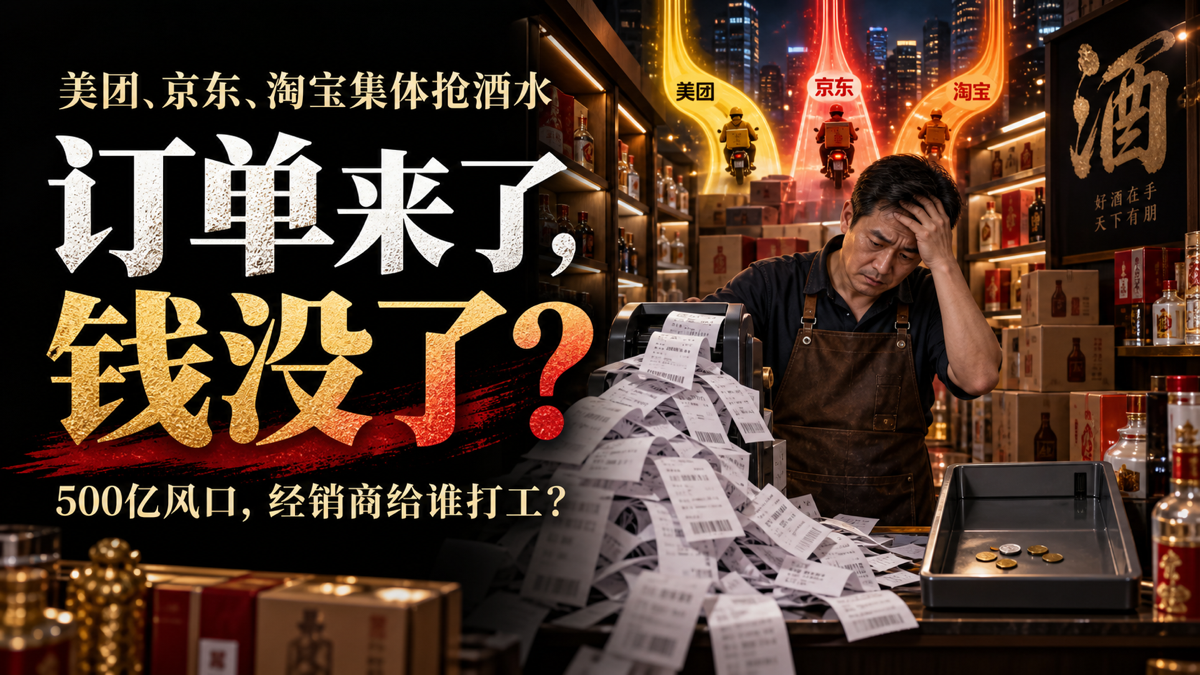
Meituan Shangou, Taobao Instant Commerce, JD Miaosong—three platforms this year collectively elevated instant retail to top-tier entry points. Meituan spun Shangou out as an independent brand. Alibaba rebranded its hourly delivery service as Taobao Instant Commerce. JD merged hourly delivery with JD Daojia to form JD Miaosong. Big moves, grand positioning.
But is alcohol really what they're after? No. Alcohol is just a hook. What they're eyeing is the traffic gateway within a three-kilometer radius of your store, and the fulfillment network that delivers in thirty minutes. In this chess game, the distributor is a pawn—and the most expendable kind.
The 50-Billion-Yuan Illusion
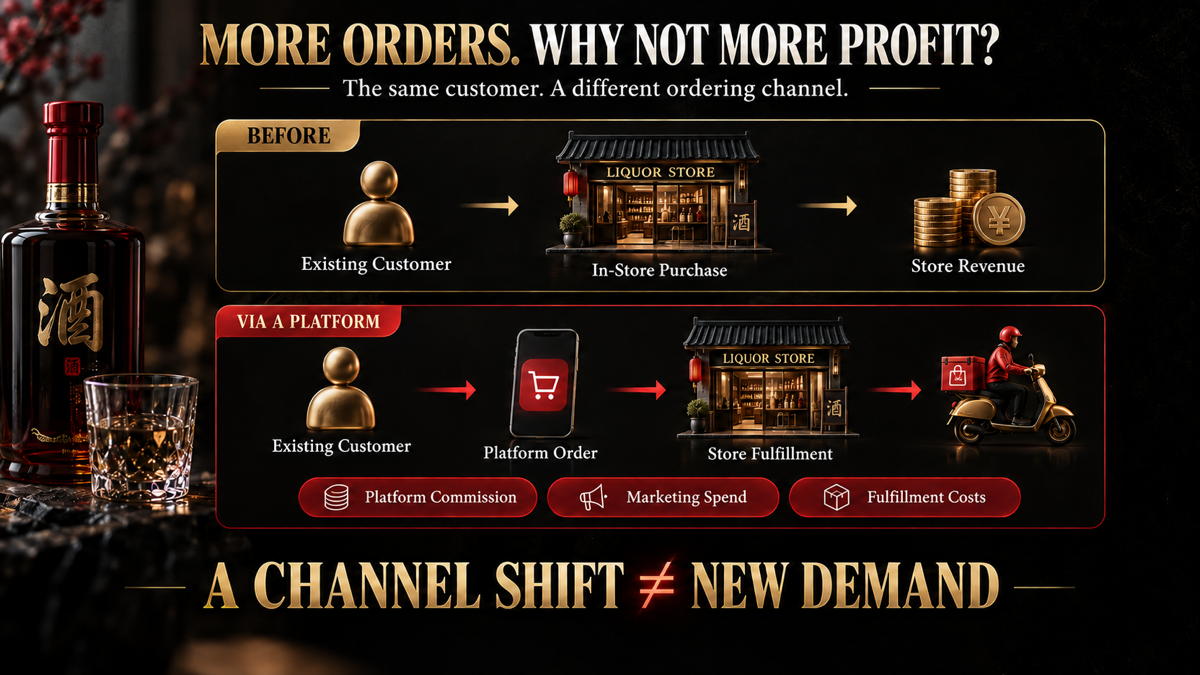
Let me throw some cold water here. That 500-billion-yuan figure gets thrown around as incremental growth. My own judgment: there's a lot of water in that number. Think about it—a loyal customer who used to come to your shop to pick up two bottles of Moutai now lies on his couch, orders on Meituan, and has a rider deliver it in twenty minutes. That order gets counted under instant retail, but this was already your customer. Moving an offline order online, where the platform eats the commission and traffic while your store loses foot traffic—is that growth, or is that relocation?
Let me be blunt. The bulk of so-called instant retail alcohol orders is essentially moving money from the distributor's own plate to someone else's table.
"Tobacco and Liquor Shops Becoming Dark Stores"—Easier Said Than Done
The phrase "tobacco and liquor shops becoming dark stores" got talked to death this year. It sounds great: no more waiting for customers, serving a three-to-five-kilometer radius with instant delivery. But go ask the owners who actually went online. If you don't join a platform, your foot traffic gets cannibalized by the shop next door that did. If you do join, you go from boss to delivery rider—pricing power gone, deposits, commission rates, and marketing fees all still due, profits so thin you can see through them. Data shows the number of baijiu and beverage lightning warehouses grew 130% year-over-year in 2025, but how many of those warehouses are actually profitable? Nobody's saying.
I have a distributor friend who bit the bullet and joined Meituan last year. This year he vented to me: orders are up, money isn't—just working for the platform. I believe him.
But This Isn't "Don't Act"—It's "Don't Act Blindly"
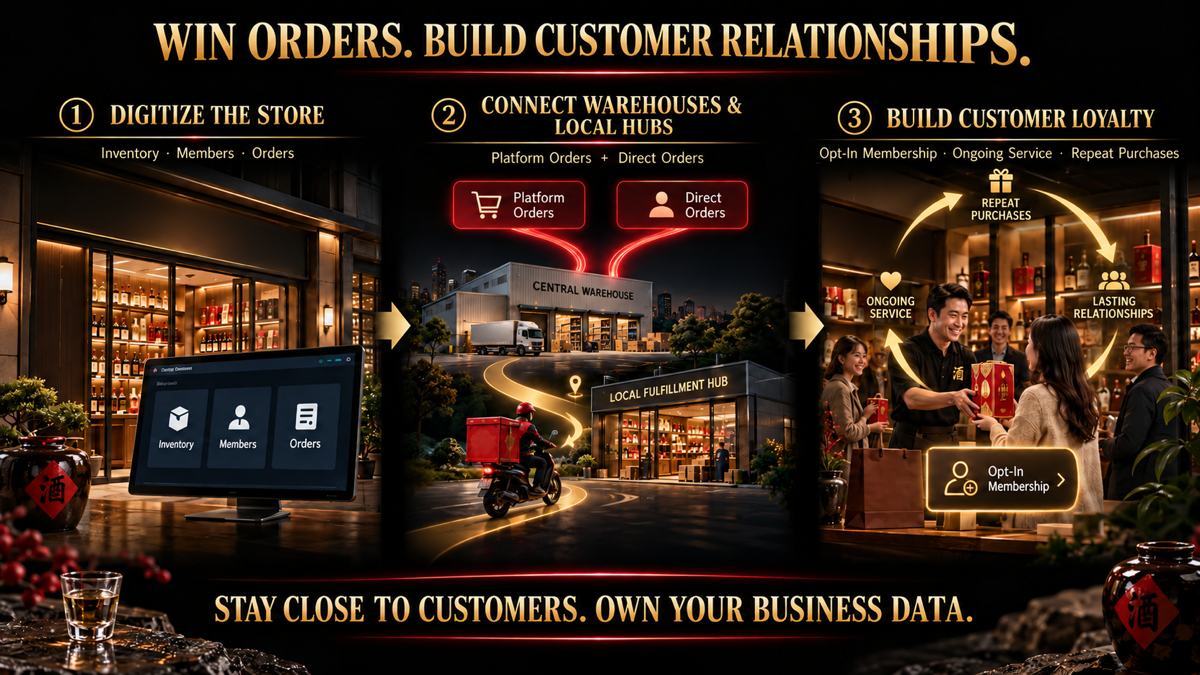
There are people who figured it out. Their approach comes down to three things. First, digitize the store—don't just hang a sign; get inventory, membership, and orders into a system. Second, deploy a combined cloud-warehouse and dark-store setup that takes both platform orders and your own private-domain orders. Third and most critical: platform traffic shouldn't just pass through—you need to use private domain to capture those customers, so next time they want baijiu, they think of you first, not Meituan.
Too many people miss that third point. The platform gives you traffic once. If you use it once, you'll always be an employee. Turn that traffic into your own user asset, so next time the repurchase comes through you—then you've leveraged the platform's strength without letting the platform leverage your life.
Who Should Dive In, Who Should Stay Away
Who should dive in:
You already run same-city delivery with rider resources—fast onboarding.
You have a solid member base with hundreds or thousands of loyal customers in your private domain—joining instant retail is a natural extension.
You hold scarce supply, like an exclusive regional agency—the platform is courting you to onboard, and you have bargaining power.
Who should hold off:
You have one shop where the owner is also the clerk and accountant, and your system is all in your head—fix the basics first.
Your margins are already thin and you rely on information asymmetry to earn the spread—once you're on a platform and prices get compared side by side, you'll die the fastest.
Blindly following the trend in, you'll most likely lose money making noise. I've seen too many in this industry—chasing hot spots hard, then at year-end realizing: traffic up, money gone.
The Second Half of the 50-Billion-Yuan Question: Who Wins?
Back to the opening question. In the second half of 500 billion yuan, who's the winner? My answer has been consistent: being closest to the goods doesn't help. The one who survives is closest to the consumer and holds the data. Platforms are close to the consumer, but they won't share data with you. So what this ultimately comes down to is: while the platform uses you as a pipe, can you quietly turn yourself into the person closest to the consumer?
It's not easy. I'm still figuring it out myself, and many plays haven't fully panned out yet. But one thing I want to make clear: trends don't wait for you to be ready. If you don't act, the distributor half a step ahead of you will deliver your customer away in thirty minutes.