
Search
Articles26 results
View all →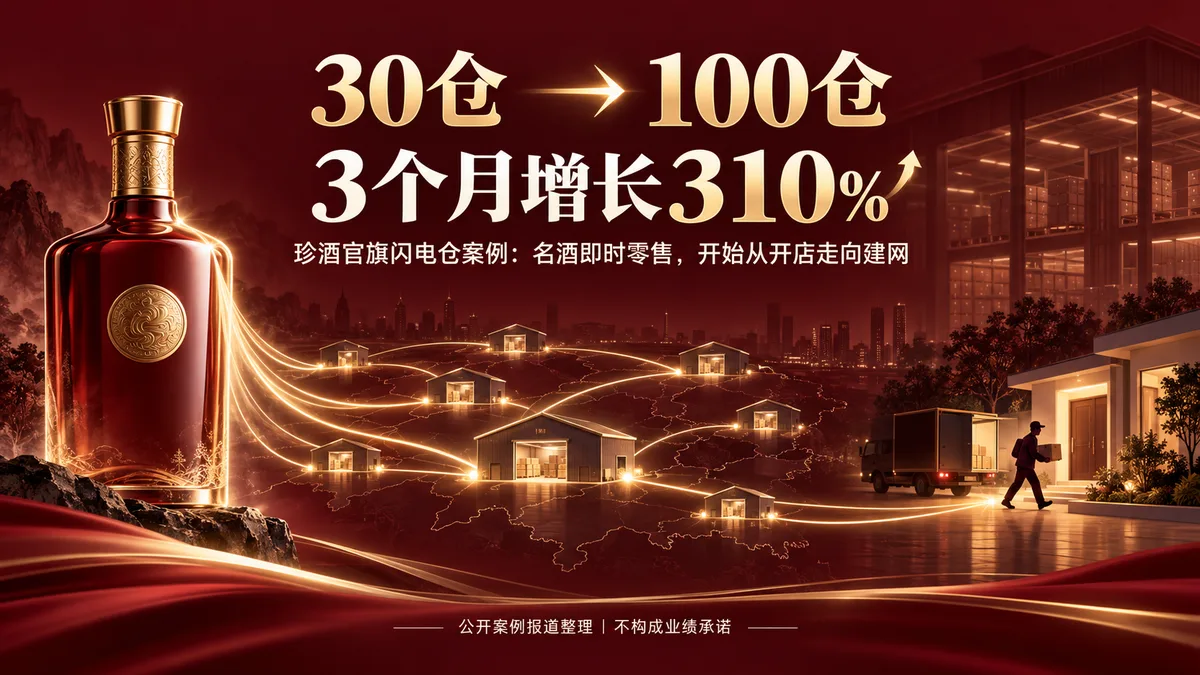
Zhenjiu’s Official Flagship Lightning Warehouses: Did a 310% Three-Month Growth Case Validate a Light-Asset Route for Premium Baijiu in Instant Retail?
At Meituan’s Instant Retail Industry Conference on September 22, 2026, a Zhenjiu case was presented: a 30-warehouse pilot expanded to 100 warehouses across core areas of 18 cities in three months, with sales revenue up 310% sequentially. Assortment reached 3.5 times that of comparable branded liquor stores, while per-store output reached 2.5 times. Premium baijiu’s instant-retail playbook is shifting from “list products on a platform” to “use a warehouse network to build local availability.”
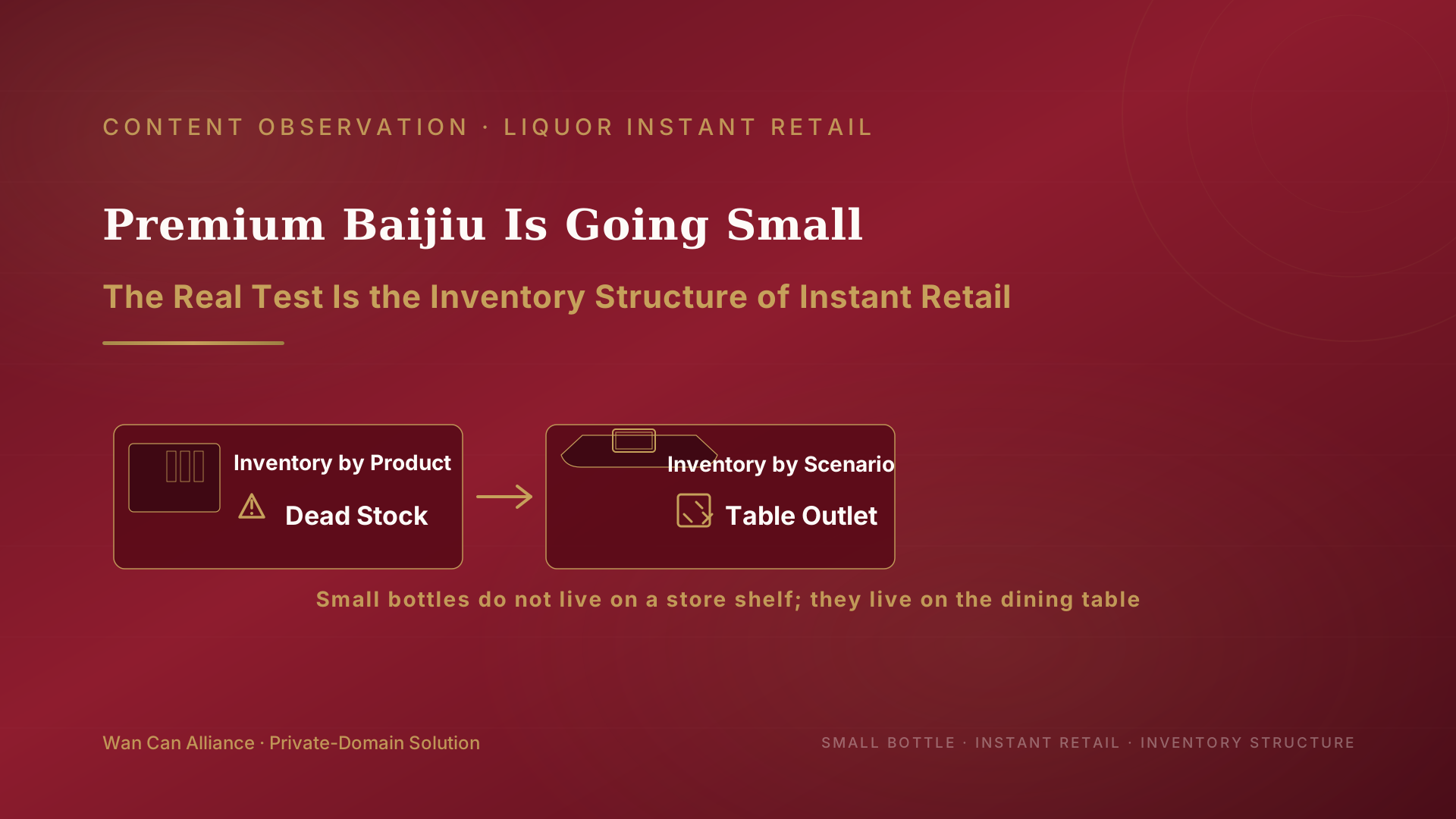
Premium Baijiu Is Going Small: The Real Test for Small Bottles Is the Inventory Structure of Instant Retail
Premium baijiu brands are releasing small bottles all at once, but small bottles multiply SKU complexity several-fold, and if store inventory is organized by product rather than by consumption scenario, small bottles become an inventory black hole, the fix lies not in the warehouse but on the dining table. This article starts from why the likes of Luzhou Laojiao and Wuliangye are shrinking their bottles, breaks down why "making the bottle smaller is easy but the warehouse is hard," and lands on an approach where inventory follows scenarios.
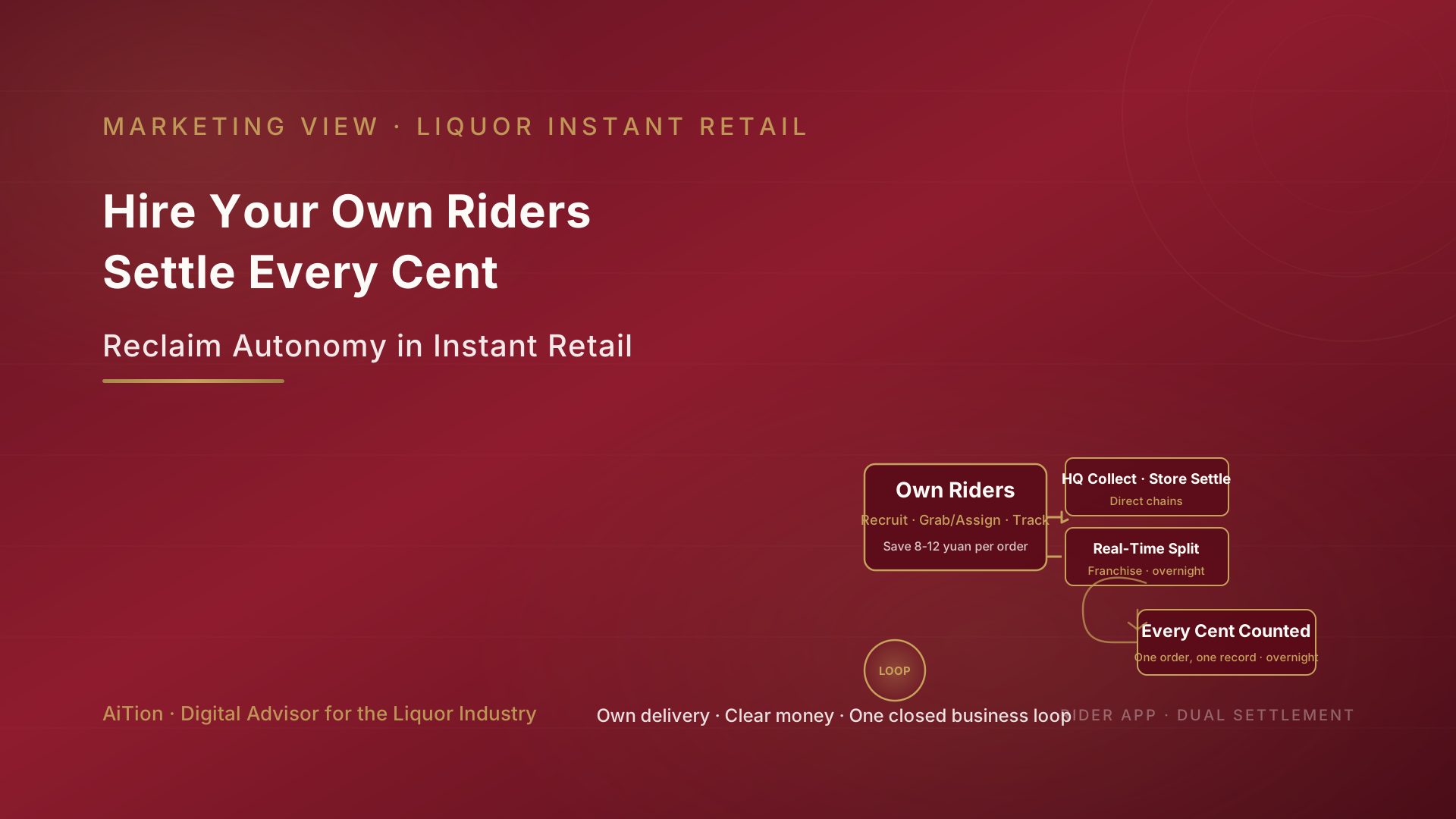
Hire Your Own Riders, Settle Every Cent, and Reclaim Autonomy in Liquor Instant Retail
After two or three years in liquor instant retail, many distributors find themselves working for the platform: the platform takes commission, the riders are not theirs to manage, and fund reconciliation is still done by hand. Version 2.1 of the instant-retail system launches a rider app and dual-mode fund settlement, helping distributors win back control over delivery and money. This article unpacks the upgrade logic and links the full picture through a single wedding banquet order.
Instant Retail for Regional Distributors and Alcohol Supply Chains · The Wan Can Alliance Private-Domain Solution
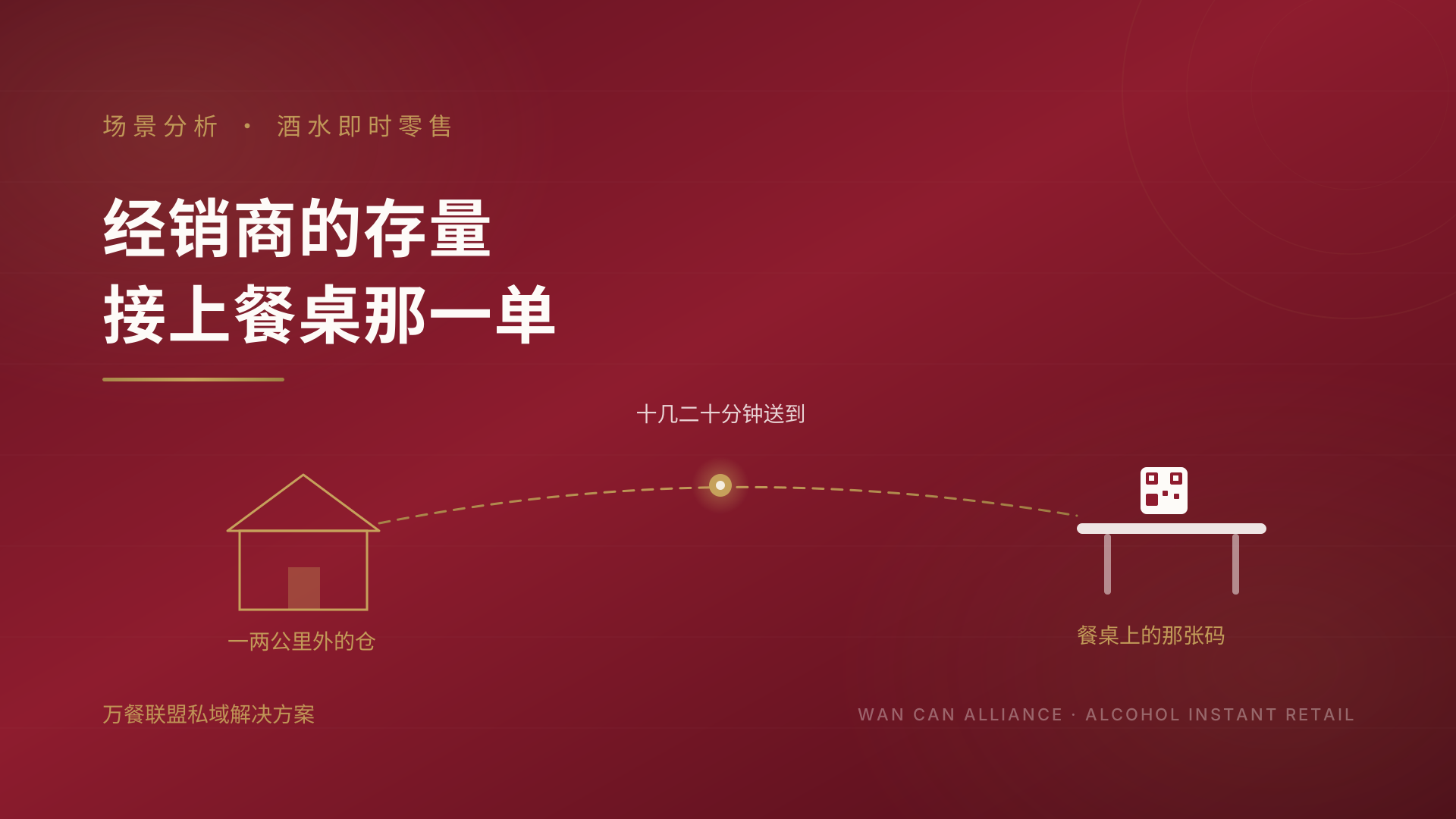
Regional distributors face a clear situation: the price spread on famous liquor has been squeezed thin, and stocking outlets means fronting the goods and extending credit. But the warehouses, vehicles, outlets, SKU breadth, and local relationships in their hands are things no one else has. What the Wan Can Alliance does is connect that existing stock to the single order at the dining table.
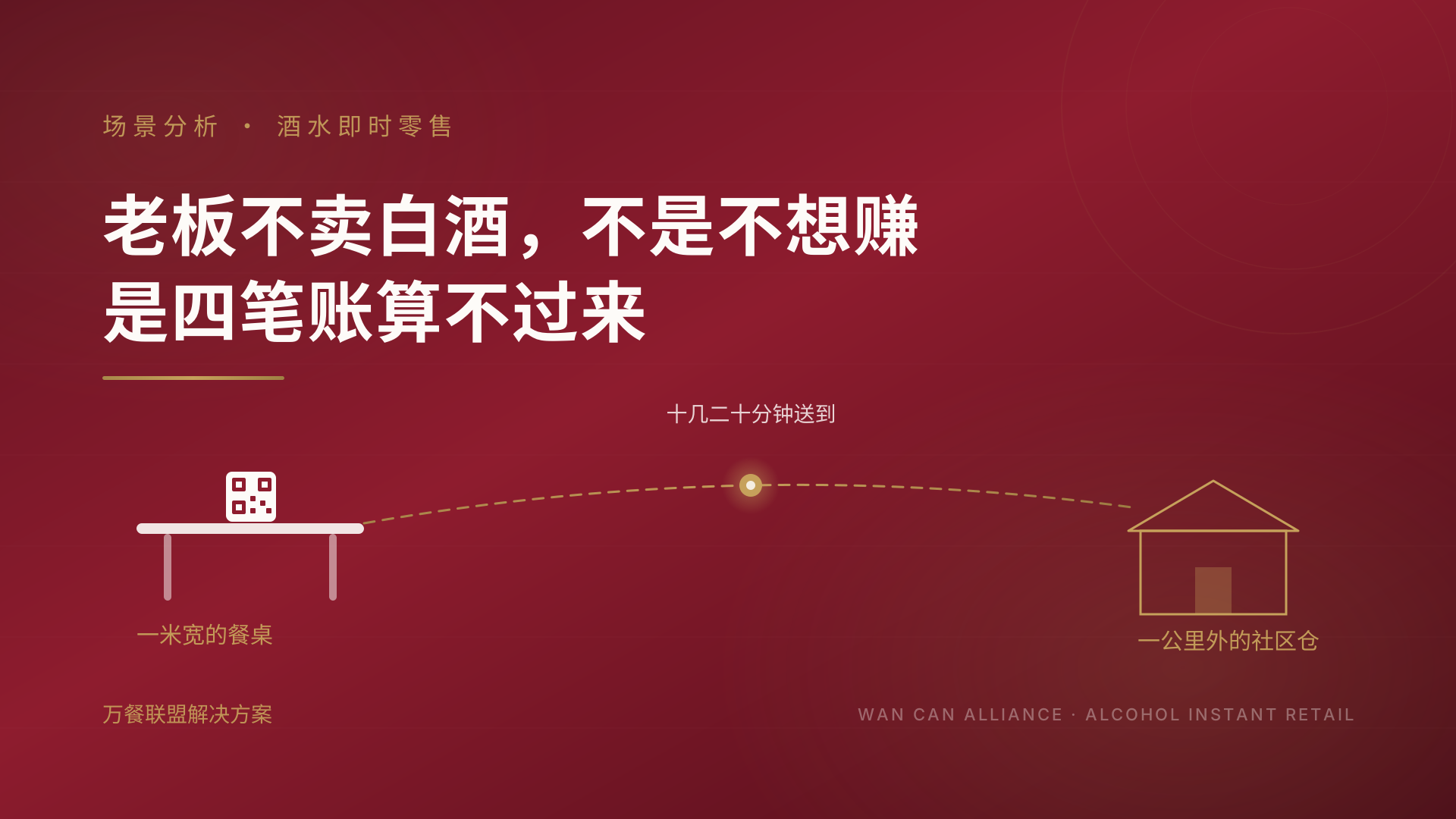
Scenario Analysis: Alcohol Instant Retail · The Wan Can Alliance Solution
The owner doesn't stock baijiu—not because he doesn't want the margin, but because four accounts don't add up. Last night at a late-night food stall, two young women from a brand walked from table to table pitching their baijiu. Buy a bottle and you get a lucky draw; if the prize was big enough, they even danced on the spot. Lively—and expensive. I kept thinking: the baijiu the owner can't display—could it sit in a warehouse a kilometer away?
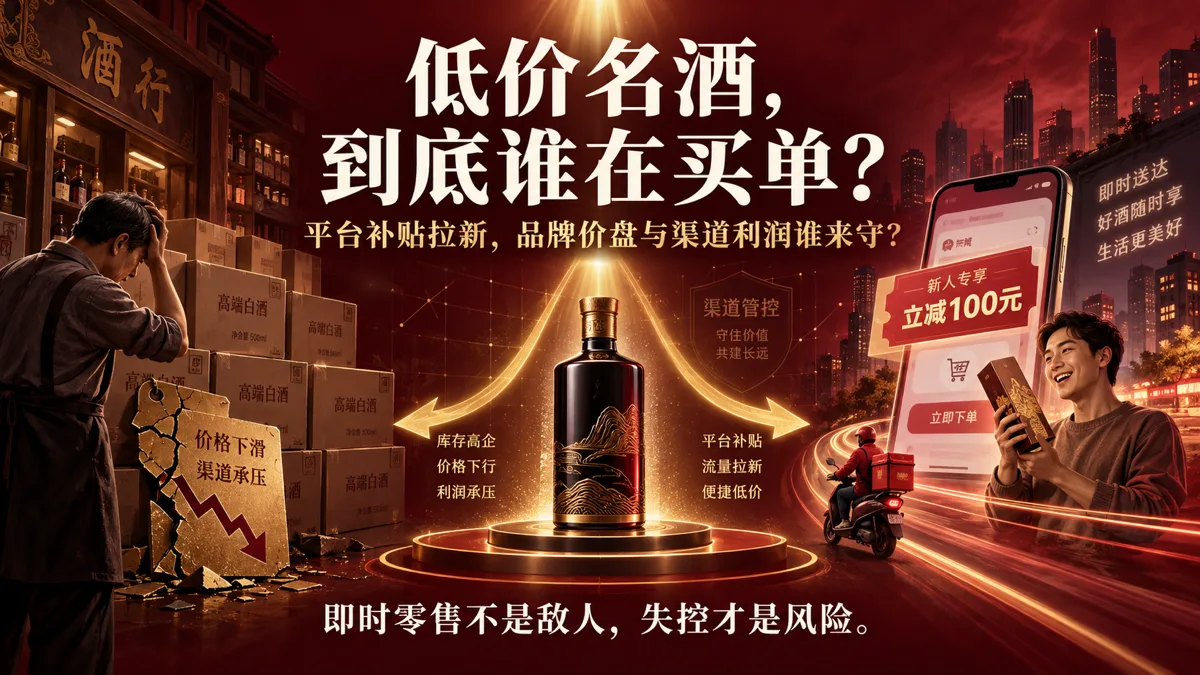
Platform Subsidies Are Breaking Through Premium Liquor Pricing: Is Instant Retail a Lifeline or a Poison Pill?
Instant retail is pulling premium liquor into a more transparent competitive environment defined by lower consumer prices, faster delivery, and platform-led demand. Subsidies and traffic strategies may expand consumer reach, but they can also pressure established pricing discipline, distributor margins, and brand premium. This article examines instant retail’s dual effect on premium liquor channels: it can open new occasions and capture consumer data, while also amplifying diversion, price inversion, and channel conflict when authorization, pricing, and profit-sharing rules are weak. The issue is not whether a brand enters instant retail, but who controls product data, channel rules, and consumer relationships.
Popular keywords