
Scenario Analysis: Alcohol Instant Retail · The Wan Can Alliance Solution
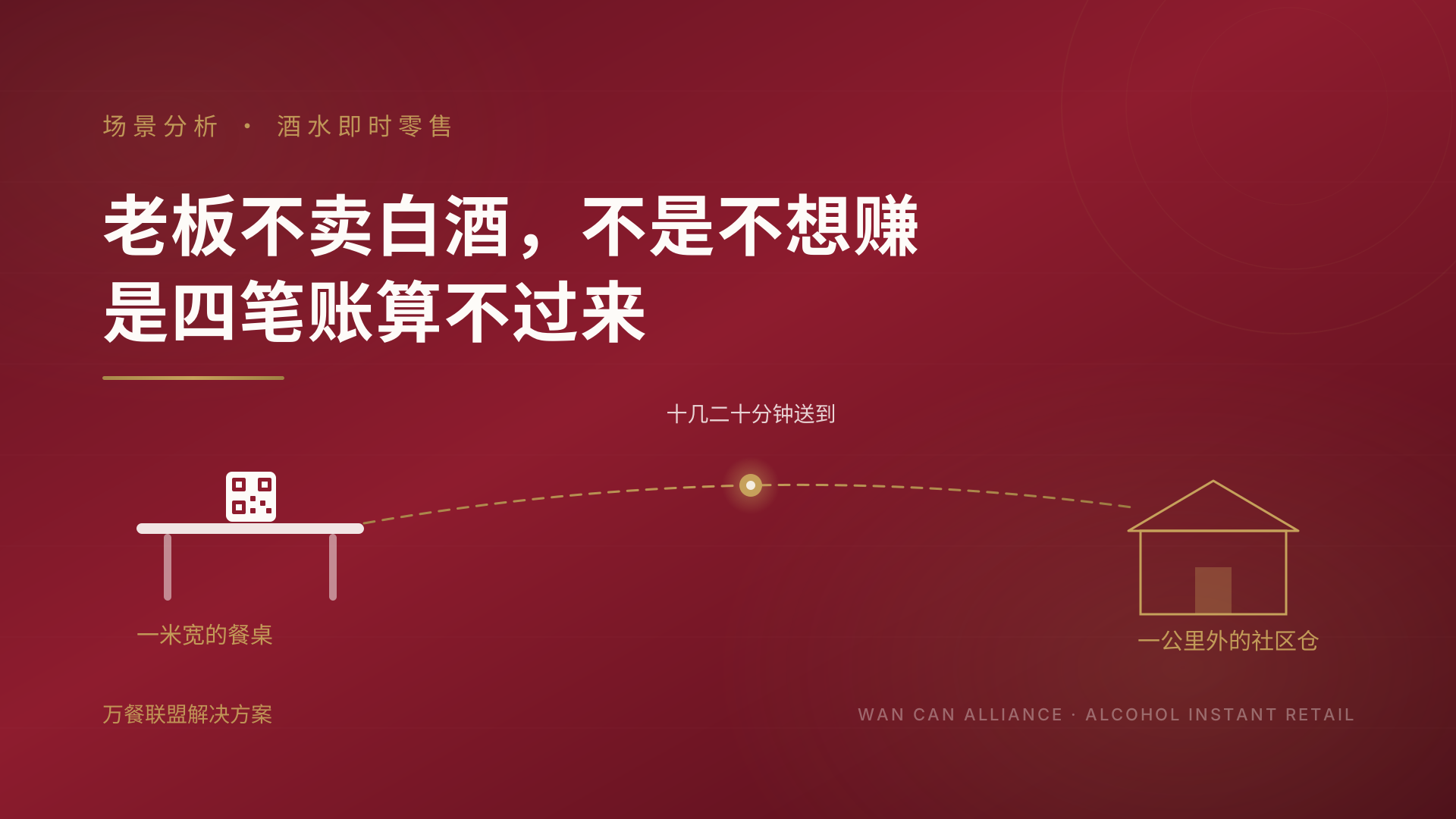
The owner doesn't stock baijiu—not because he doesn't want the margin, but because four accounts don't add up. Last night at a late-night food stall, two young women from a brand walked from table to table pitching their baijiu. Buy a bottle and you get a lucky draw; if the prize was big enough, they even danced on the spot. Lively—and expensive. I kept thinking: the baijiu the owner can't display—could it sit in a warehouse a kilometer away?
Introduction: Last Night's Table Spilling onto the Roadside
Last night I ate at a late-night food stall. It was packed—tables stretched all the way to the roadside.
The husband-and-wife owners ran back and forth between the stove and the register. Waiters carried trays sideways through the gaps between chairs. The register counter was tiny; behind it sat a few small bottles of everyday baijiu—Maopu, Xiao Jinjiu, Erguotou, just those. Beside it, three cabinets and three freezers held cola and a few kinds of beer.
The freezers were provided by the beer brands. That detail matters later.
Past eight, two young women showed up, carrying their brand's baijiu from table to table. Customers were peeling crayfish, so they waited nearby for a chance to start a conversation. Buy a bottle and you get one draw; if the prize was big enough, they performed a dance on the spot.
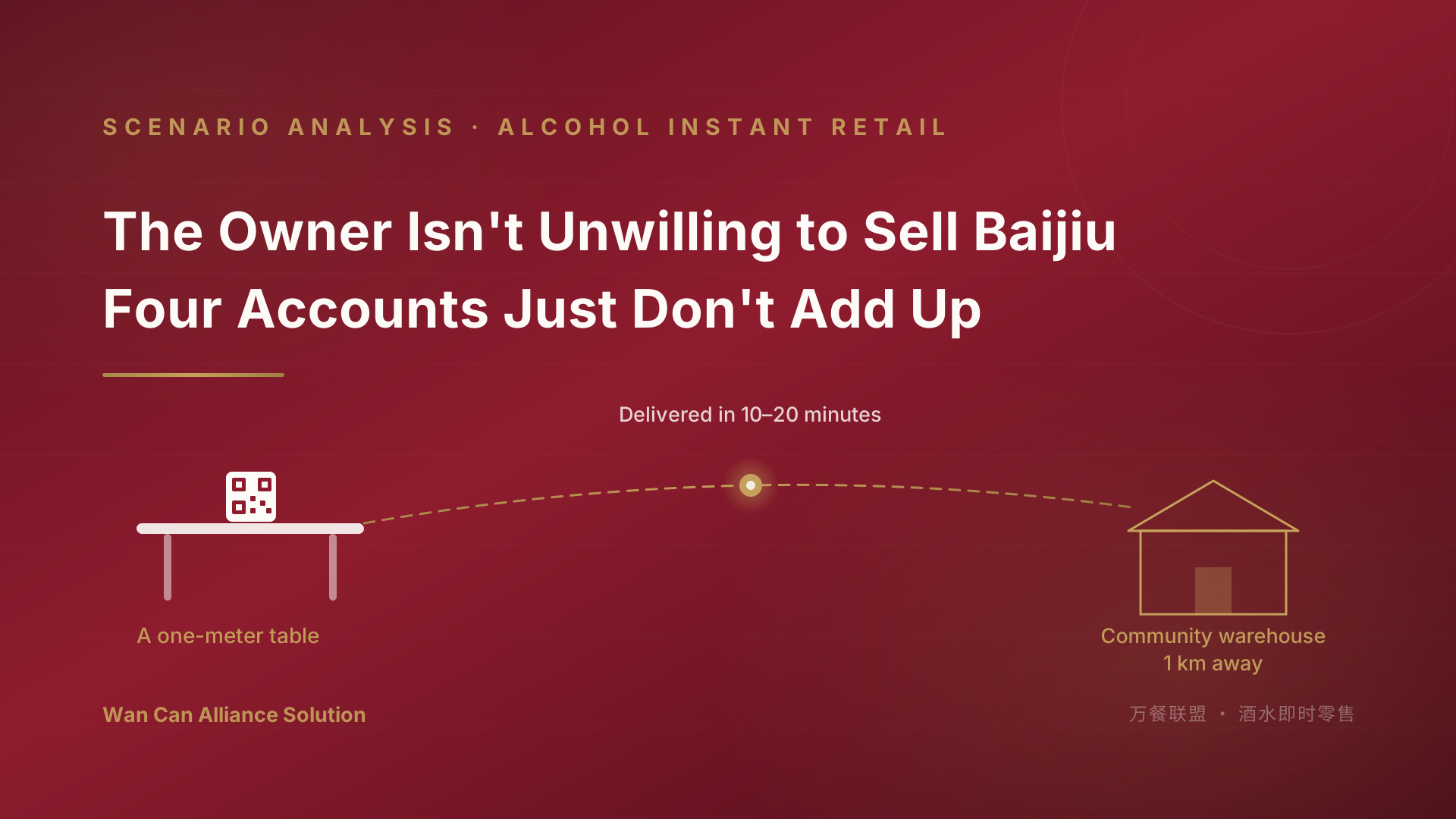
The Owner Isn't Unwilling to Sell Baijiu—Four Accounts Just Don't Add Up
The first account is space. Every inch of a food stall's floor is making money. The one-foot-wide counter behind the register is already at its limit with three small bottles.
The second is capital. Mid-to-high-end baijiu runs hundreds to over a thousand yuan a bottle; stocking ten bottles ties up thousands. A mom-and-pop shop's cash has to cover ingredients, rent, and payroll. It can't afford to tie it up.
The third is authenticity. How do you tell real from fake, and can the supply channel be trusted? A restaurant owner has no such expertise—and shouldn't have to carry that risk.
The fourth is profit. Baijiu that reaches a food stall has already passed through several hands, leaving the owner a razor-thin spread. With no money to be made, why would he tie up capital?
So the freezers hold only beer. Beer is cheap, turns over fast, must be drunk cold—and the brand handed over the freezer for free. The brand put up the asset, so the freezer holds the position on its behalf.
Baijiu was never given that position. That's where this story begins.
One Night's Ceiling Is a Few Dozen Tables
Now run the numbers from the brand's side. Two salespeople's salaries and commissions, the draw prizes, the on-site materials—all riding on one store, one night.
Harder still is the ceiling. There's only so many tables one person can work through thoroughly in a night—thirty, fifty, and that's it. To cover more stores, you can only add people, and costs rise with headcount.
When customers don't drink baijiu that night, it often isn't that they've never heard of the brand—it's that the table had no options. In front of them were only cola, beer, and those three small bottles of Erguotou. So those three are all they could drink.
To give people options, you don't necessarily have to carry the baijiu to the table.
Give the Drink List to the Phone, Leave the Freezer for Beer
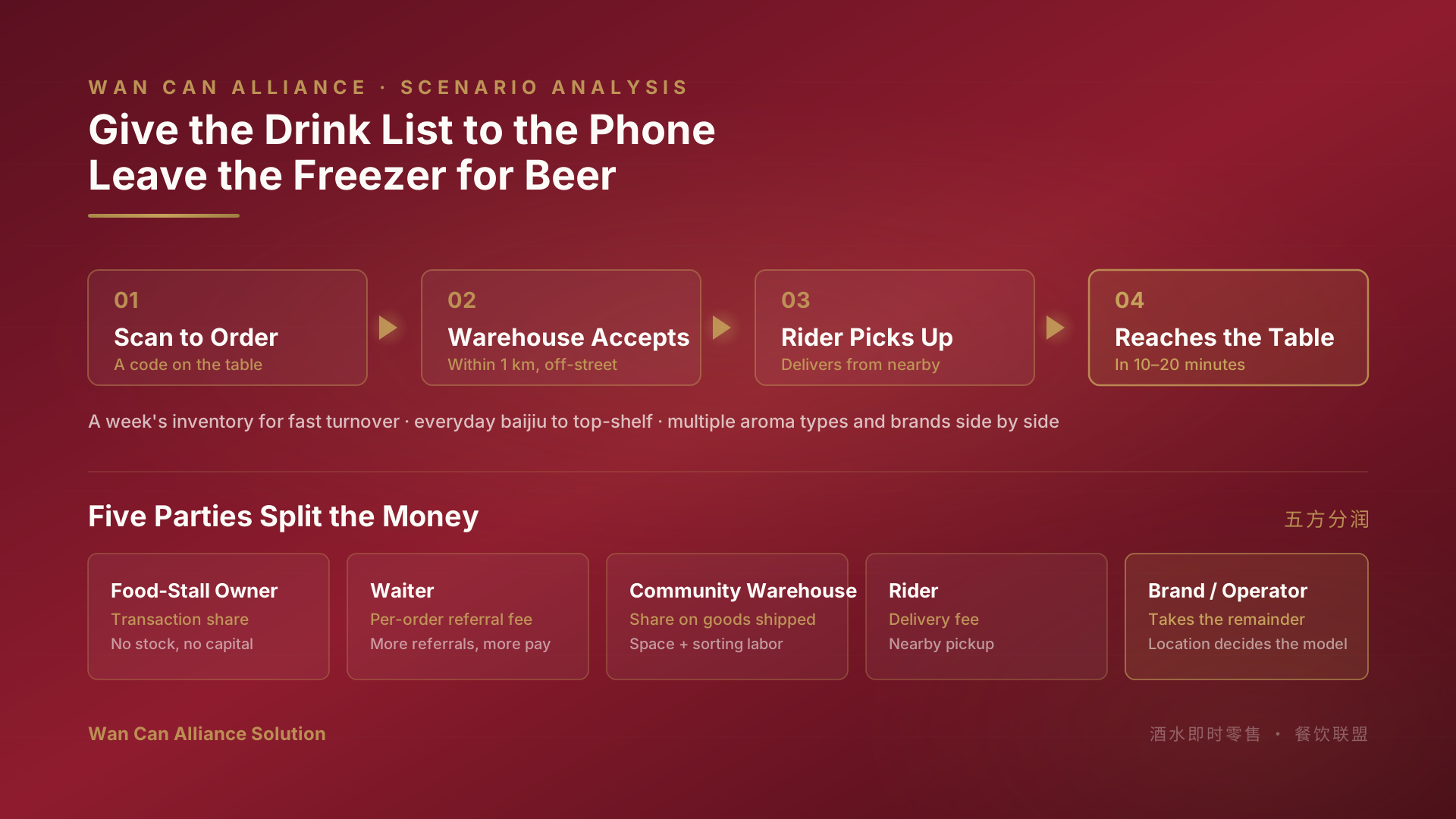
Try a different approach. The brand goes to the food-stall owner to discuss one thing only: put a code on every table.
When a customer wants a drink, the waiter says one line: "Scan the code on the table—it'll be here in ten to twenty minutes." The order lands directly at a community warehouse one or two kilometers away. The warehouse isn't on a street and has no storefront—just a sorting space, with rent far below a street-facing shop. A rider picks up the goods and delivers to the table.
The timing works. A food stall takes a few minutes per dish, and a full table of dishes takes twenty to thirty minutes—so the baijiu arrives around when the food is ready.
One easily overlooked point: beer isn't suited to this route. Beer needs to be cold, and both delivery and insulation cost money—taking it on-site from the store is the most economical. Baijiu is the exact opposite: bottles range from a few dozen to over a thousand yuan, the price span is wide, and the SKUs are numerous—no single freezer could ever hold them.
This is the line anyone in the alcohol business should fixate on. What a food stall can display on its own is limited to small-bottle everyday baijiu like Xiao Jinjiu, Jiangxiaobai, and Erguotou, plus two or three kinds of beer—all squeezed into the narrow band from ten to fifty yuan. When a customer wants to drink something more presentable, the owner can't produce it, and that table's business is lost on the spot. An instant retail mini-program is different. What goes in the warehouse, each store decides its own product selection: everyday baijiu at a few dozen yuan up to baijiu at over a thousand, multiple aroma types and brands laid out side by side—customers can order them, and only then do distributors have business to do.
The division of labor is then clear. The freezer goes to beer; the drink list goes to the table-code mini-program.
Five Parties Split the Money—and One Is Asset-Light
The customer scans, picks a warehouse, and pays. Once the order completes, the money is split five ways.
The food-stall owner takes a share of the transaction—all he contributes is the scenario and a code. No purchasing, no capital tied up, no delivery.
The waiter's referral fee settles per order, so he's willing to bring more customers to scan.
The community warehouse takes a share based on goods shipped; its costs are mainly a non-street-facing space and sorting labor.
The rider takes the delivery fee.
The brand or operator takes what's left.
Among these five, even the dark store or community warehouse is asset-light—it only needs to hold a week's inventory for fast turnover. And where the warehouse is built and what it stocks determine whether this model works. The warehouse is best placed in an area where residences, restaurants, and late-night stalls are mixed together.
A One-Meter Table Can't Hold a Drink List
Back to that opening scene. Those two young women did nothing wrong—they were just using the most expensive method to close the thinnest possible order.
A food stall's table is only one meter wide. A city has tens of thousands of such tables. Whoever moves the warehousing and delivery from behind the table to a kilometer away turns those tens of thousands of tables into a single comprehensive drink list.
Conclusion
Some people call this approach the Wan Can Alliance.
As for what exactly the customer wants to drink, they can take their time choosing.