
Search
Articles12 results
View all →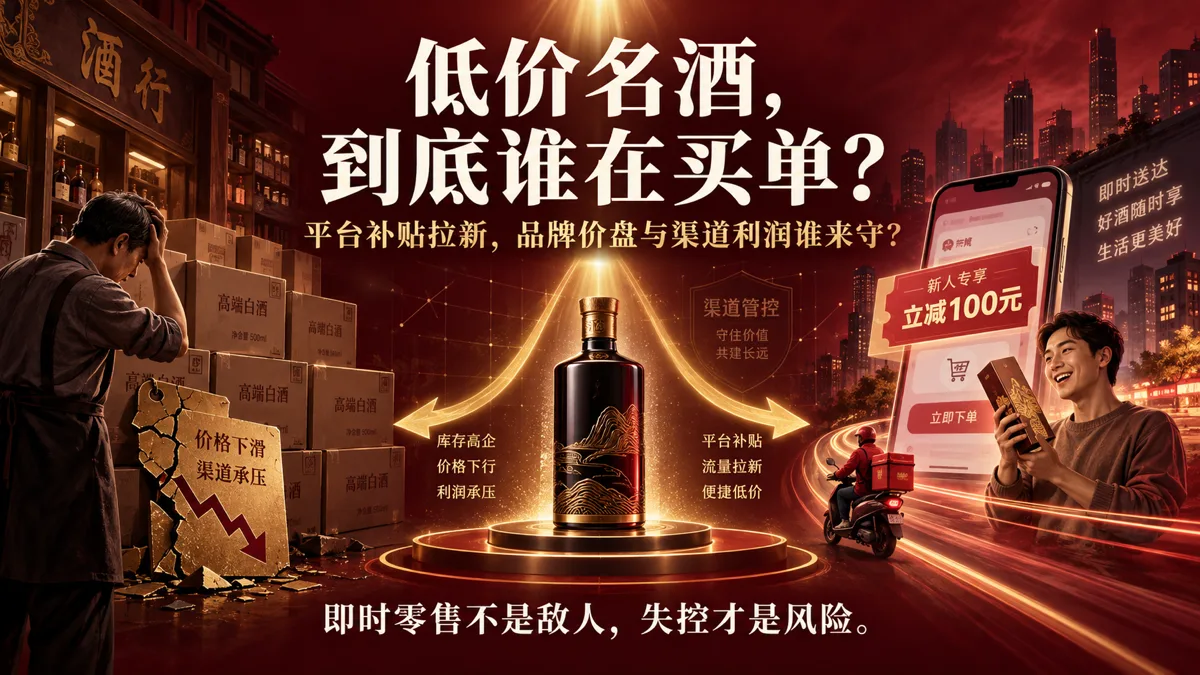
Platform Subsidies Are Breaking Through Premium Liquor Pricing: Is Instant Retail a Lifeline or a Poison Pill?
Instant retail is pulling premium liquor into a more transparent competitive environment defined by lower consumer prices, faster delivery, and platform-led demand. Subsidies and traffic strategies may expand consumer reach, but they can also pressure established pricing discipline, distributor margins, and brand premium. This article examines instant retail’s dual effect on premium liquor channels: it can open new occasions and capture consumer data, while also amplifying diversion, price inversion, and channel conflict when authorization, pricing, and profit-sharing rules are weak. The issue is not whether a brand enters instant retail, but who controls product data, channel rules, and consumer relationships.
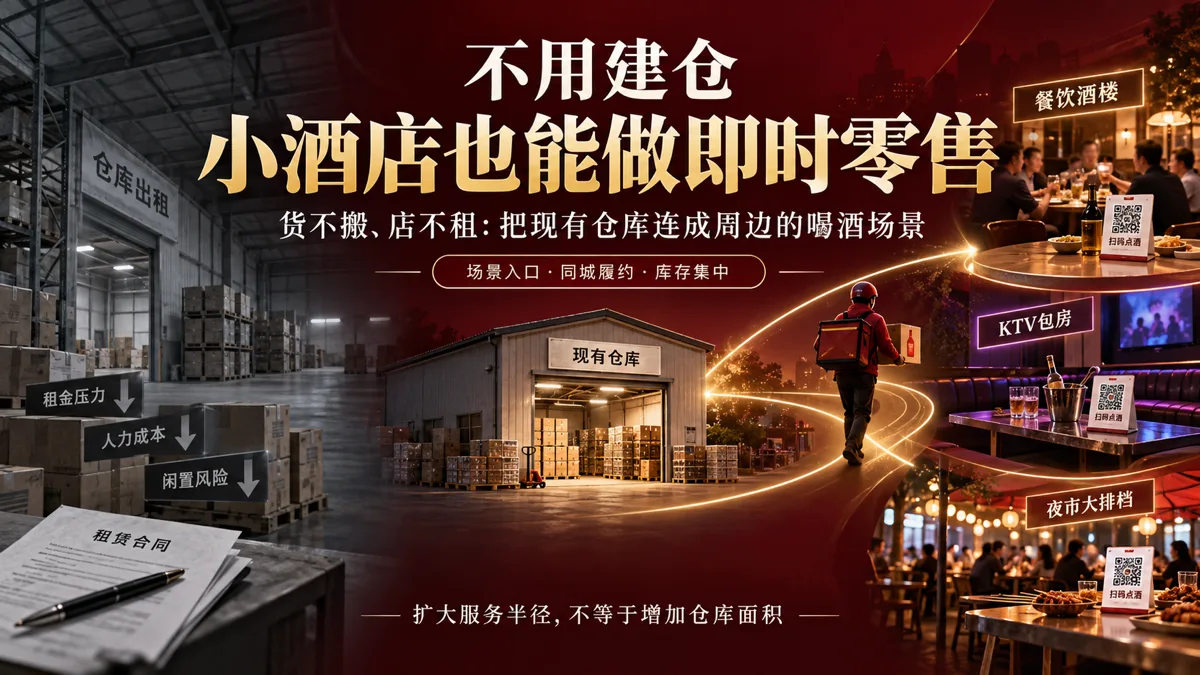
Don't Let "Dark Store" Scare You Off: A Lightweight Playbook for Small Shops Entering Instant Retail
Instant retail is described as a heavy-asset game of "building a warehouse plus a delivery fleet," and individual tobacco & alcohol shops back off the moment they hear it. But a warehouse isn't the only answer. Make your existing warehouse the center, project drinking scenarios into nearby restaurants, KTVs, and late-night food stalls—goods don't move, no store is rented—yet your alcohol sales entry points can multiply dozens of times. This article lays out this lightweight playbook clearly.
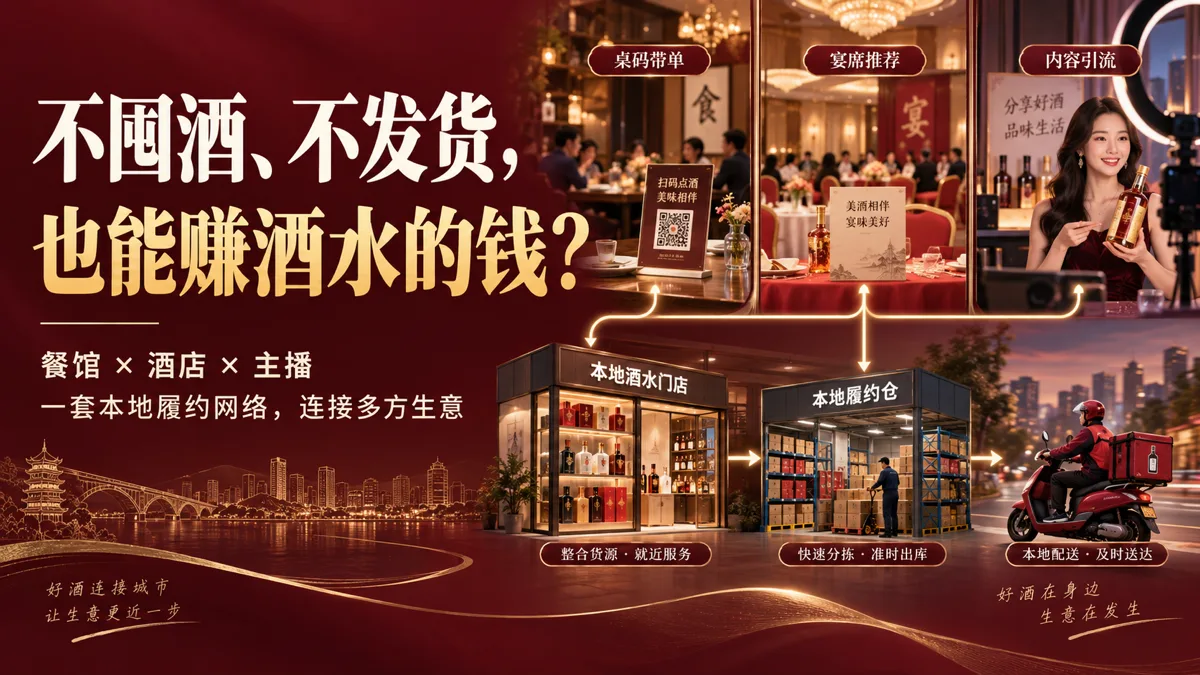
Restaurants Hold No Inventory, Hotels Carry No Stock, Streamers Don't Handle Shipping: An Alcohol Instant Retail Model Where Everyone Profits Together
The traditional alcohol business habitually distributes stock first and sells later—the more scattered the stock, the harder inventory management becomes; the more partners involved, the harder commission calculation gets. This article proposes a model that separates products, traffic, and fulfillment: the platform builds direct stores, franchise stores, and dark stores for unified fulfillment; restaurants place table QR codes and earn a cut without holding inventory; hotels refer banquet clients without stocking and earn commissions; streamers drive traffic without handling shipping; revenue is automatically settled through two systems—payment splitting for enterprise partners and tax-compliant payouts for individual promoters. The core: centralized inventory, distributed customer acquisition, proximity fulfillment, and automated revenue settlement—reorganizing a city's alcohol business.
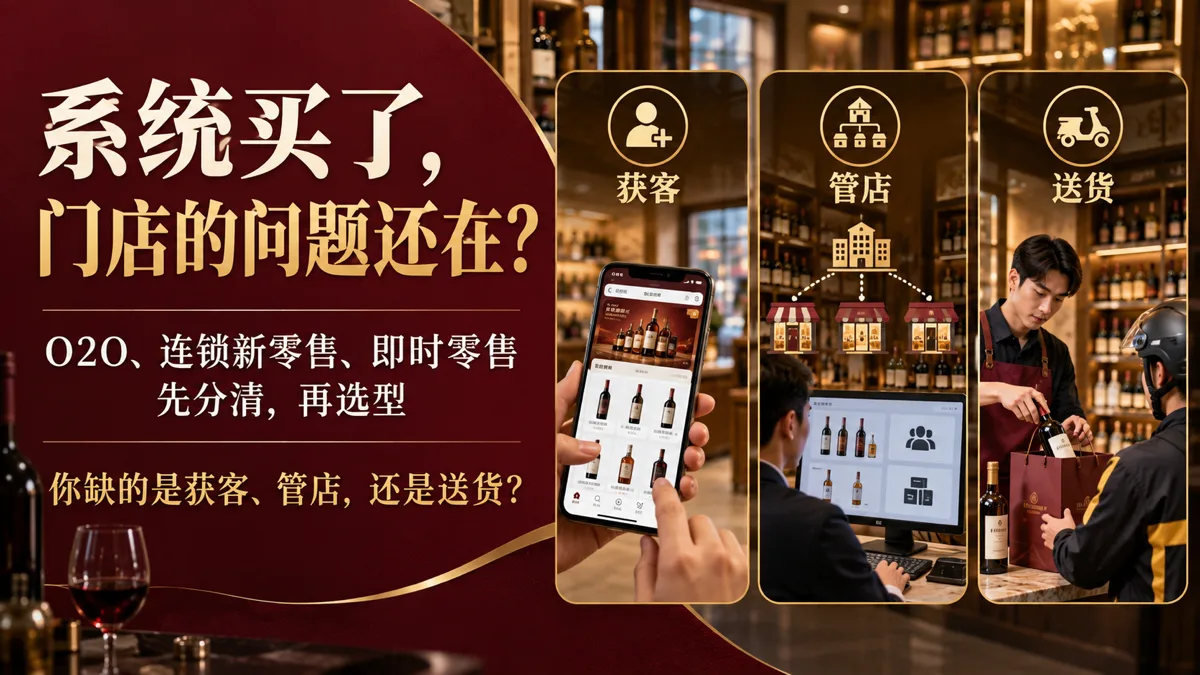
Stop Confusing O2O, Chain New Retail, and Instant Retail: How Should Alcohol Stores Choose a System?
People in the alcohol business have all heard terms like O2O, chain new retail, and instant retail, but they solve different problems: O2O solves "how customers find you," chain new retail solves "how to manage multiple stores together," and instant retail solves "how to get baijiu to customers as fast as possible." This article breaks down the core logic, applicable scenarios, and system capability differences of each concept, helping alcohol stores figure out whether they're stuck on customer acquisition, store management, or delivery before choosing a system—fix the shortest plank first.
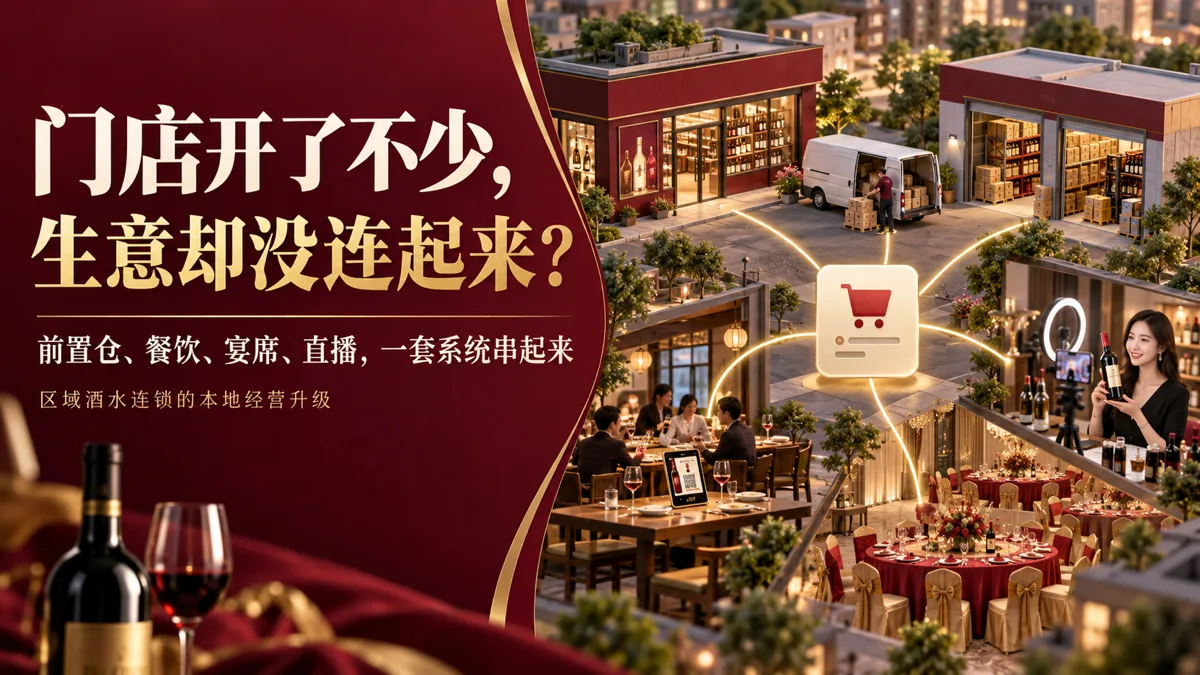
An Instant Retail System for Regional Alcohol Chain Enterprises: Localized Dark Stores, Restaurant Alliances, Hotel Banquets, and Private Domain Live Streaming
The local resources of regional alcohol chain enterprises—stores, loyal customers, restaurant and hotel relationships, delivery capabilities—become more valuable in the instant retail era. This article breaks down how a single instant retail system turns scattered local resources into an operating network: localized dark stores bring orders closer to customers, restaurant alliances turn dining venues into alcohol entry points, hotel banquet processes no longer rely on manual tracking, private domain live streaming helps customers understand before buying, and unified headquarters management keeps stores running smoothly. Six types of enterprises are suited for this model, the core being transforming relationship- and experience-based business into clearer, more stable, and replicable operations.
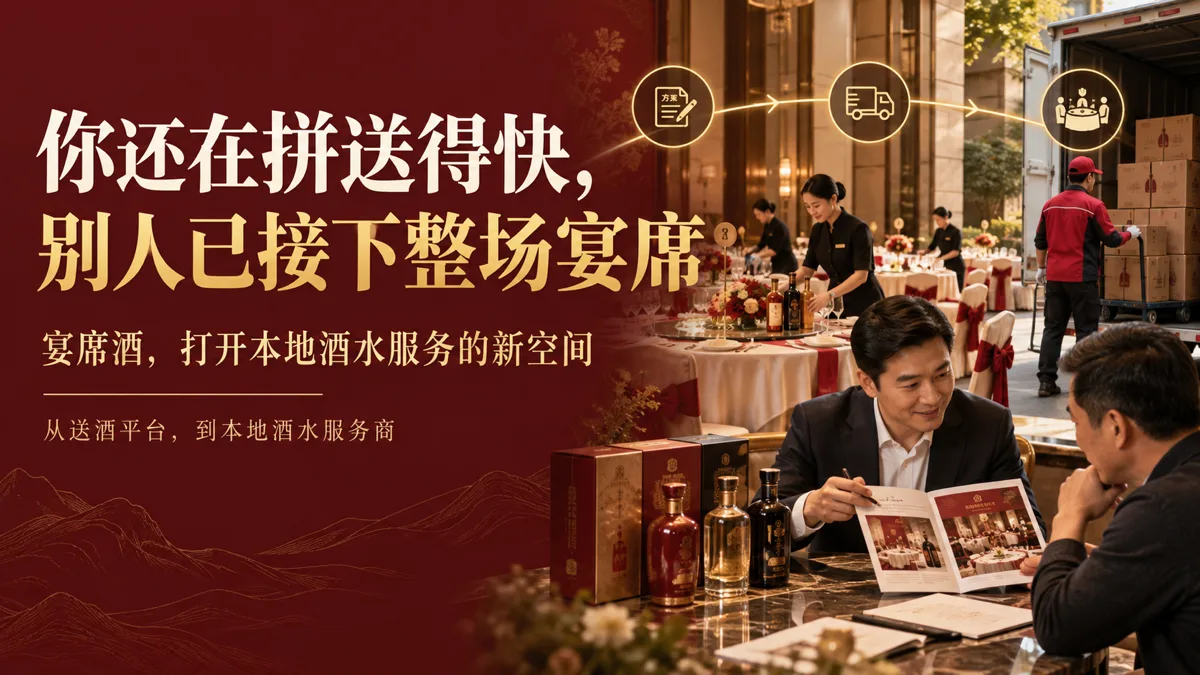
How Can Local Alcohol Instant Retail Enterprises Improve Operations Through Banquet Baijiu Service?
Many local alcohol instant retail enterprises used to focus on one word: fast. But relying only on ad-hoc orders makes you vulnerable to platform traffic and price competition. This article argues that banquet baijiu is a scenario worth attention for local enterprises, outlines four core pillars of banquet baijiu business—locking in demand early, providing scenario solutions, coordinating fulfillment, and completing settlement reviews—and explains that digitalization doesn't replace offline relationships but unifies processes scattered across WeChat and spreadsheets, helping enterprises grow from a delivery platform into a true local alcohol service provider.
Popular keywords