
Search
Articles8 results
View all →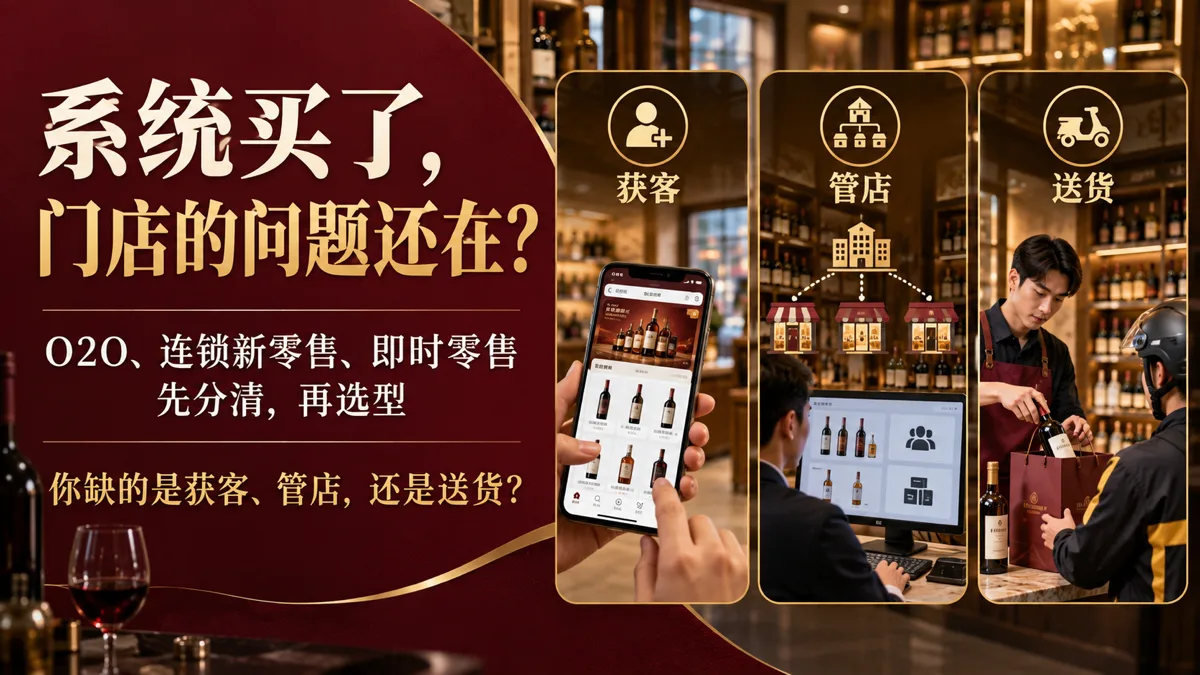
Stop Confusing O2O, Chain New Retail, and Instant Retail: How Should Alcohol Stores Choose a System?
People in the alcohol business have all heard terms like O2O, chain new retail, and instant retail, but they solve different problems: O2O solves "how customers find you," chain new retail solves "how to manage multiple stores together," and instant retail solves "how to get baijiu to customers as fast as possible." This article breaks down the core logic, applicable scenarios, and system capability differences of each concept, helping alcohol stores figure out whether they're stuck on customer acquisition, store management, or delivery before choosing a system—fix the shortest plank first.
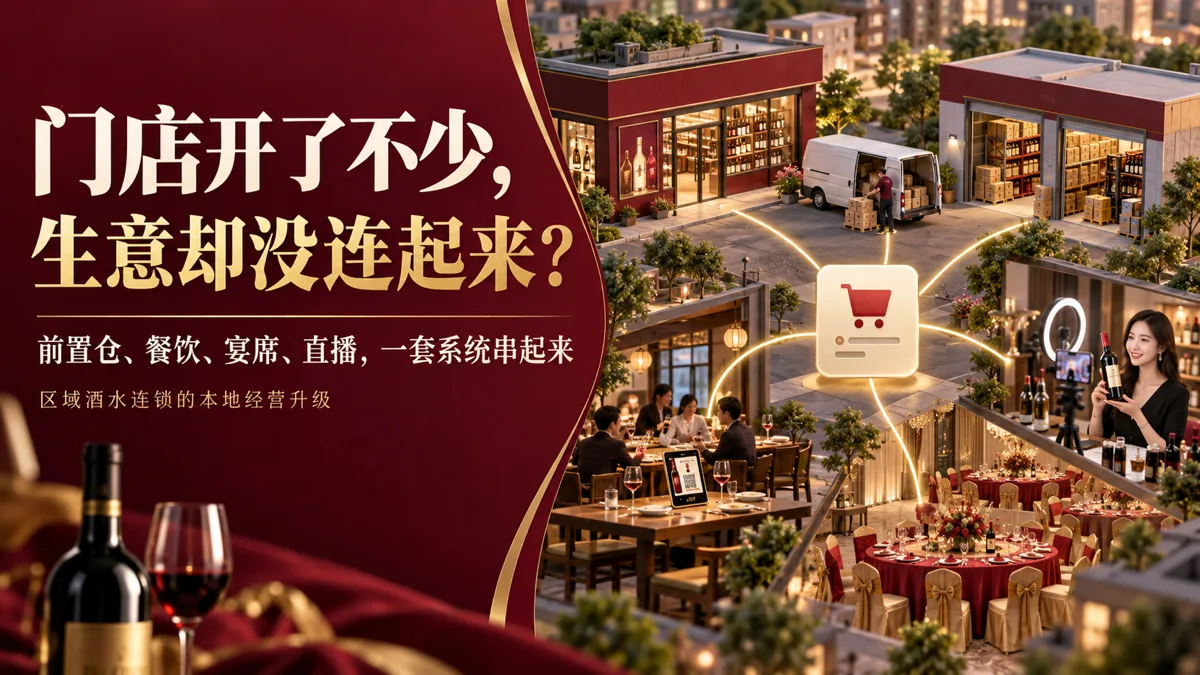
An Instant Retail System for Regional Alcohol Chain Enterprises: Localized Dark Stores, Restaurant Alliances, Hotel Banquets, and Private Domain Live Streaming
The local resources of regional alcohol chain enterprises—stores, loyal customers, restaurant and hotel relationships, delivery capabilities—become more valuable in the instant retail era. This article breaks down how a single instant retail system turns scattered local resources into an operating network: localized dark stores bring orders closer to customers, restaurant alliances turn dining venues into alcohol entry points, hotel banquet processes no longer rely on manual tracking, private domain live streaming helps customers understand before buying, and unified headquarters management keeps stores running smoothly. Six types of enterprises are suited for this model, the core being transforming relationship- and experience-based business into clearer, more stable, and replicable operations.
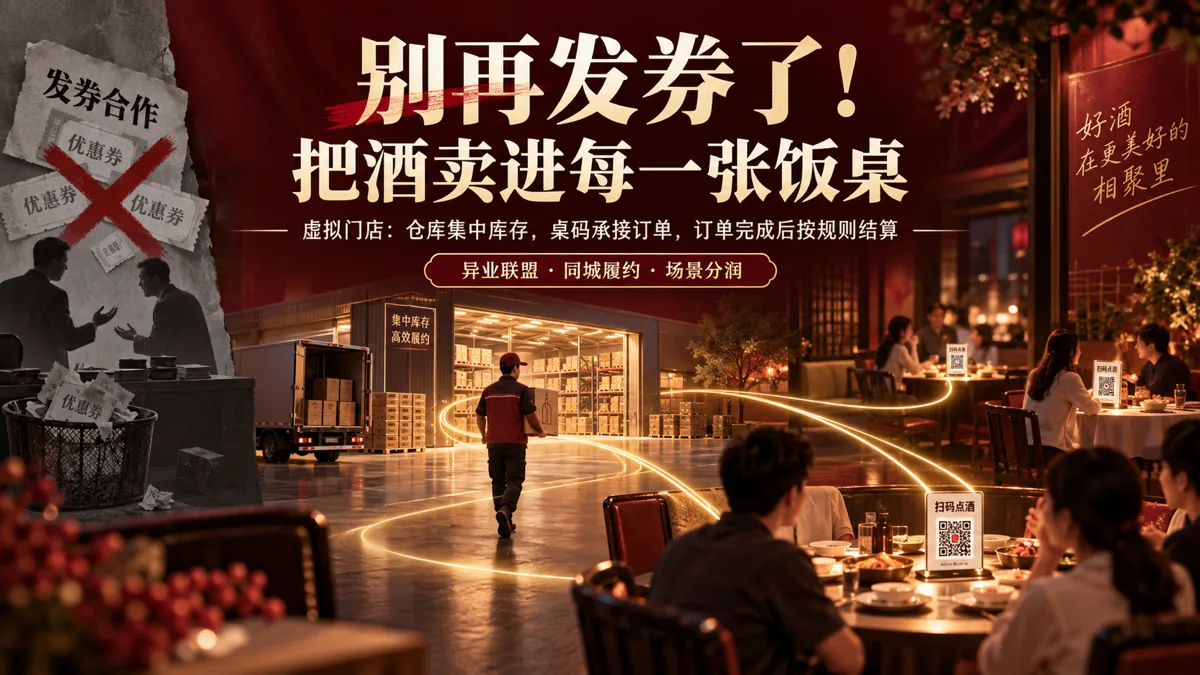
How to Build a Cross-Industry Alliance "Virtual Store": Make the Warehouse the Center, Put Baijiu on Every Dining Table
Traditional cross-industry alliances are often sustained by coupons, personal referrals, and month-end manual reconciliation—short-lived, with unclear responsibilities and hard-to-sustain cooperation. A virtual store concentrates inventory in the alcohol merchant's warehouse and captures orders through exclusive table QR codes in consumption scenarios like restaurants, KTVs, and late-night food stalls. The alcohol merchant handles stocking and same-city fulfillment, while partner venues and key referrers earn profit shares according to set rules. This article breaks down the inventory, order, settlement, and user-retention logic, and offers a three-step launch method.
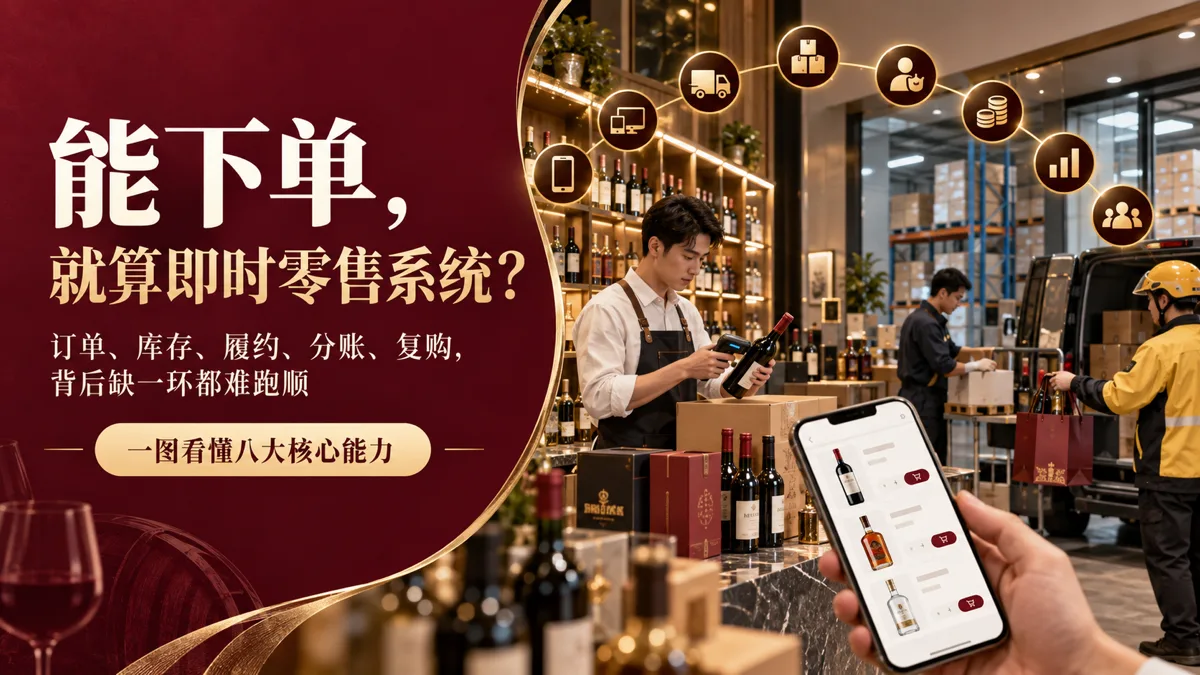
Understanding the Eight Core Capabilities of an Alcohol Instant Retail System
An alcohol instant retail system is, at its core, a digital operating system built around store and dark store fulfillment. This article systematically breaks down eight capabilities—from mini-program order management, platform order unification, store fulfillment, inventory and replenishment, membership and marketing, fund splitting and settlement, data analytics, to enterprise WeChat SCRM—explaining what problem each solves and how it lands, helping alcohol merchants understand the complete capability map of an instant retail system.
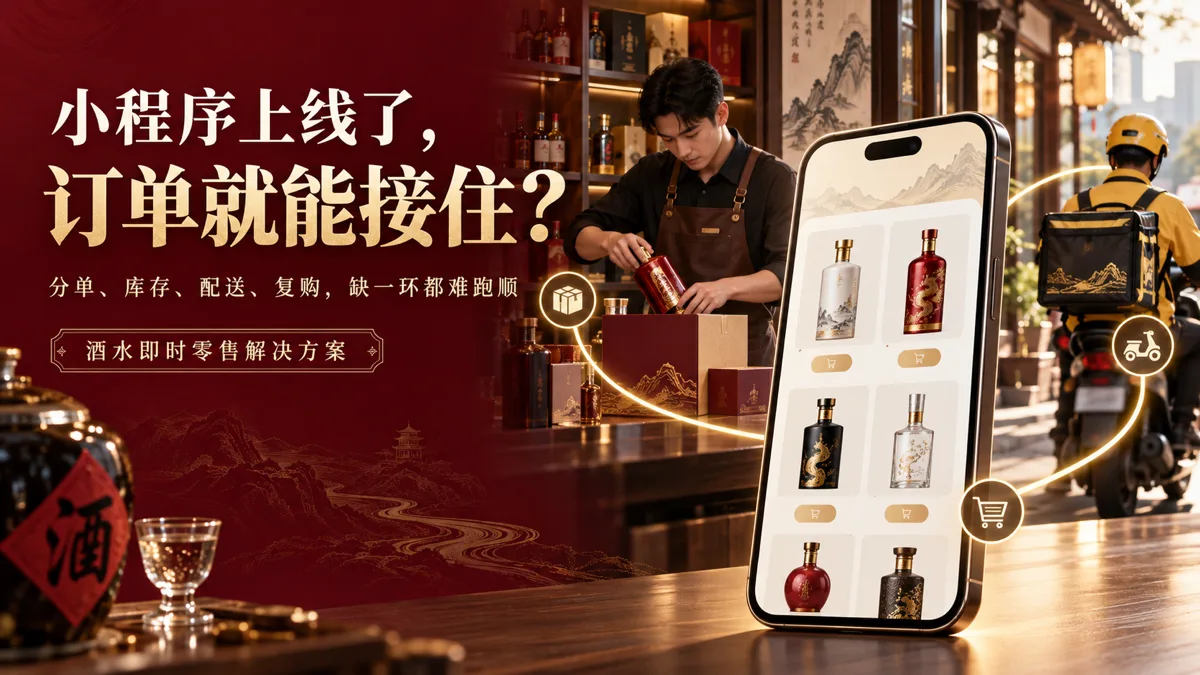
Alcohol Instant Retail Solution: From Mini-Program Ordering to Same-City Delivery, Helping Alcohol Merchants Connect Sales, Fulfillment, and Repurchase Loops
Alcohol instant retail isn't just a delivery problem—it's a system problem spanning online customer acquisition, store fulfillment, inventory coordination, same-city delivery, and member repurchase. This article breaks down six dimensions—entry, order dispatch, inventory, delivery, operations, and scenarios—to show how alcohol merchants can connect sales, fulfillment, and repurchase into a closed loop.
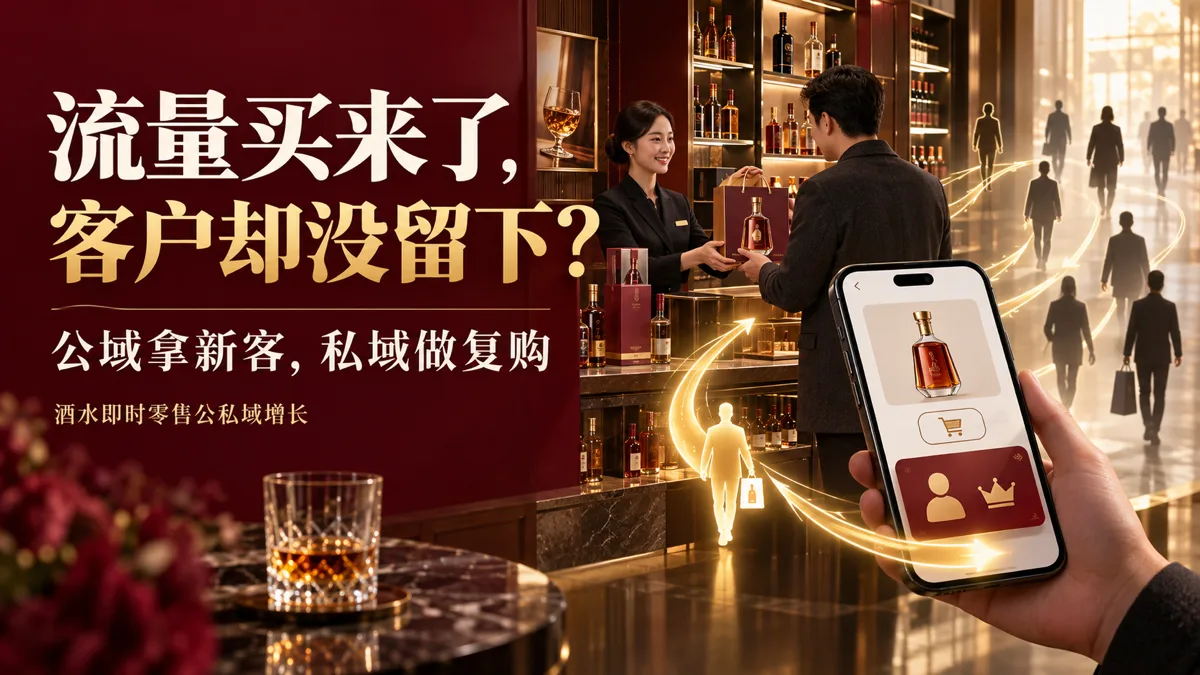
Alcohol Instant Retail: Public-to-Private Domain Growth—Acquire New Customers in Public Domains, Drive Repurchase in Private Domains
Alcohol sales growth can't rely on waiting for customers to walk in. User purchase paths have changed—alcohol merchants need to organize public-domain acquisition, private-domain repurchase, mini-program transactions, and store fulfillment into a sustainable operating loop. This article breaks down the public-to-private growth playbook across eight dimensions: public-domain entry, private-domain capture, scenario segmentation, mini-program transactions, campaign design, store delivery, business-type strategies, and a six-step implementation roadmap.
Popular keywords