
Search
Articles7 results
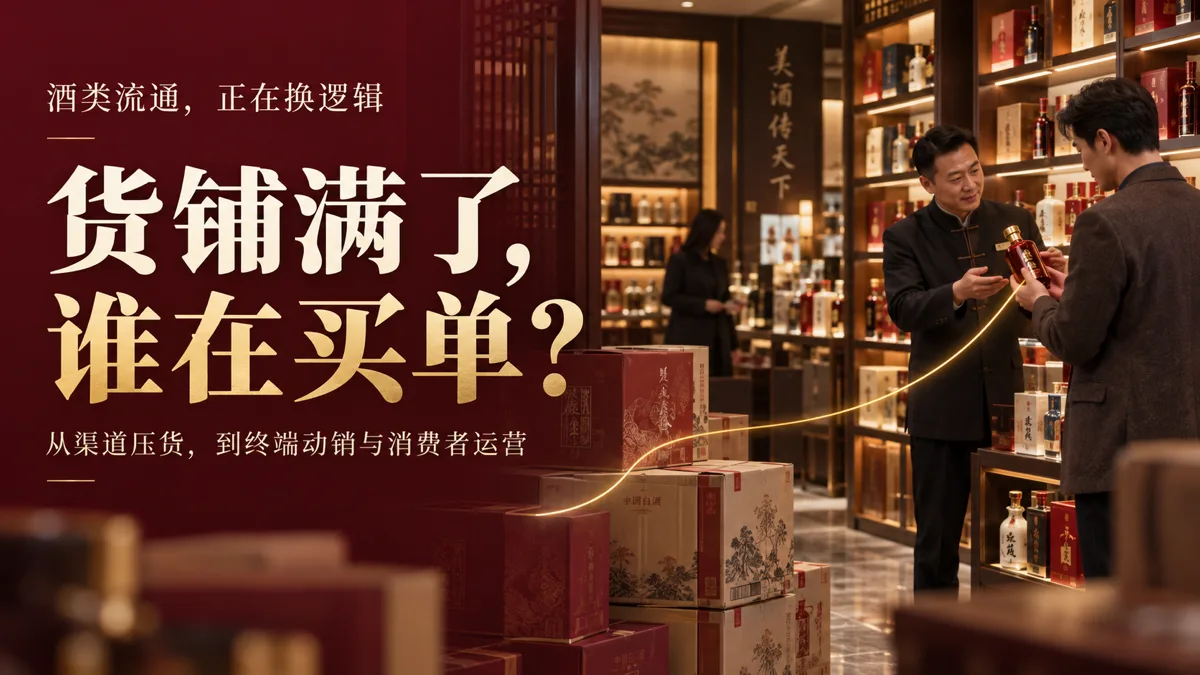
New Observations on the Liquor Industry: The Dominant Logic of Alcohol Distribution Is Shifting from Channel Stocking to Terminal Sell-Through and Consumer Operations
For a long time, the alcohol industry relied on franchise capacity, distribution capacity, and stock-pushing capacity to drive growth. Today, terminals are more cautious in receiving goods, consumers make more specific purchasing decisions, and the marginal effectiveness of the old logic keeps declining. The dominant logic of alcohol distribution is migrating—from channel stocking to terminal sell-through and consumer operations. Whoever is closer to real consumption, whoever can retain users as durable assets, will have a better chance of surviving this adjustment cycle and seizing the initiative for the next phase of growth.
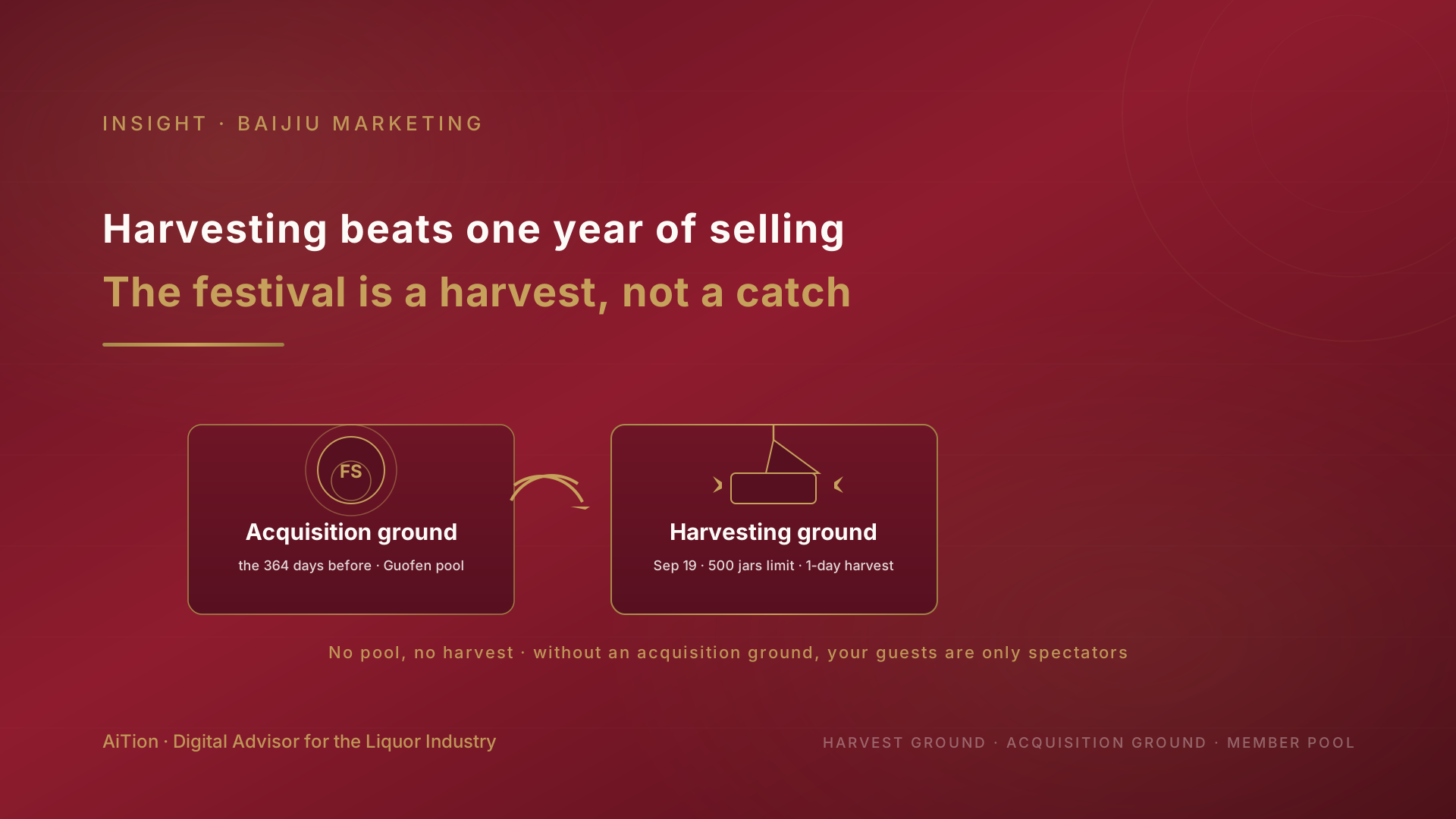
Lidu's Jar-Sealing Playbook: Why an Annual Sealing Festival Beats Other Makers' Whole-Year Sealing
Traditional liquor makers sell jar-sealing through salespeople cold-calling from phone books, yet with high unit prices, low purchase frequency, and a high trust threshold, efficiency is inherently low. Lidu did the opposite: it moved customer acquisition from the big event to the days before it — farming its membership pool, the "Guofen Home", for 364 days, so that when its Global Seal-Keepers Convention arrives on September 19, only 500 globally limited jars get filtered straight out of the pool, cashing in a whole year of accumulation in a single day. This article unpacks the essential difference between a "harvesting ground" and an "acquisition ground", and lays out the three-step recipe: build a pool first, then tier it, then harvest. Hold a big event without a pool, and the livelier the event, the more your guests are just spectators.
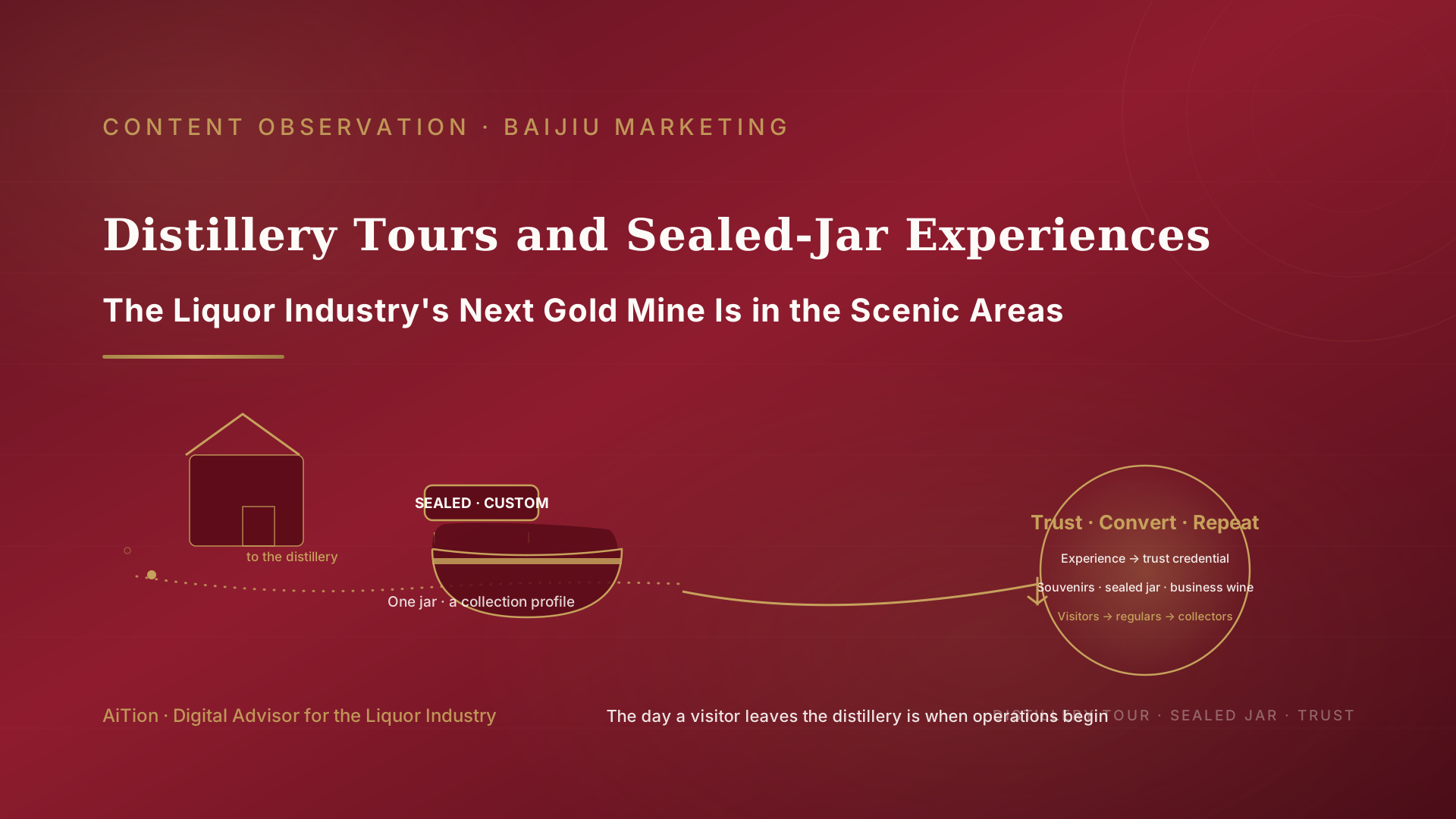
Distillery Tours and Sealed-Jar Experiences: The Liquor Industry's Next Gold Mine Is in the Scenic Areas
For the past decade, a visitor to Maotai Town would take an hour for photos, two hours to buy liquor, and three hours to leave; distillery tourism was essentially a giveaway for sales. Now "shifting from selling liquor to selling a lifestyle" has become the consensus across the producing regions, as the Langjiu special train, Renhuai's million-level visitors, and a string of distillery figures heat up, turning the distillery tour from a reception process into an "experience-conversion-repurchase" operating entry point. This article unpacks the industry chessboard and single-point heat of liquor-tourism integration, explains why the value of a distillery tour lies not in tickets but in the souvenir purchases, word-of-mouth retelling, and business entertainment reuse that a single visit buys, and lays out the landing chain of booking reception, experience conversion, and data settlement.
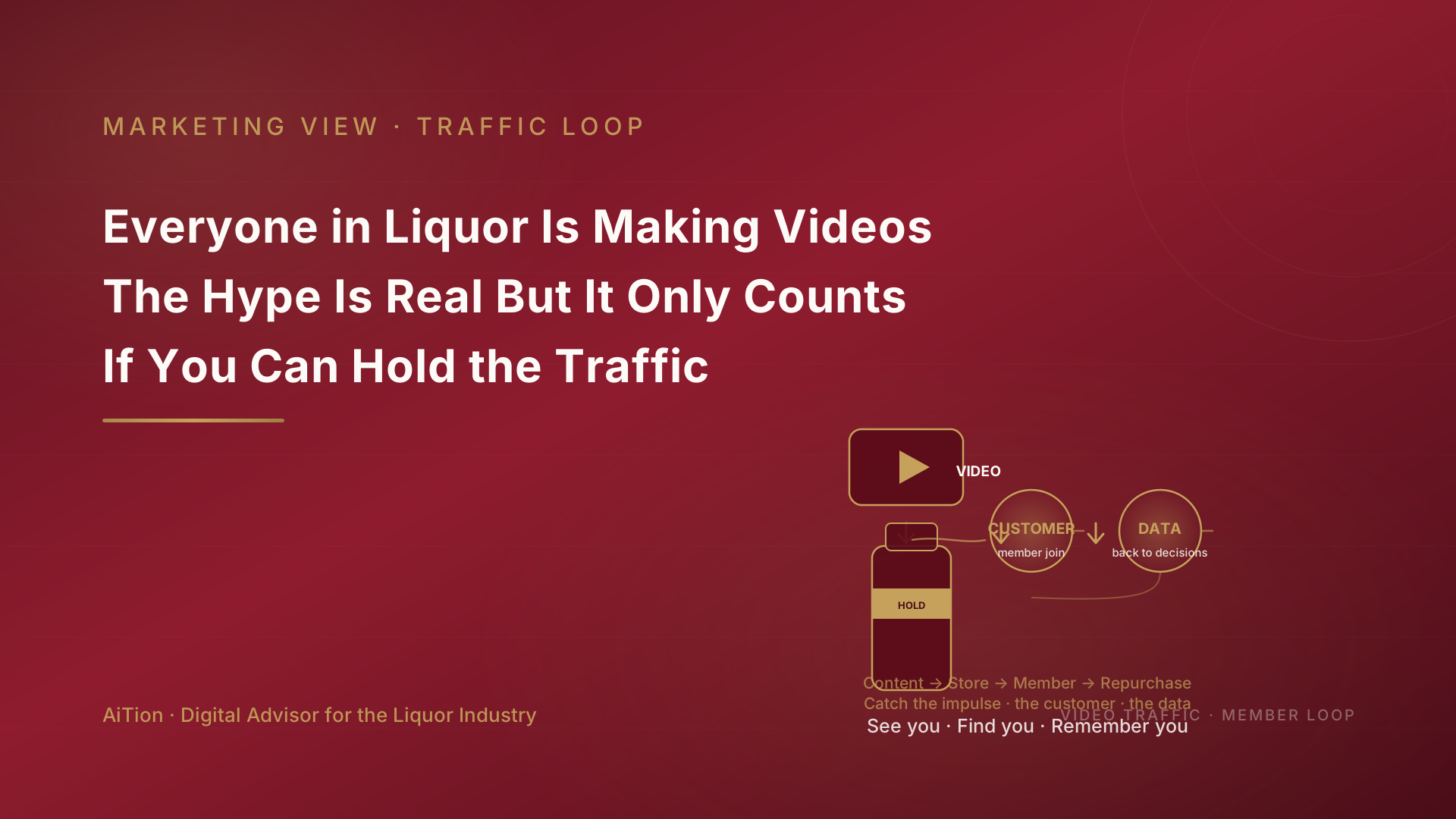
Everyone in the Liquor Industry Is Making Videos—The Hype Is Real, But It Only Counts If You Can Hold the Traffic
Founders of leading distilleries building their personal boss-IP, business teams making videos as an all-hands effort, and distilleries going downmarket to coach terminals on running same-city accounts—video has become an organizational behavior across the liquor industry. But the value of short video lies in the closed loop; a traffic matrix without member conversion and a store fulfillment system often ends with a lot of noise and zero lasting results.
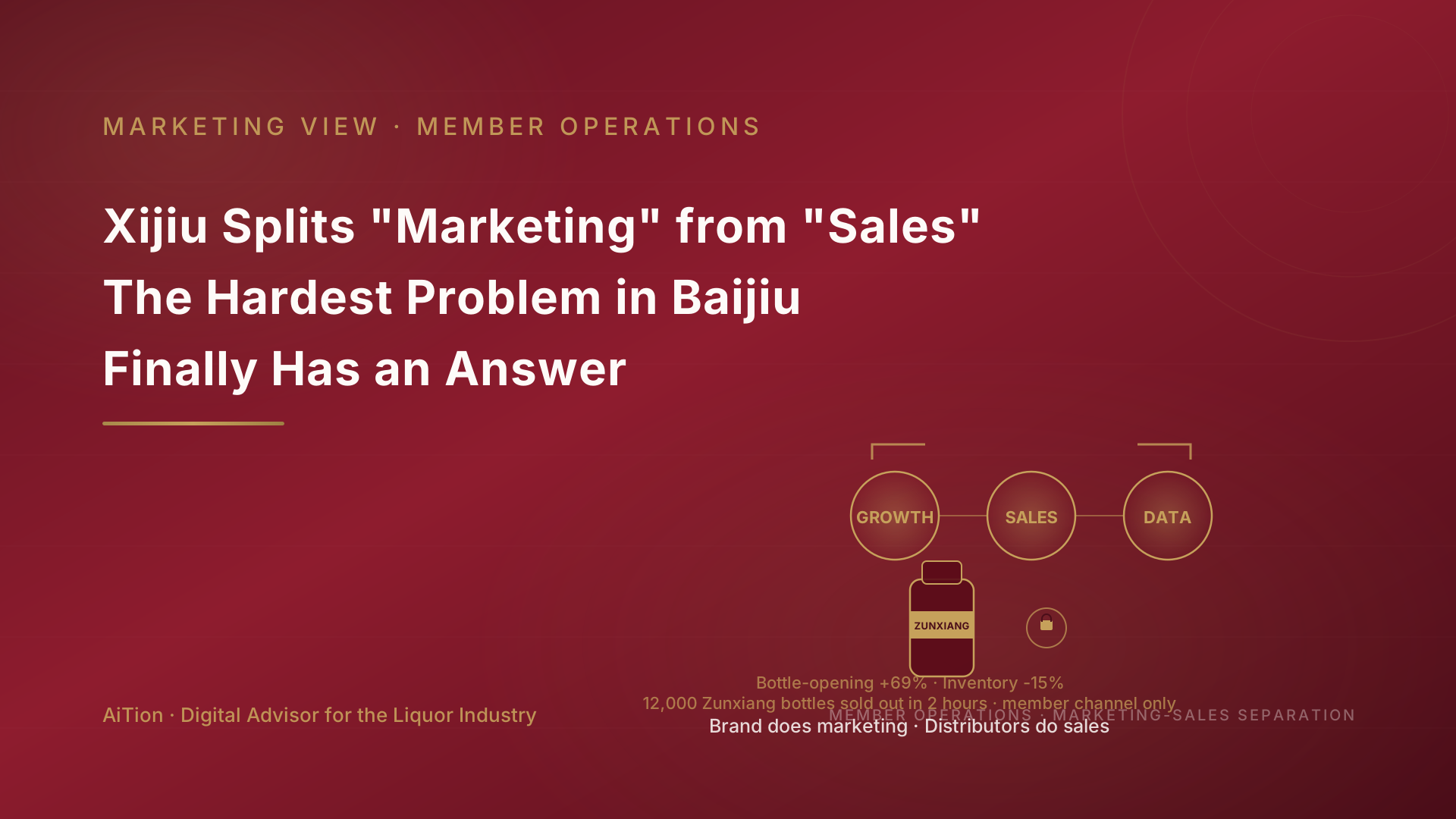
Xijiu Splits "Marketing" from "Sales": The Hardest Problem in Baijiu Finally Has an Answer
Through its Marketing 2.0 reform, Xijiu is advancing the moderate separation of "marketing" and "sales": the 719 Member Festival drew 330,000 participants, 12,000 bottles of Member Zunxiang member-exclusive liquor sold out in two hours, bottle-opening volume rose 69% year-over-year, and inventory fell 15%. This article looks at how Xijiu, with a three-center structure and products that never enter the open market, solves the industry's age-old problem of serving the C-end without cutting into the B-end's pie—so that brand, distributor, and consumer all win.

Only 30,000 of 57 Million Members Are "Being Served"—What About the Rest?
Langjiu's membership has surpassed 57 million, but only 30,000 can enter the estate to enjoy its services. The cost of high-end experiences rises with headcount, while the cost of reaching the silent majority is nearly zero—two curves heading in opposite directions, which means "something for everyone" is impossible by design. The solution: let a system take over tiering.
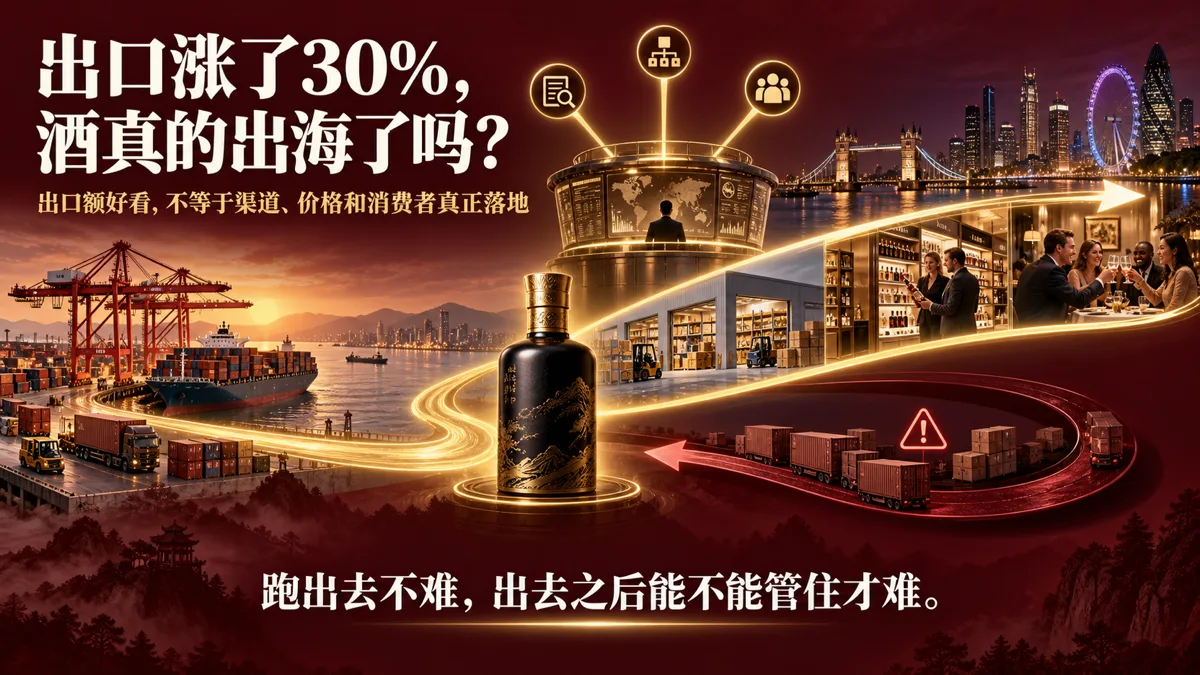
Baijiu’s Half-Year Export Report: Exports Rose 30%, Yet 90% of Exported Baijiu May Never Reach Overseas Consumers
China’s baijiu exports reached US$530 million in the first half of 2025, up 30.9% year on year. Export volume reached 8.31 million liters, up 7.4%, while the average export price rose 21.9% to US$63.7 per liter. The figures point to simultaneous volume and price growth. Yet rising imports of China-origin spirits, re-imported exports, and weak cross-border channel discipline suggest that export value alone is not a reliable measure of internationalization quality. The next phase of baijiu globalization will depend on whether producers can build traceable pricing systems, operable consumer relationships, and coordinated overseas distributor networks.
Popular keywords