
Search
Articles3 results
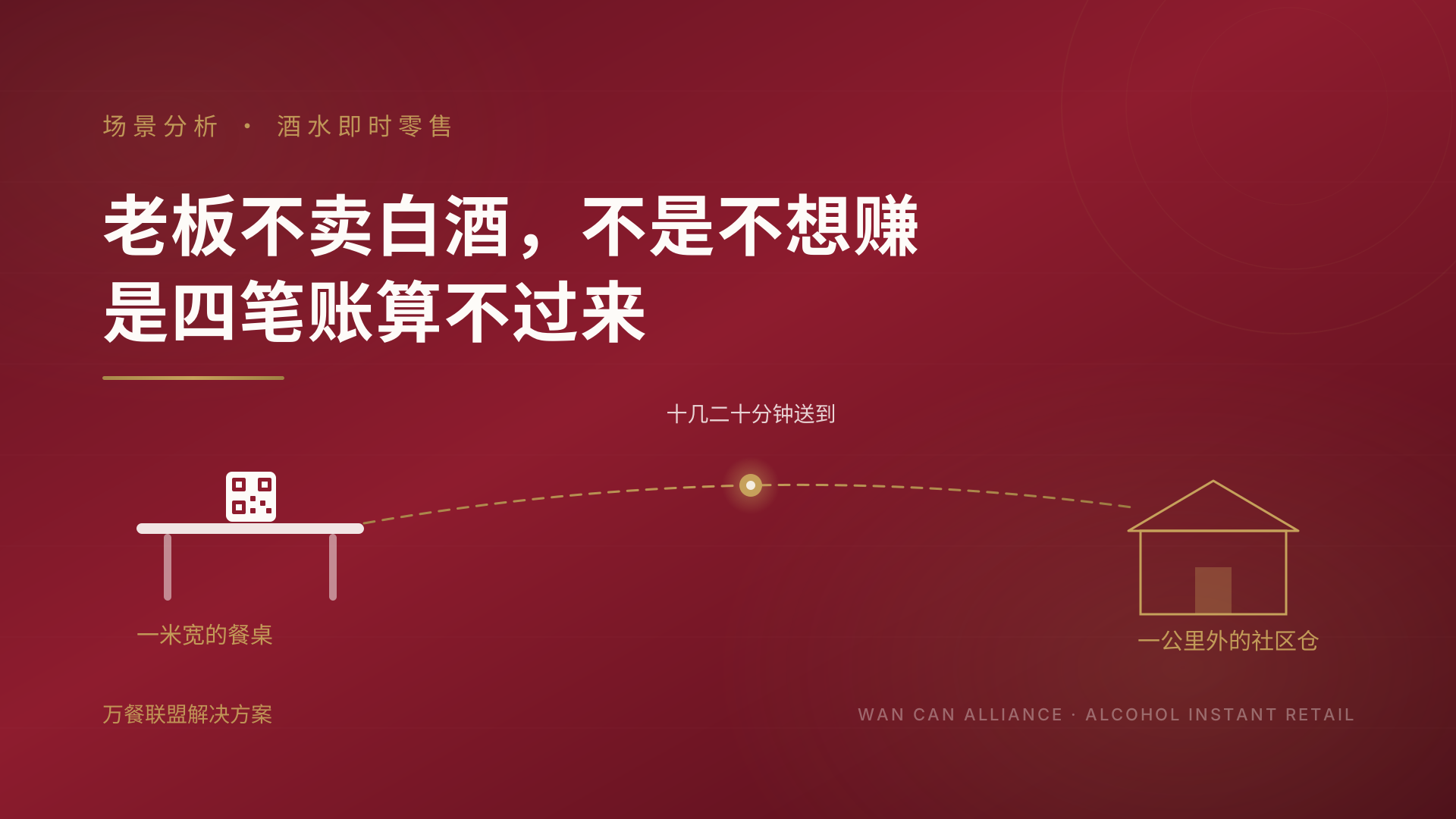
Scenario Analysis: Alcohol Instant Retail · The Wan Can Alliance Solution
The owner doesn't stock baijiu—not because he doesn't want the margin, but because four accounts don't add up. Last night at a late-night food stall, two young women from a brand walked from table to table pitching their baijiu. Buy a bottle and you get a lucky draw; if the prize was big enough, they even danced on the spot. Lively—and expensive. I kept thinking: the baijiu the owner can't display—could it sit in a warehouse a kilometer away?
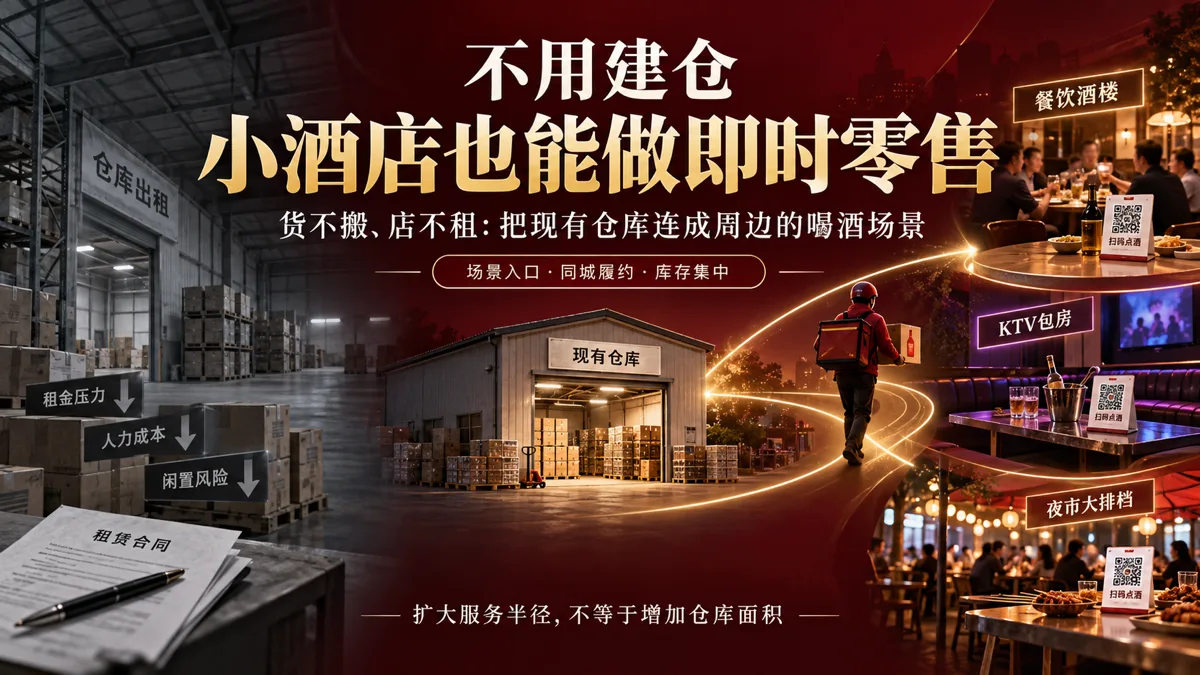
Don't Let "Dark Store" Scare You Off: A Lightweight Playbook for Small Shops Entering Instant Retail
Instant retail is described as a heavy-asset game of "building a warehouse plus a delivery fleet," and individual tobacco & alcohol shops back off the moment they hear it. But a warehouse isn't the only answer. Make your existing warehouse the center, project drinking scenarios into nearby restaurants, KTVs, and late-night food stalls—goods don't move, no store is rented—yet your alcohol sales entry points can multiply dozens of times. This article lays out this lightweight playbook clearly.
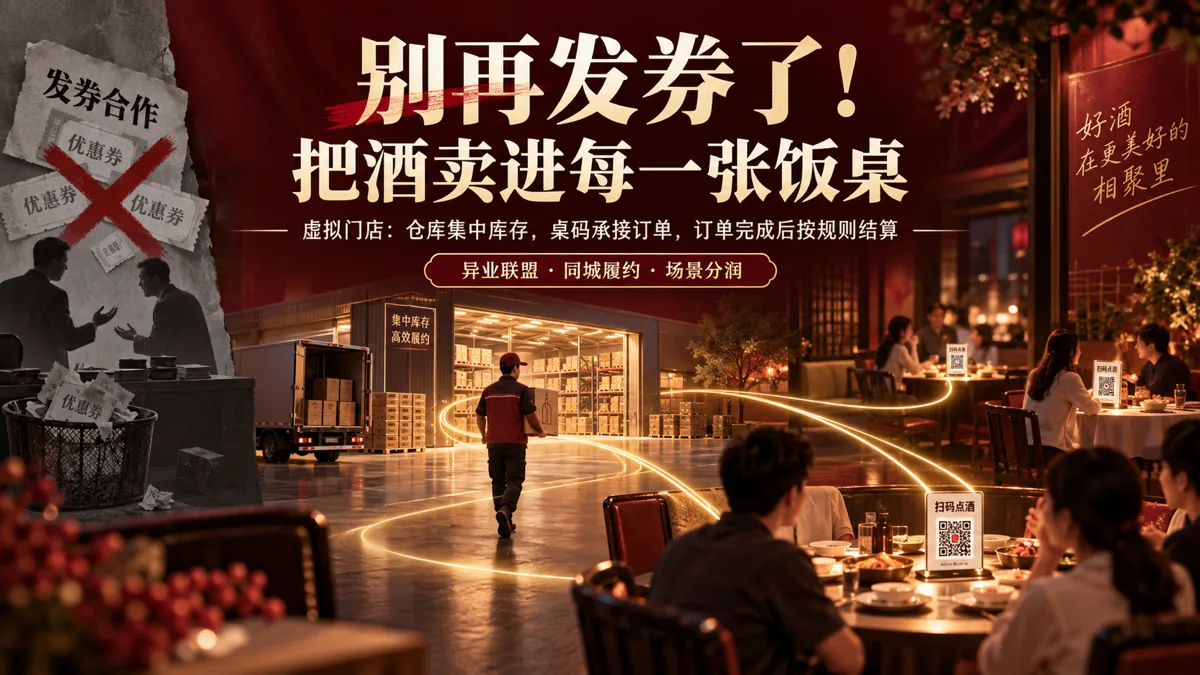
How to Build a Cross-Industry Alliance "Virtual Store": Make the Warehouse the Center, Put Baijiu on Every Dining Table
Traditional cross-industry alliances are often sustained by coupons, personal referrals, and month-end manual reconciliation—short-lived, with unclear responsibilities and hard-to-sustain cooperation. A virtual store concentrates inventory in the alcohol merchant's warehouse and captures orders through exclusive table QR codes in consumption scenarios like restaurants, KTVs, and late-night food stalls. The alcohol merchant handles stocking and same-city fulfillment, while partner venues and key referrers earn profit shares according to set rules. This article breaks down the inventory, order, settlement, and user-retention logic, and offers a three-step launch method.
Popular keywords