
Search
Articles4 results
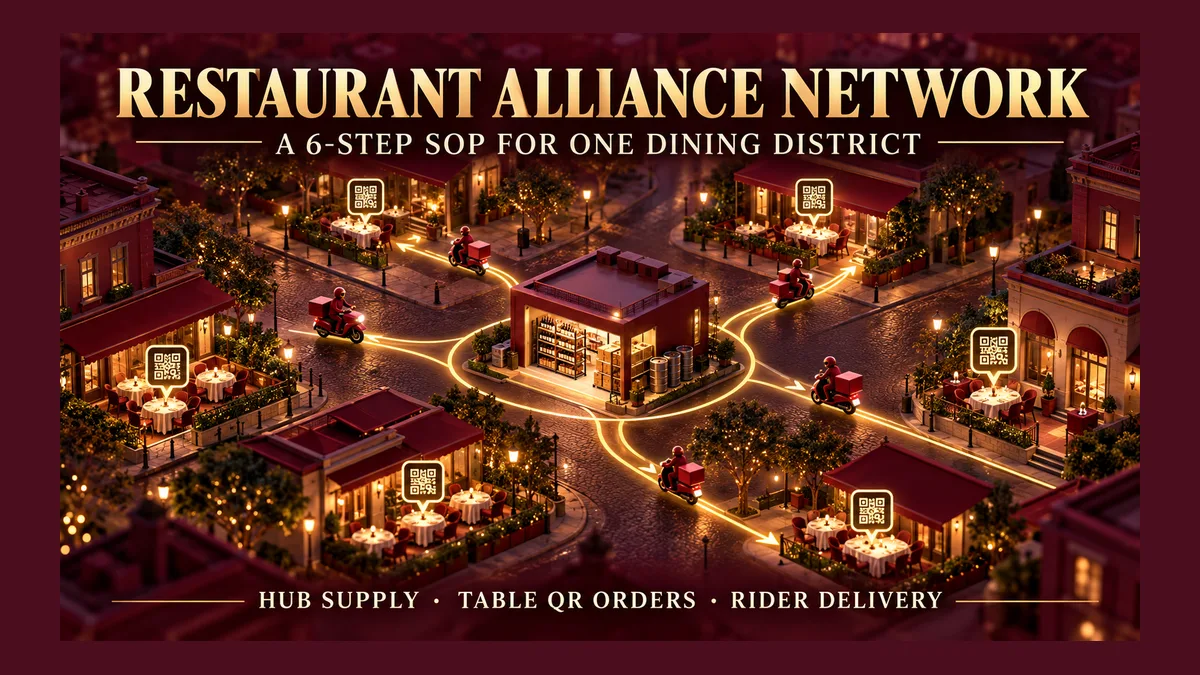
Instant-Retail Restaurant Alliance Network: A Six-Step SOP for Starting in One Commercial District
Regional alcohol distributors do not need to begin instant retail by opening a street-facing store or covering an entire city at once. Start with one commercial dining district: a micro-fulfillment hub holds inventory, restaurants provide table QR-code sales entry points, and riders deliver drinks to the table. Once the closed loop works, add community tobacco-and-liquor stores and expand the supply, fulfillment, and restaurant-sales network step by step.
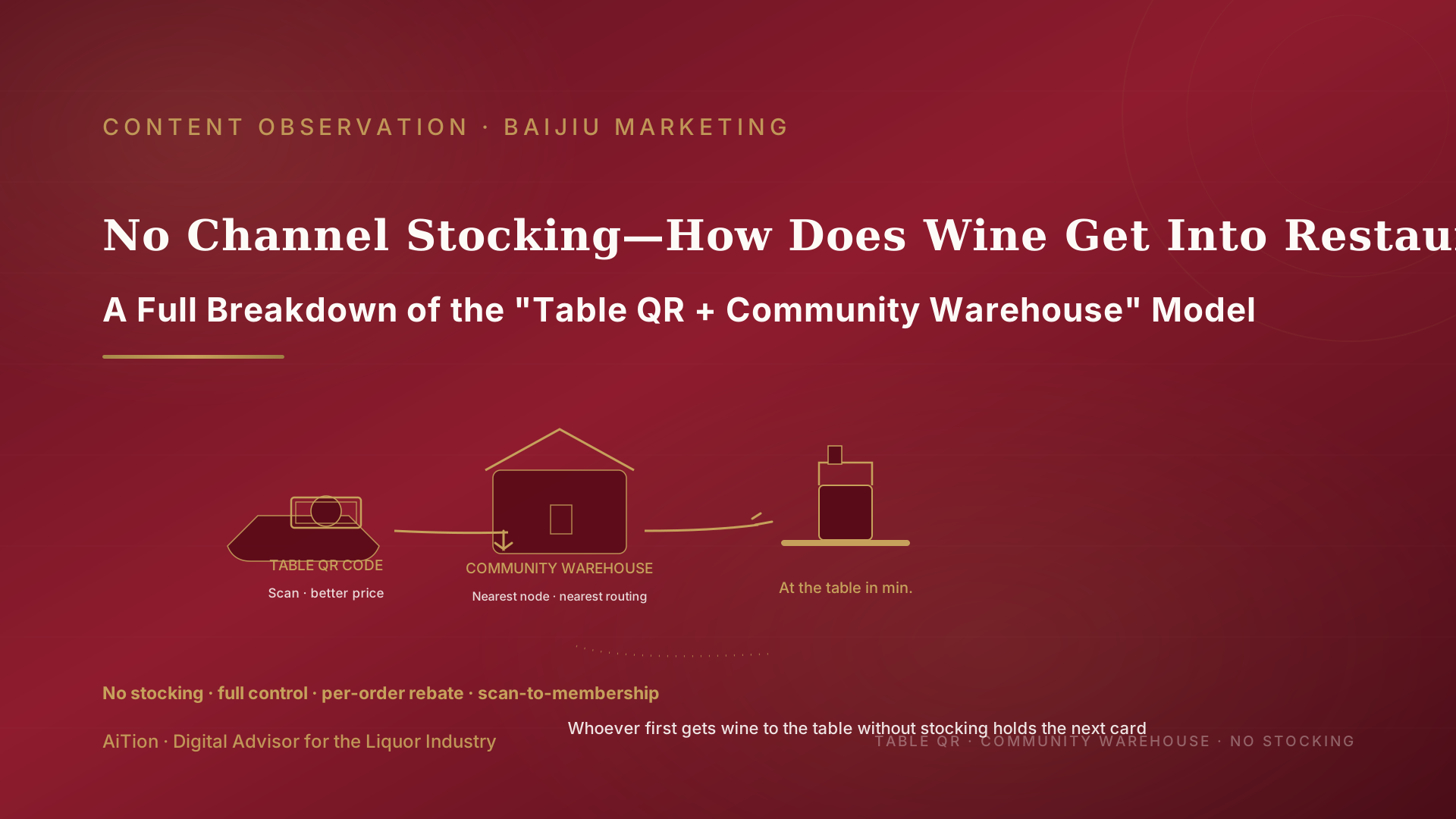
No Channel Stocking, How Does Wine Get Into Restaurants? A Full Breakdown of a Working "Table QR + Community Warehouse" Model
When distributors and stores begin collectively saying "no" to channel stocking, and stock piles up in the distillery as the most stinging reality for regional liquor makers, some people switch to a different playbook: no longer force inventory onto distributors, but open a storefront of their own, spread low-cost community warehouses, and place a QR code on each restaurant table—diners scan, the system auto-locates the nearest community warehouse, and the wine reaches the table within a dozen minutes. This article fully breaks down the "table QR + community warehouse" model—how four roles each get what they want in a zero-inventory closed loop, how it casually unties the "no outside liquor allowed" knot, five traps that can bury you, and its true value: swapping the growth yard-stick from "volume shipped" to "bottle-open rate."
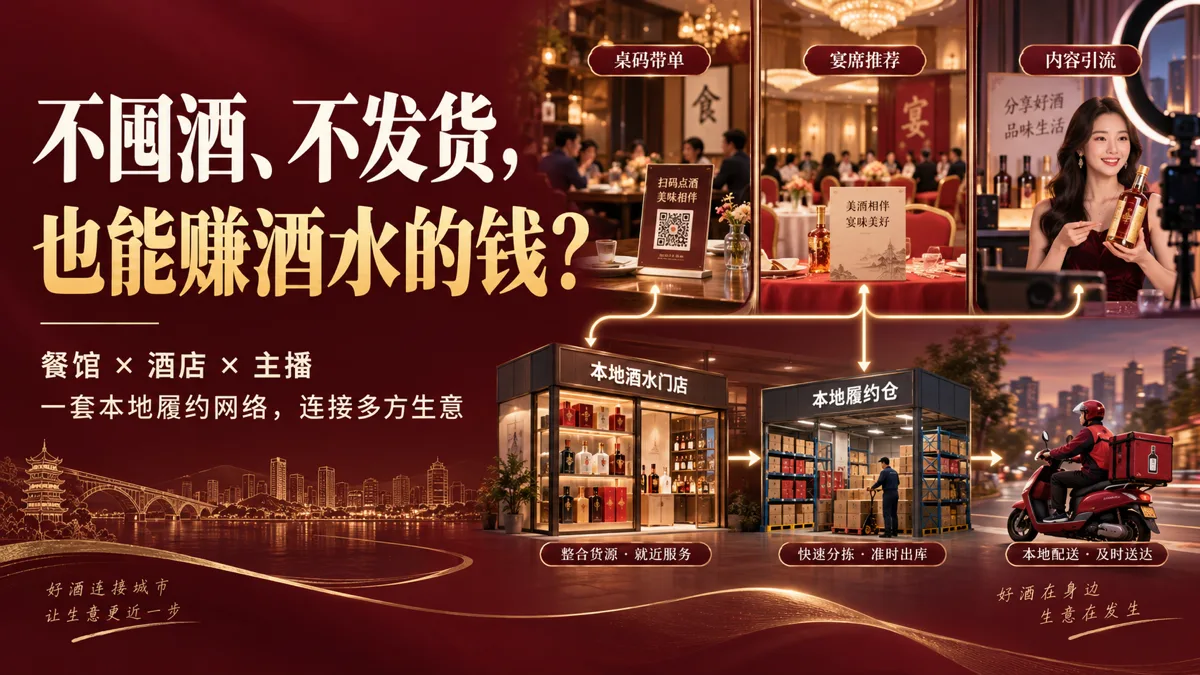
Restaurants Hold No Inventory, Hotels Carry No Stock, Streamers Don't Handle Shipping: An Alcohol Instant Retail Model Where Everyone Profits Together
The traditional alcohol business habitually distributes stock first and sells later—the more scattered the stock, the harder inventory management becomes; the more partners involved, the harder commission calculation gets. This article proposes a model that separates products, traffic, and fulfillment: the platform builds direct stores, franchise stores, and dark stores for unified fulfillment; restaurants place table QR codes and earn a cut without holding inventory; hotels refer banquet clients without stocking and earn commissions; streamers drive traffic without handling shipping; revenue is automatically settled through two systems—payment splitting for enterprise partners and tax-compliant payouts for individual promoters. The core: centralized inventory, distributed customer acquisition, proximity fulfillment, and automated revenue settlement—reorganizing a city's alcohol business.
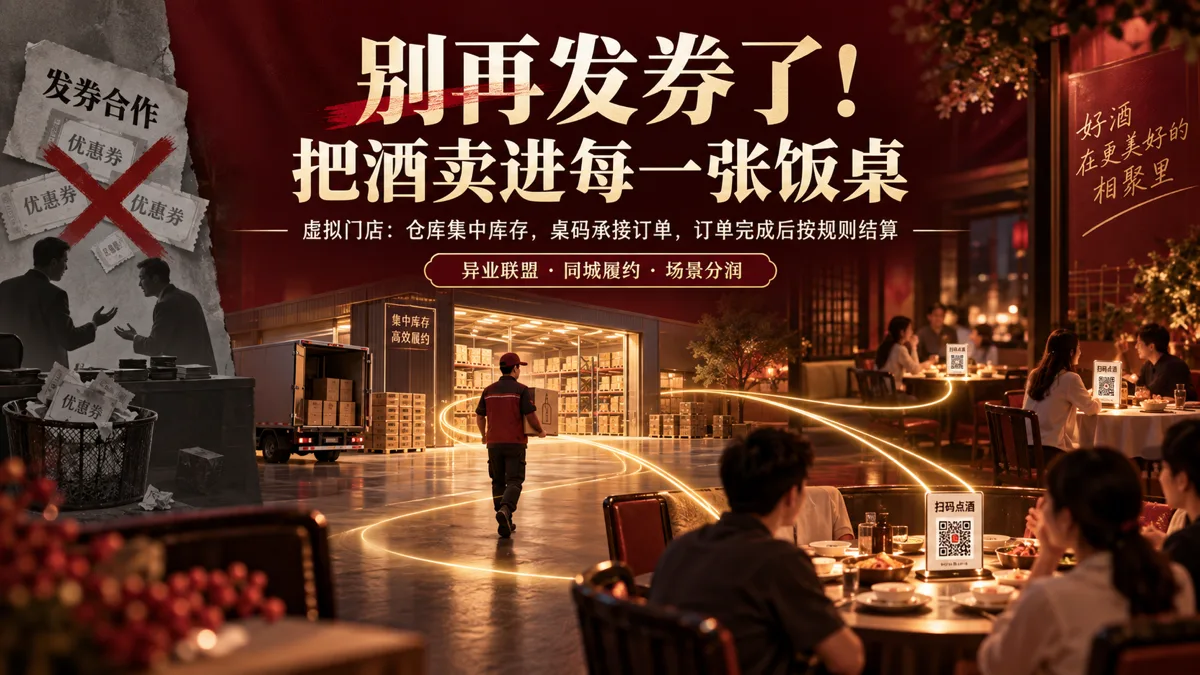
How to Build a Cross-Industry Alliance "Virtual Store": Make the Warehouse the Center, Put Baijiu on Every Dining Table
Traditional cross-industry alliances are often sustained by coupons, personal referrals, and month-end manual reconciliation—short-lived, with unclear responsibilities and hard-to-sustain cooperation. A virtual store concentrates inventory in the alcohol merchant's warehouse and captures orders through exclusive table QR codes in consumption scenarios like restaurants, KTVs, and late-night food stalls. The alcohol merchant handles stocking and same-city fulfillment, while partner venues and key referrers earn profit shares according to set rules. This article breaks down the inventory, order, settlement, and user-retention logic, and offers a three-step launch method.
Popular keywords