
Search
Articles3 results
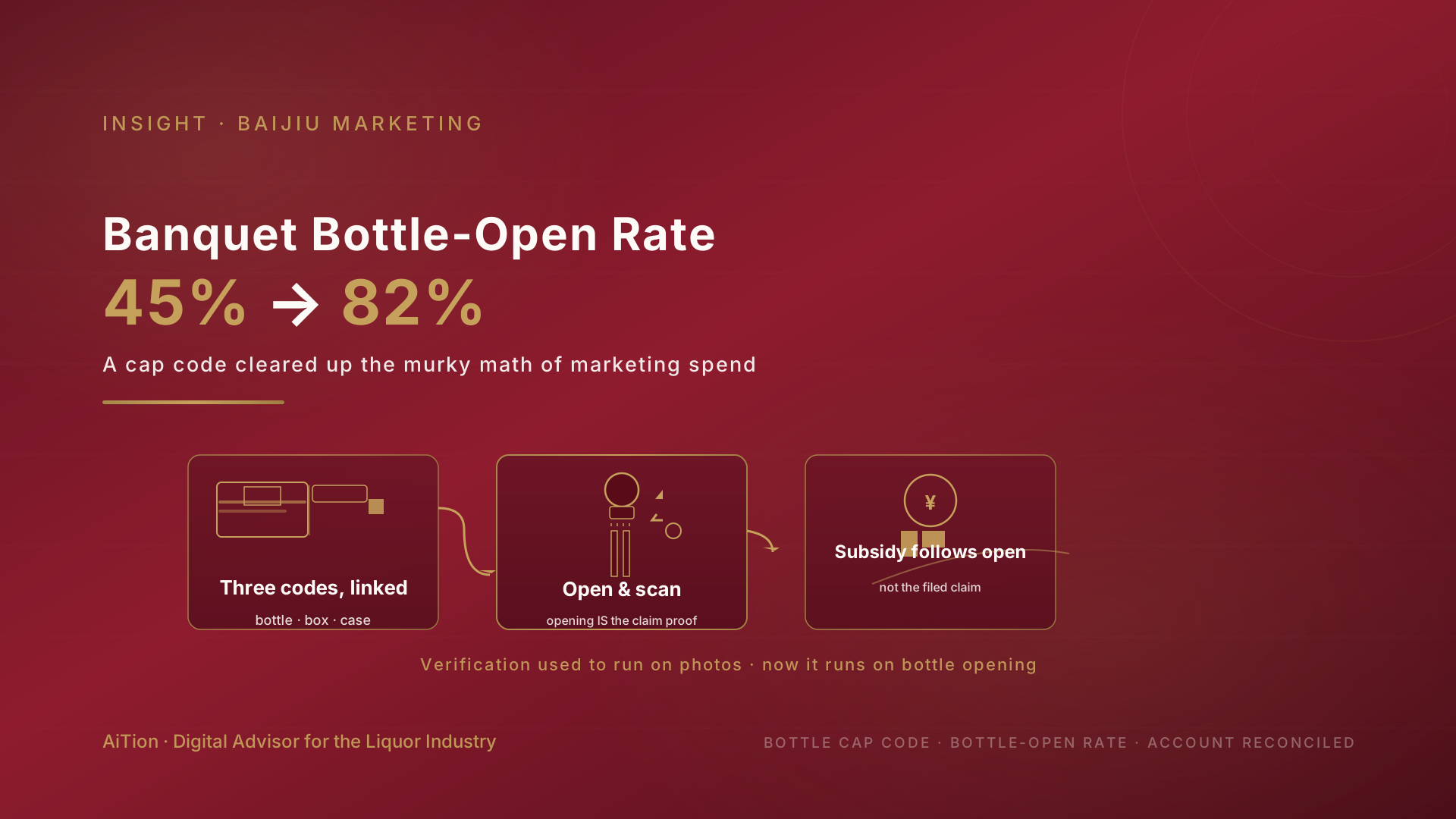
From 45% to 82% Bottle-Open Rate: How a Cap Code Cleared Up the Murky Math of Liquor Makers' Marketing Spend
Traditional liquor makers verify banquet subsidies with photos, snapping empty bottles, table counts, and banners in one go, so the real bottle-open ratio sits far below what the report figures claim. This article breaks down how a "cap code" (a code on the bottle cap) swaps the verification basis from photos to actual bottle opening — subsidy follows the opened bottle, not the filed claim. Named data from Wuliangye, Jiugui, Tanjiu, and Yanghe lines up one by one, and one undisclosed maker pushed its banquet bottle-open rate from 45% to 82%. Once the accounts are settled, as who wins and who chafes recalculates; and two buckets of cold water — the scan rate and the red-packet size — still have to be balanced.
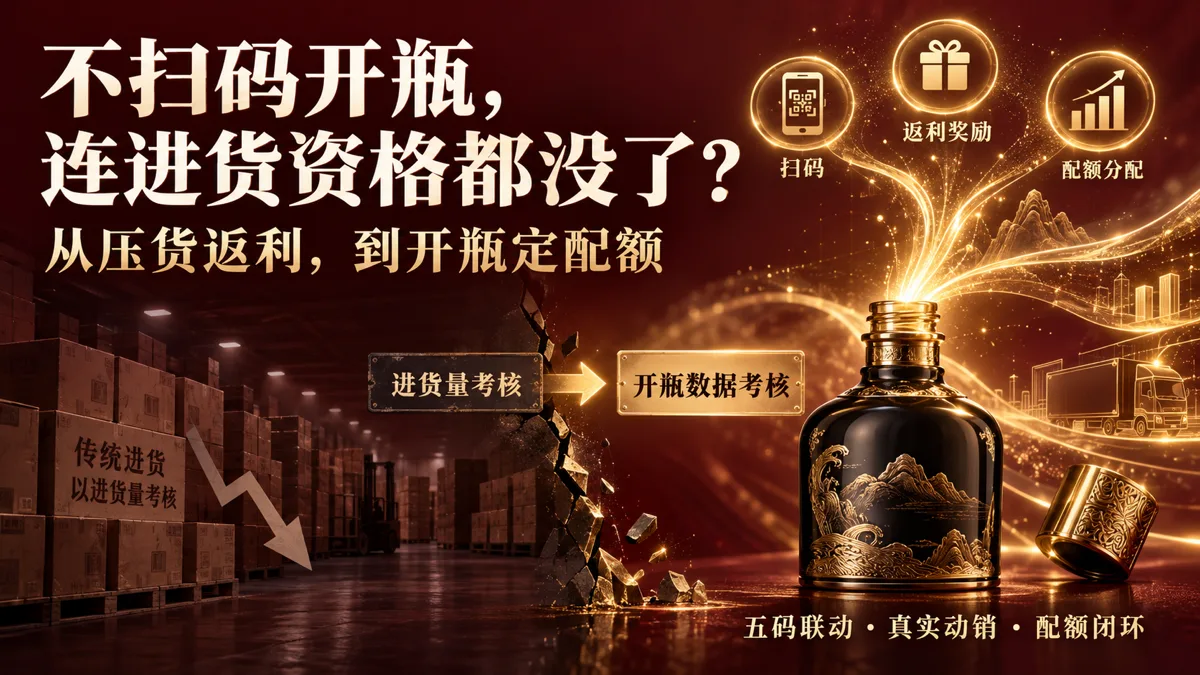
Inventory 38 Days vs Industry 52: How Guojiao 1573 Rewrote Channel Rules with "Bottle-Open Rate"
China Alcoholic Drinks Association data shows 58% of distributors still have growing inventory, and the industry average inventory turnover has soared to 900 days. But Guojiao 1573 is an outlier: distributor inventory compressed to 38 days (industry average 52), price stability rate at 89%, 52% ABV wholesale price steady at 840-860 yuan, and channel efficiency up 40%. The core shift: changing the KPI from "purchase volume" to "bottle-open rate"—if consumers don't open bottles and scan, distributors can't get rebates, increase quotas, or even order goods. Five-code integration has deployed over 50 million cases, with 110 million bottles opened, 40% scan rate, and 50 million members accumulated. Bottle-open data has become the new currency of channel power—whoever completes this transformation earlier holds a card that keeps them at the table in the second half of the zero-sum game.
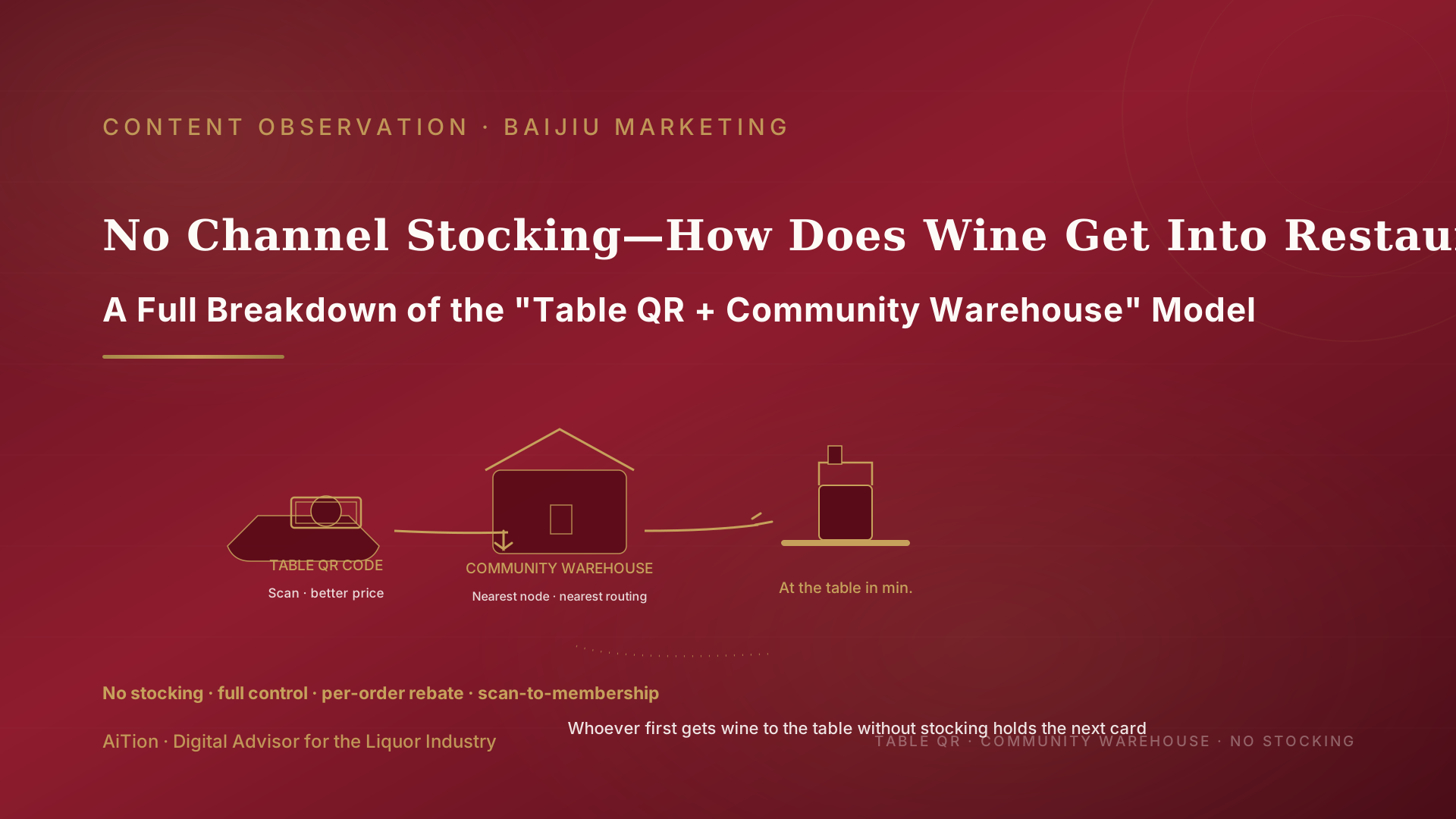
No Channel Stocking, How Does Wine Get Into Restaurants? A Full Breakdown of a Working "Table QR + Community Warehouse" Model
When distributors and stores begin collectively saying "no" to channel stocking, and stock piles up in the distillery as the most stinging reality for regional liquor makers, some people switch to a different playbook: no longer force inventory onto distributors, but open a storefront of their own, spread low-cost community warehouses, and place a QR code on each restaurant table—diners scan, the system auto-locates the nearest community warehouse, and the wine reaches the table within a dozen minutes. This article fully breaks down the "table QR + community warehouse" model—how four roles each get what they want in a zero-inventory closed loop, how it casually unties the "no outside liquor allowed" knot, five traps that can bury you, and its true value: swapping the growth yard-stick from "volume shipped" to "bottle-open rate."
Popular keywords