
Search
Articles2 results
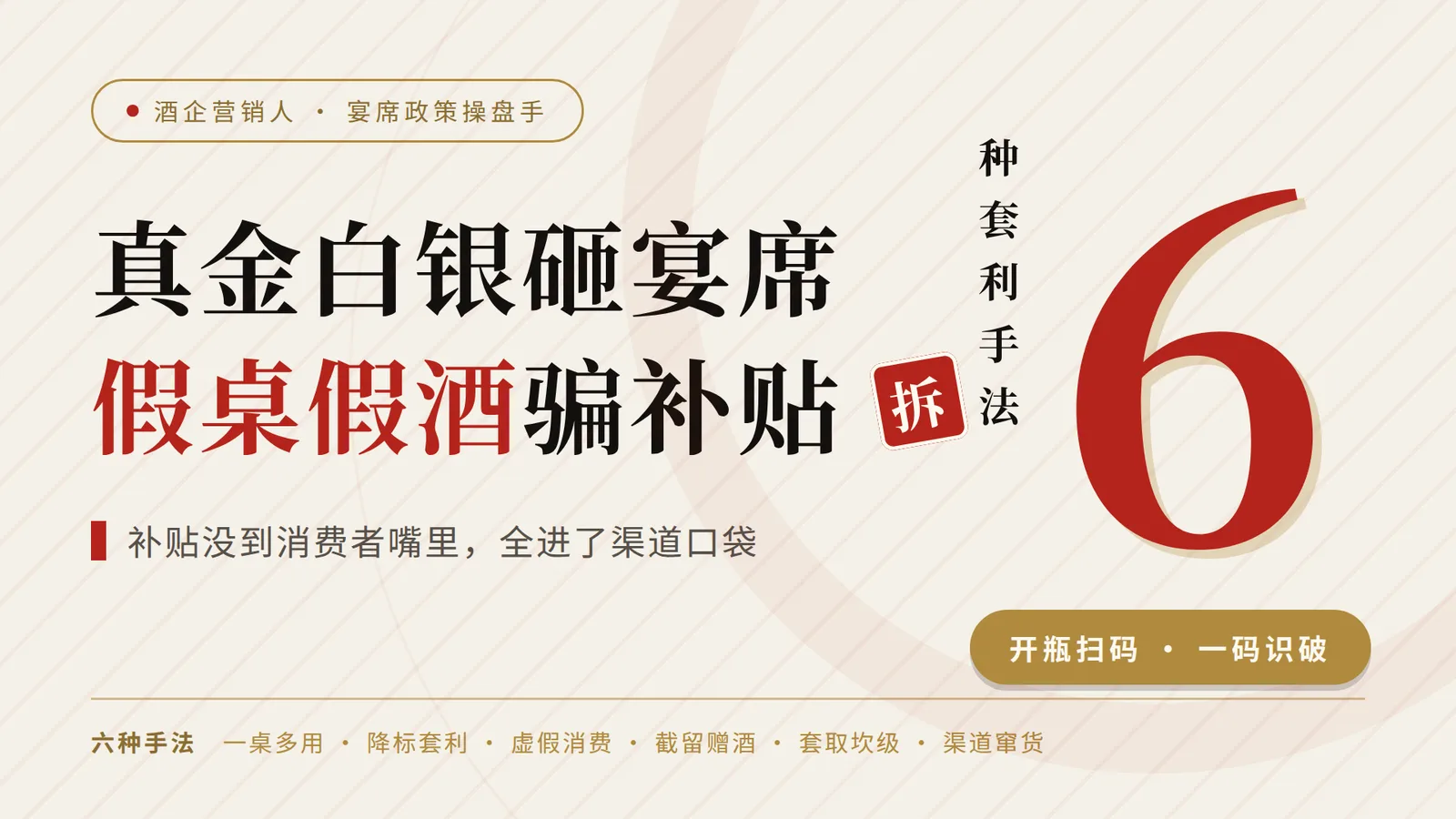
How Much Subsidy Does One Fake Banquet Swindle Away? Breaking Down Six Arbitrage Tactics in Distillery Banquet Policies
Distilleries are collectively throwing subsidies at the banquet market, but most of the money never reaches consumers' mouths. This article breaks down six arbitrage tactics—one table used multiple times, under-reporting the catering standard, fake consumption, diverting gifted baijiu, gaming tier thresholds, and cross-region channel flooding—and argues the root cause isn't greedy distributors but distilleries' inability to see the terminal. Five-code integration leaves a data trail on every bottle from factory to uncapping, replacing photo-and-stamp verification with real bottle-opening scans, paired with three-tier instant profit sharing, so subsidies actually land on consumers.
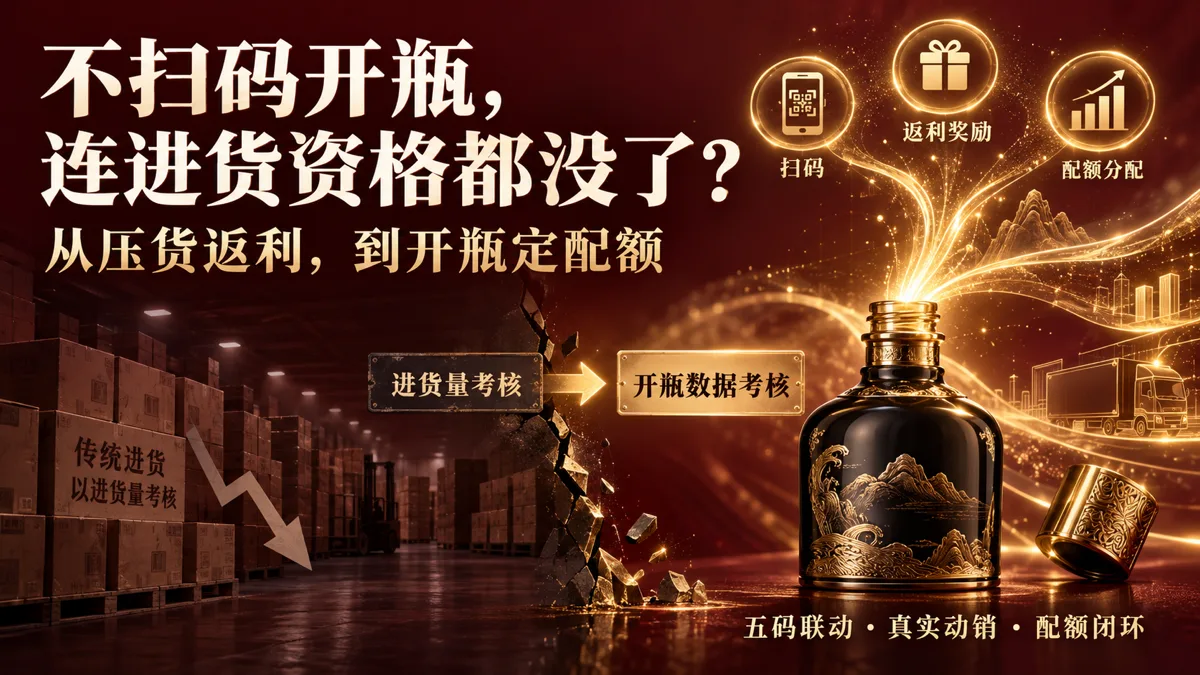
Inventory 38 Days vs Industry 52: How Guojiao 1573 Rewrote Channel Rules with "Bottle-Open Rate"
China Alcoholic Drinks Association data shows 58% of distributors still have growing inventory, and the industry average inventory turnover has soared to 900 days. But Guojiao 1573 is an outlier: distributor inventory compressed to 38 days (industry average 52), price stability rate at 89%, 52% ABV wholesale price steady at 840-860 yuan, and channel efficiency up 40%. The core shift: changing the KPI from "purchase volume" to "bottle-open rate"—if consumers don't open bottles and scan, distributors can't get rebates, increase quotas, or even order goods. Five-code integration has deployed over 50 million cases, with 110 million bottles opened, 40% scan rate, and 50 million members accumulated. Bottle-open data has become the new currency of channel power—whoever completes this transformation earlier holds a card that keeps them at the table in the second half of the zero-sum game.
Popular keywords