
One Sealed Jar of Liquor Seals Away the Wine, and Opens Up a Life
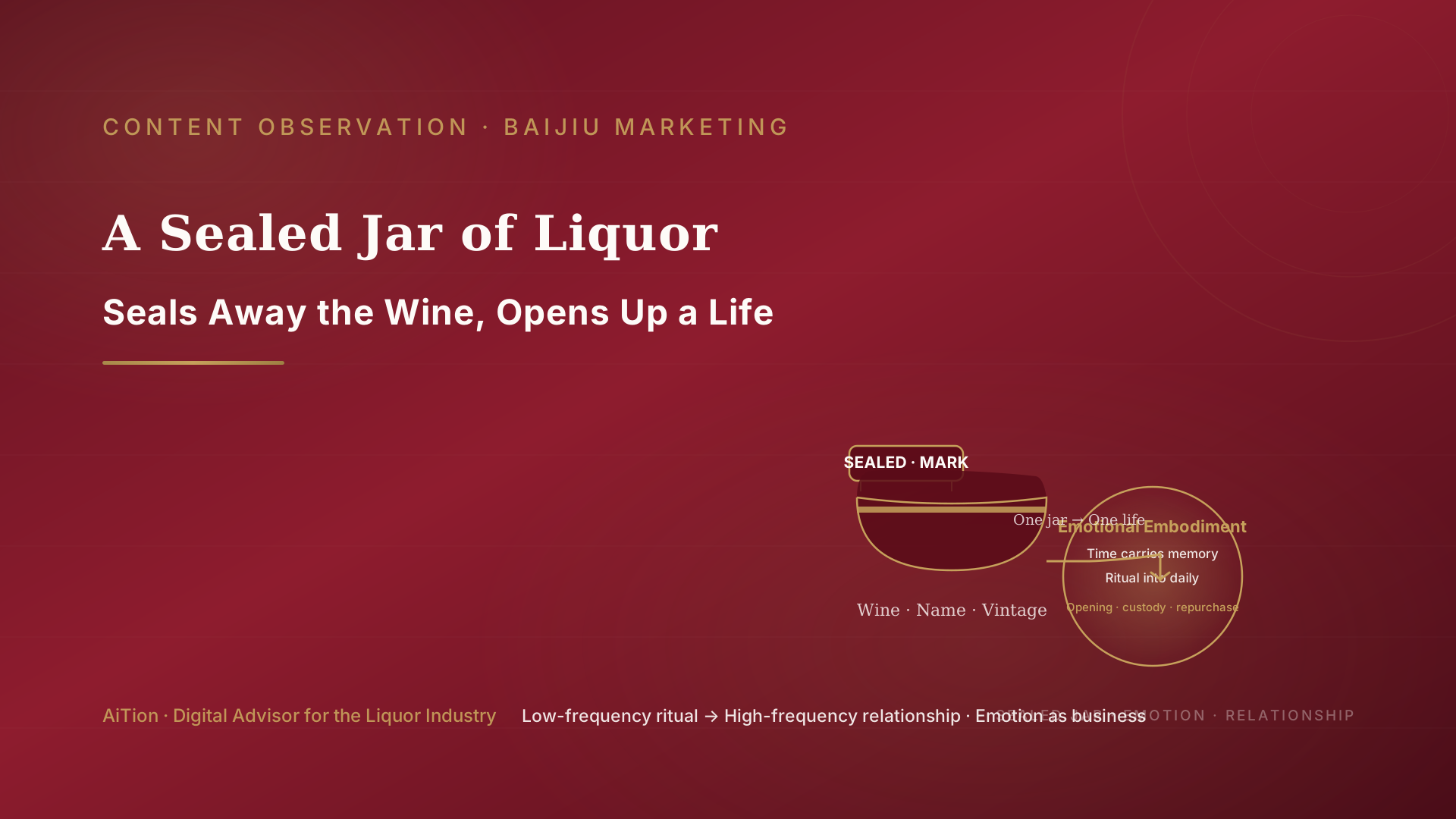
The sealed-jar liquor business is moving from the distillery's backyard into the main battlefield. What moves people about it is that it turns abstract emotion into something tangible — a clay jar carved with a family name, a wedding jar pairing two surnames, a corporate jar inscribed with values — every jar selling time and memory. This article unpacks how distilleries turn a low-frequency sealing ritual into a high-frequency customer relationship: digital certificates, streamlined wine-withdrawal and gift-transfer flows, and systematized customer operations that settle sealed-jar clients as the most valuable asset in the private domain.
I. From the Backyard to the Main Battlefield, Sealed-Jar Liquor Breaks Through
The sealed-jar liquor business is moving from the distillery's backyard into the main battlefield.
On sauce-aroma distilleries in Maotai Town, clay jars from 5 jin to 100 jin are yours to pick, with engraving and pattern printing supported, backed by constant-temperature cellar custody storage, and vintages freely matched from 3 to 20 years. A distillery in the northeast has turned sealed jars into a vessel for family legacy, offering wedding festivity jars, private aged sealed jars, and corporate commemorative jars in full range. Chengyu Shaofang has even opened a custom liquor estate in Xi'an's Hi-Tech Zone, telling the story of "walking from 1862 Maotai Town to 2026 Keji Second Road," with enterprise custom, wedding custom, personal custom, and sealed-jar custom all rolled out.
Behind these moves sits one plain judgment. Wine sells time, and sealed-jar liquor is the business of packaging time and selling it.
II. The Sealed-Jar Customer Is the Most Valuable Kind in the Private Domain
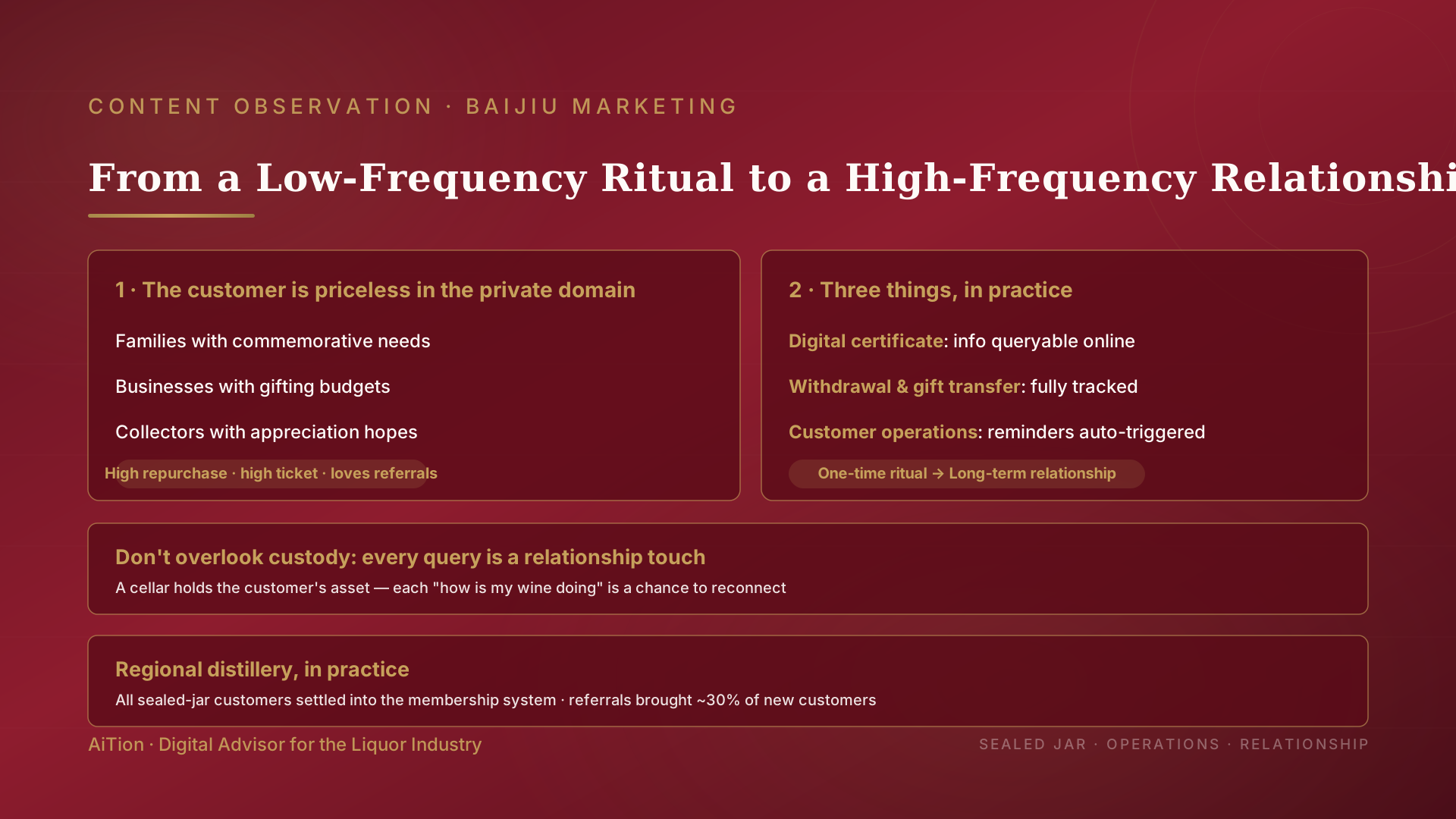
What does a person willing to spend several thousand to tens of thousands of yuan sealing a jar look like? A family with commemorative needs, a business with a gifting budget, a collector with appreciation expectations. For a distillery, most sealed-jar business is held together by salespeople's personal ties, recorded on paper receipts, with chaotic withdrawal and transfer, untraceable custody, and customers lost right after sealing. The ritual is done grandly; the follow-up operations barely exist.
The root of what makes sealed-jar liquor move people is that it embodies abstract emotion. A clay jar carved with a surname is an anchor of family memory — a spiritual keepsake that descendants can solemnly open at ancestor-worship, homecoming, or housewarming. A wedding jar, pairing two surnames, sealed with mud and stamped, opened ten or twenty years later, is wine bouquet as memory. A corporate commemorative jar, engraved with founding year and values, is a moving monument of organizational spirit.
These scenes share one trait: extremely high emotional intensity, but extremely low purchase frequency. For a distillery, the challenge is how to turn a low-frequency ritual into a high-frequency relationship. The answer is to make sealing a jar an entry point, and make customer operations a daily routine. Sealing day is the starting point; afterwards, an annual jar-opening reminder, vintage-appreciation bulletins, and anniversary greetings are all reasons to reach out.
There is one overlooked point: custody. Constant-temperature cellar custody means the distillery's warehouse permanently holds a customer's asset, and the customer will periodically ask, how is my wine doing. Every query is an opportunity to maintain the relationship.
III. Three Things, in Practice
Digital certificates. Sealing info, vintage, serial number, and storage location are all queryable online, and customers can check their wine anytime; the paper-receipt era is over.
Streamlined withdrawal and gift transfer. Online application, gifting, and pickup are fully tracked; the gift function also brings in new customers — when a jar is gifted out, the relationship travels along with it.
Systematized customer operations. Sealed-jar customers get dedicated profiles and membership systems, with jar-opening reminders, vintage-appreciation notices, and anniversary marketing triggered automatically, turning a one-time ritual into a long-term relationship.
IV. Distilleries Around the Country Are Already Testing Different Plays
Publicly, distilleries around the country are already testing different sealed-jar plays. Some do surname customization, carving family precepts and hall names onto the jar, with each jar independently numbered and carrying a brief family-origin record. Some do wedding ceremony jars, where the couple jointly seals the mud and stamps their mark after the ritual, delivering it to the family cellar for safekeeping. Some offer business owners private sealed-jar storage to meet collection, appreciation, and premium-entertaining needs.
A regional distillery we served moved sealed-jar liquor from an offline ritual into a system. Customers pick jars, wines, and engraving online; sealing records and custody status are always queryable; and when opening time arrives, the system reminds them automatically. After over a year, all sealed-jar customers are settled in the membership system, and referrals brought in nearly 30% of new customers. They didn't change the ritual's sense of ceremony; they simply caught the relationships on both sides of it.
V. Distilleries Build a Product Line, Distributors Capture High-Value Scenarios
On the distillery side, turn sealed jars from an event into a product line. Define jar types, vintages, and price tiers, add custody and ceremony services, and make it a replicable, standardized business rather than a deal negotiated one sales call at a time.
On the distributor side, sealed-jar is a high-ticket business worth the effort. First find out which high-net-worth scenarios exist locally — weddings, corporate anniversaries, family commemorations — then talk product mix and service flows.
Conclusion
Time is the last ingredient in winemaking, and the hardest to copy. The jar seals away the wine, opens up memories, and memories are something money can't buy. The distillery that can catch this emotional value is the one that truly turns sealed jars into a business.
If you're doing sealed-jar or custom liquor but still managing customers with spreadsheets and favors, our sealed-jar system can digitize certification, custody, withdrawal, transfer, and customer operations all in one place. We welcome a chat about how you do it today, and where you should start changing first.
Appendix: Data and Case Sources
Maotai Town sauce-aroma distillery sealed-jar specifications: 5-100 jin clay jars, engraving/pattern printing, constant-temperature cellar custody, 3-20 year vintages
Chengyu Shaofang: custom liquor estate opened in Xi'an Hi-Tech Zone, brand narrative "from 1862 Maotai Town to 2026 Keji Second Road"
Regional distillery case: all sealed-jar customers settled into the membership system, referrals accounting for nearly 30% of new customers
The trend analysis (high emotional intensity, low purchase frequency, custody as a relationship-maintenance opportunity) is this article's framework
【Note: The images in this article were AI-generated. 】