
Fengtan Baijiu Digitalization Solution: Turning High-End Clients from "Sealing a Jar of Baijiu" into "Owning a Manageable Brand Asset"
Introduction
In the past, fengtan baijiu was mostly an offline ceremony.
Customers came to the distillery, selected their baijiu, sealed the jar, took photos, and received proof. The venue had the aroma of baijiu, a sense of ceremony, brand culture, and the feeling of being valued. For distilleries, this was an excellent way to manage high-end customers. A customer willing to visit the site in person already signaled interest, trust, and spending power.
But the problem lies here too.
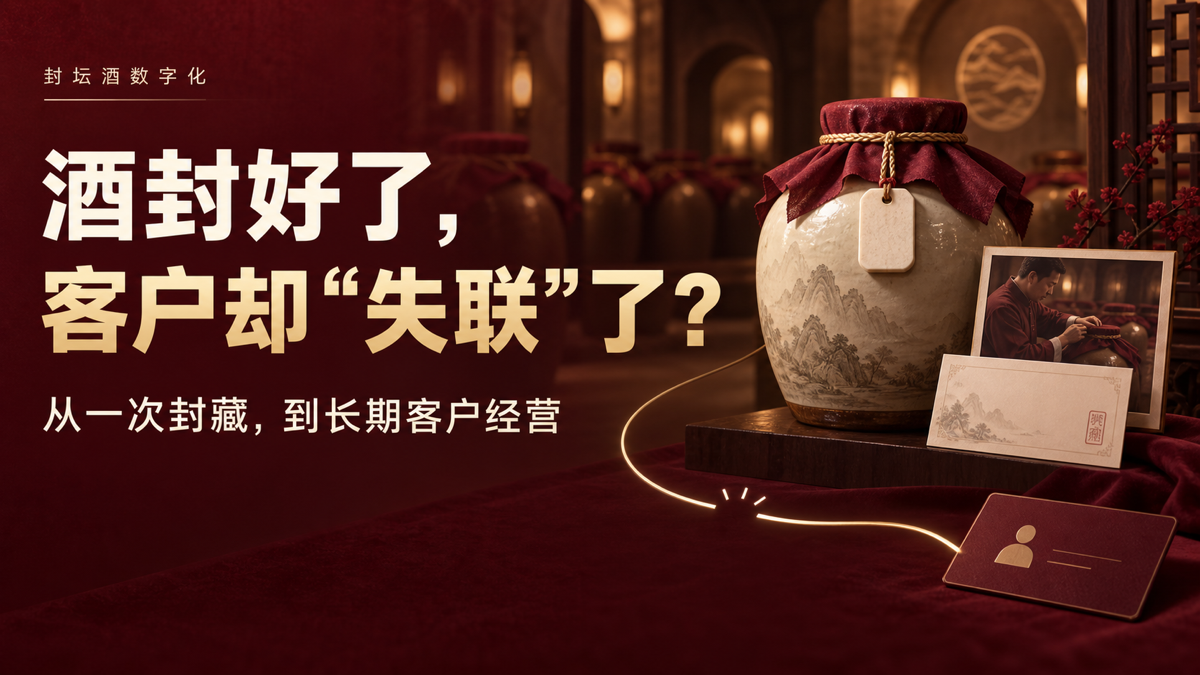
After the sealing ceremony, the connection between the customer and the distillery often weakened. Where is the jar of baijiu the customer bought stored? When can they retrieve it? Can they gift it? Can they transfer it? Can they check the sealing environment at any time? Can the distillery continue to serve this group of high-value customers?
Many traditional fengtan businesses have strong upfront ceremony but weak backend operations. The transaction was completed on-site, but customer data might still sit in spreadsheets, on salespeople's phones, or with distributors. Distilleries struggled to truly retain fengtan customers, let alone carry out follow-up membership operations, repurchase conversion, and brand communication.
So, fengtan baijiu digitalization isn't simply about "moving the process online."
What it truly solves is: how to turn fengtan baijiu from a one-time transaction into a sustainable high-end customer asset system.
I. Why Are Distilleries Paying More Attention to Fengtan Baijiu?
Fengtan baijiu is naturally suited for premium baijiu brands.
It's not an ordinary shelf product, nor is it simple open-and-drink consumption. Fengtan baijiu has vintage, has story, has a waiting period, and carries a strong sense of ceremony. Customers buy fengtan baijiu not necessarily to drink immediately, but for collection, commemoration, gifting, or even to express an identity and taste.
These customers are less price-sensitive. They care more about whether the brand is reliable, whether the service is dignified, and whether the process feels prestigious.
Fengtan baijiu has another important characteristic: it carries time value.
After ordinary baijiu is sold, the consumption chain ends quickly. The customer takes it home, opens it, drinks it, and consumption is complete. But fengtan baijiu is different. After purchase, there are subsequent actions: storage, checking, withdrawal, gifting, and transfer. As long as this process is supported by a system, the distillery has the opportunity to continuously reach the customer.
This is also why fengtan baijiu works well as a private domain operations entry point.
People who actually buy fengtan baijiu tend not to be low-frequency ordinary consumers, but rather the brand's high-net-worth customers, core members, corporate clients, group-buy clients, and social-circle clients. For distilleries, these people aren't targets for a single transaction—they're customer assets worth long-term maintenance.
Distilleries do fengtan baijiu not just to sell one more product, but to build a high-end customer engagement scenario.
II. Four Core Pain Points of Traditional Fengtan Baijiu
The first pain point: heavy ordering processes and strong on-site dependency.
Traditional fengtan mostly relies on offline events. Customers select baijiu, register, pay, and confirm on-site. When attendance is large, manual registration is error-prone, customer information syncs slowly, and order flow lacks clarity. For customers, the experience is unstable; for distilleries, management costs are high.
The second pain point: opaque sealing process.
Customers are buying a jar of long-term sealed baijiu, but where exactly it's sealed, what the environment is like, and its subsequent status often can only be explained verbally by the brand. For high-end customers, trust is critical. Especially given the high unit price and long cycle of fengtan baijiu, if customers can't see the process, it's hard to build sustained confidence.
The third pain point: inconvenient withdrawal, gifting, and transfer.
Fengtan baijiu typically isn't in the customer's possession. To withdraw baijiu, the customer needs to contact a salesperson or the distillery. To gift it, they need to handle ownership rights. To transfer it, there's a lack of standard credentials and clear processes. What should be a socially valuable product often sees reduced usage frequency due to complex procedures.
The fourth pain point: distilleries lack ongoing operational leverage.
After the transaction is completed, who is the customer, how much did they buy, when was it sealed, have they withdrawn baijiu, have they gifted it, have they repurchased—without unified data retention, follow-up operations are hard to launch. The distillery knows it sold baijiu, but doesn't necessarily truly hold the customer relationship.
Therefore, fengtan baijiu digitalization isn't about building a mini-program to look advanced. It's about turning links that relied on manual effort, experience, and offline communication into system capabilities that are recordable, trackable, manageable, and operable.
III. From Online Booking to Asset Display: Building the Full-Chain Fengtan Closed Loop
The first step of fengtan baijiu digitalization is online booking.
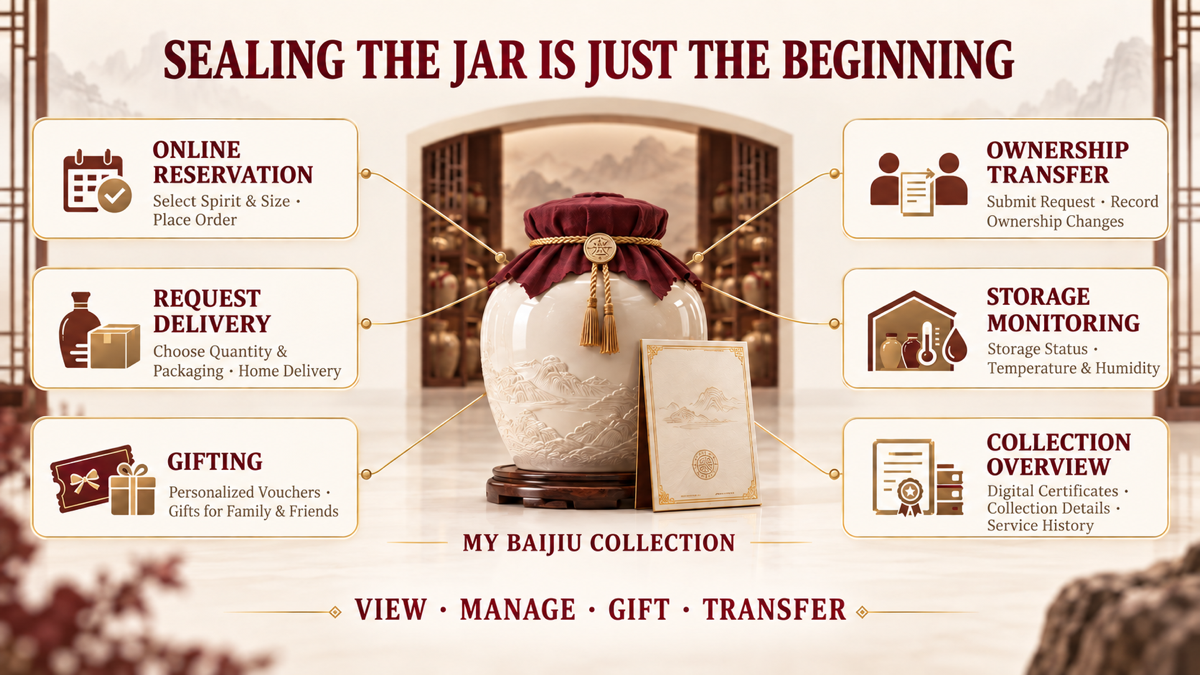
Customers can view fengtan products through the mini-program, select the baijiu body, specifications, and capacity, and submit their order. For customers, ordering is more convenient and doesn't fully depend on on-site communication. For distilleries, customer information, order data, and payment records can be captured by the system.
Online booking doesn't just improve transaction efficiency—more importantly, it builds a real fengtan customer database. Who has fengtan demand, who purchased high-value products, who's worth focused follow-up maintenance—the system shows it all.
Step two: online withdrawal.
Fengtan baijiu doesn't end when sold. When the customer will withdraw baijiu in the future, how much, in what packaging, shipped where—these all affect their second impression of the brand. Through the system, customers can initiate withdrawal requests online, selecting withdrawal volume, packaging options, and delivery methods.
What used to require multiple rounds of communication becomes a clear online operation. The customer sees it clearly; the distillery has a record. Each withdrawal is a service experience and a new touchpoint opportunity.
Step three: gifting.
Baijiu naturally has social attributes, and fengtan baijiu's social attributes are even stronger. Customers can gift their fengtan baijiu to family, elders, clients, and partners through online baijiu vouchers or rights certificates. Compared to ordinary gifting, fengtan baijiu carries more story and exclusivity.
A custom baijiu voucher, an exclusive right, a brand story—each makes the gifting act more dignified. For distilleries, gifting not only serves existing customers but also reaches new potential customers.
Step four: transfer.
Some customers buy fengtan baijiu for long-term collection; others may later need to transfer their rights. Without system records, the transfer process is easily unclear, and ownership rights create communication costs.
Through digital transfer, customers can initiate rights changes online, and the system records the transfer process and ownership changes. Transfer isn't a speculative concept—it makes fengtan rights more standardized and customer asset management clearer.
Step five: real-time monitoring.
Fengtan baijiu sells time, and it sells trust. Customers are willing to wait because they trust the brand to preserve the jar properly. Through real-time monitoring, cave-storage environment, temperature and humidity data display, customers can check the sealing status at any time.
"Seeing it" is itself a form of trust. Especially for high-end customers, transparent service is more persuasive than simple promises.
Step six: asset display.
When customers open the mini-program, they can see their collection details, digital baijiu certificates, sealing year, baijiu body information, withdrawal records, gifting records, and more. At this point, fengtan baijiu is no longer just a physical jar stored at the distillery—it's a viewable, manageable, displayable digital asset.
The customer goes from "bought a jar of baijiu" to "owning a brand asset with identity, records, and a story."
IV. The Real Value This System Brings to Distilleries
For distilleries, the value of fengtan baijiu digitalization goes beyond order management.
First, it elevates the high-end customer experience. High-end customers don't just look at product price—they care whether service is smooth, information is transparent, and rights are clear. The system standardizes processes and visualizes services. What customers feel is the brand's professionalism.
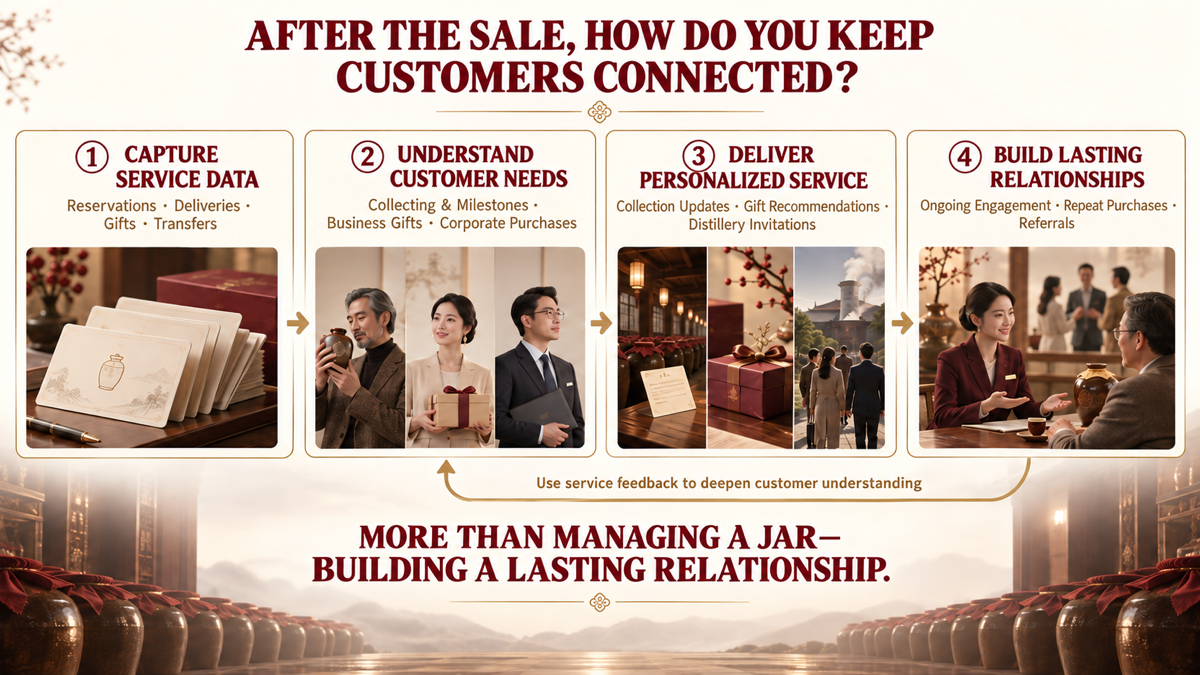
Second, it captures customer data. Who bought fengtan baijiu, how much, when they withdrew, whether they gifted, whether they transferred, what scenarios and packaging they prefer—these are critically important business data. Without data, operations rely on gut feeling; with data, customer segmentation and precision targeting have a foundation.
Third, it helps brands do private domain operations. Fengtan customers can enter enterprise WeChat, community groups, and membership systems. Follow-up through holiday greetings, collection reminders, brand content, distillery tour invitations, and repurchase recommendations enables continuous engagement. The customer relationship no longer stops at one transaction but enters long-term maintenance.
Fourth, it improves brand culture communication efficiency. Fengtan baijiu inherently has story, ceremony, and social sharing space. After digitalization, customers sharing baijiu certificates, vouchers, and collection pages is itself brand communication. The brand no longer just tells its own story—it lets customers actively participate in spreading it.
The core value of fengtan baijiu digitalization isn't just managing the business—it's helping distilleries retain, serve, and operate high-end customers.
V. Which Distilleries Are Suited for Fengtan Baijiu Digitalization?
The first type: premium baijiu brands. High product value, customers who value collection, gifting, and identity—suited for strengthening brand stickiness through fengtan baijiu.
The second type: distilleries that already have fengtan festivals, distillery tours, or factory visit events. Offline events generate traffic, and the digital system can capture follow-up conversion, withdrawals, and customer operations.
The third type: distilleries with high-net-worth customers, group-buy clients, and corporate client resources. Fengtan baijiu can serve as a vehicle for deep service and relationship maintenance.
The fourth type: distilleries undergoing private domain and membership digitalization upgrades. Fengtan customers are naturally high-value members, suited for long-term refined operations systems.
Not every distillery needs to build a complex system right away. But as long as the enterprise already has premium products, high-end customers, and a fengtan business foundation, it's worth restructuring the process digitally.
Conclusion
Today, fengtan baijiu needs more than on-site excitement—it needs follow-up capabilities: viewable, manageable, giftable, transferable, and continuously serviceable. What the customer buys isn't a jar sitting quietly in storage, but an asset guarded long-term by the brand.
For distilleries, fengtan baijiu digitalization isn't simply launching a mini-program—it's building a high-end customer operations system.
If you're running a fengtan baijiu business or planning a fengtan baijiu digitalization system, feel free to leave a comment below. By commenting, you can request the "Fengtan Baijiu Digitalization Solution Materials," which include functional architecture, business processes, and operational strategies—suitable for distillery marketing departments, digitalization teams, and high-end customer operations teams.